
Students spend a week conducting research in real laboratories
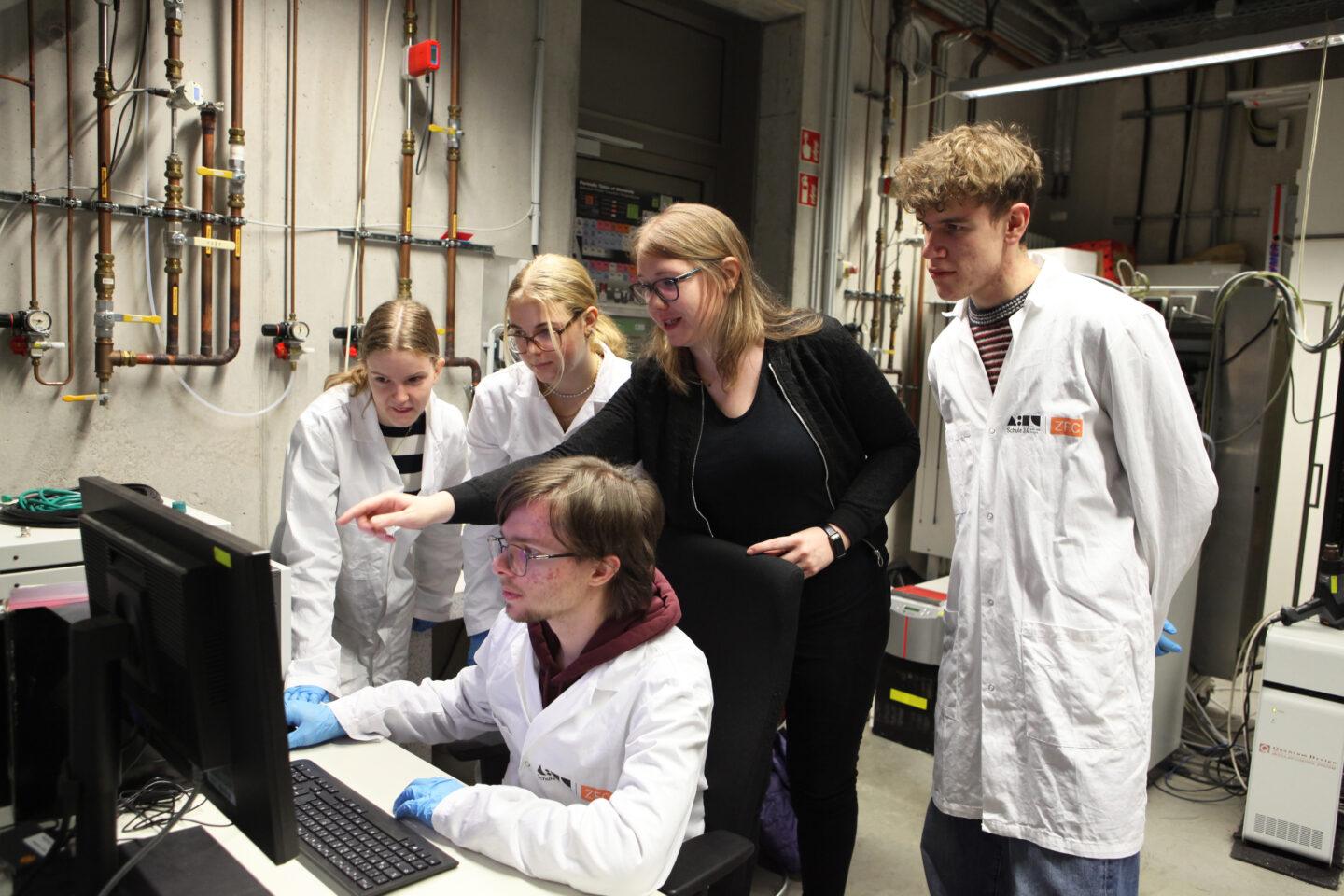
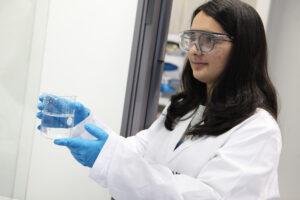
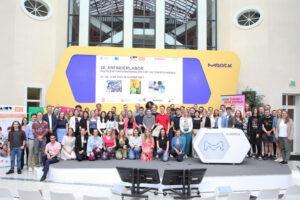
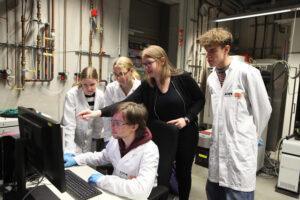
For 20 years, the Inventors' Lab the door to applied research for dedicated students from Hesse. For one week, they work in real research labs, explore current issues in materials science, and gain insights into a world that often remains hidden in everyday school life: science as teamwork, as a societal responsibility – and as a potential career path.
The program is supported by the Center for Chemistry , the Faculty of Materials Science at TU Darmstadt , and the science and technology company Merck . These three partners have been shaping the inventors' lab in Darmstadt for years – from the perspectives of promoting young talent, university research, and industrial practice.
In a discussion at Merck, Ruben Bischler from TU Darmstadt, Dr. Thomas Schneidermeier from the Center for Chemistry, and Dr. Thomas Eberle from Merck offer insights into the motivation, aims, and impact of the format. They discuss why curiosity is more important than pure expertise, why genuine research experience has a lasting impact on young people, and why materials research plays a key role in the energy transition.
At the heart of the inventors' lab lies an attitude that unites all participants. "The most important thing is curiosity," says Ruben Bischler. Those who end up in the inventors' lab usually already possess this intrinsic drive: the desire to discover new things, experience research firsthand, and develop themselves beyond the confines of the school curriculum. Materials science, in particular, is well-suited for this. It is highly interdisciplinary, combining physics, chemistry, computer science, and engineering. Even though the week is structured thematically, it offers ample opportunity to explore individual interests in greater depth.
"The most important thing is curiosity."
Ruben Bischler, TU Darmstadt
The organizers have observed clear changes in the young people over the years. Dr. Thomas Schneidermeier, who founded the inventors' lab 21 years ago, notes that students today are significantly more self-confident, especially during presentations. While their curiosity remains the same, schools place greater emphasis on independent work and presentation skills. This is particularly evident in the final presentations at the end of the week.
“The curiosity has remained the same – but students today are much more self-confident.”
Dr. Thomas Schneidermeier, Center for Chemistry
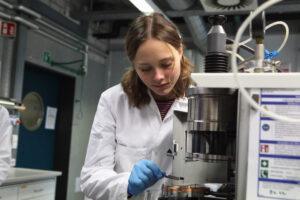
The inventors' lab consistently focuses on a central question for the future: the energy transition. Materials research plays a key role in this – especially when it is presented in a concrete and application-oriented way. Wind power, hydrogen, and energy storage are among the topics that particularly motivate young people. Crucially, the learning doesn't remain purely theoretical. The young people work in real research labs, supervised by researchers from TU Darmstadt.
"This is not a student lab. The young people are working in real research labs."
Dr. Thomas Schneidermeier
Bischler points to projects in magnet research, which plays a central role in electric motors, wind turbines, and new cooling technologies. In one case, the work even led to a visit to Magnotheerm, a Darmstadt-based start-up that implements magnetic cooling on an industrial scale. Such insights illustrate how closely basic research, application, and company formation are intertwined.
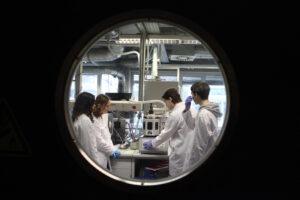
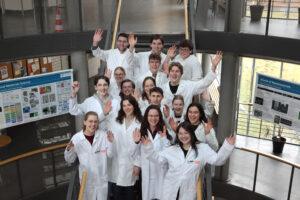
In addition to subject-specific content, the inventors' lab focuses on fundamental skills that are essential for modern research. Research is no longer a solitary pursuit. Teamwork, mutual learning, and the integration of diverse perspectives are prerequisites for scientific progress. Students experience this firsthand. From the very beginning, they work in small groups, quickly develop team spirit, and learn to share responsibility.
“Nobody works alone today – not even a Nobel laureate.”
Dr. Thomas Eberle, Merck
Merck deliberately incorporates the industrial perspective into the format. Natural sciences are not just a subject for schools or universities, but rather the foundation of economic success and societal development. Research serves to solve problems, develop sustainable solutions, and improve quality of life.
“ With our research at Merck, we are specifically addressing societal challenges and thus shaping a better future,”
Dr. Thomas Eberle
The fact that the inventors' lab also contributes to attracting young talent is a fascinating topic. Time and again, former participants later choose to study at TU Darmstadt. The young people know what they're getting into, and the university gains highly motivated students.
In a broader context, it becomes clear: the energy transition is inconceivable without material innovation. New technologies place new demands on solar cells, batteries, magnets, and semiconductors. At the same time, the responsible use of resources is increasingly coming into focus.
Liveable Darmstadt
powered by MerckMerck is actively committed to a region worth living in. Together with its partners, the company creates an environment where science education, sports, and the arts can flourish. Through its support of social institutions and charitable projects, Merck contributes to a better community in Darmstadt.
In the field of science education, Merck fosters the next generation's interest in and curiosity about science, technology, and research. This includes the biology and chemistry student labs in cooperation with the Technical University of Darmstadt. Merck is also committed to STEM* activities in schools in the region and supports numerous competitions for young STEM talents, including "Jugend forscht" (Young Researchers), the International Chemistry Olympiad, and the Day of Mathematics. Every year, Merck awards the Merck Abitur Prize to talented students from Darmstadt and the surrounding area and offers professional development courses for teachers.
The “Inventors’ Lab”, which is carried out in cooperation with the Center for Chemistry eV and the TU Darmstadt, gives high school students practical insights into everyday research at Merck and at the TU Darmstadt.
*The now well-established acronym STEM stands for the fields of mathematics, computer science, natural sciences and technology