
SPD city councilor reports on obstacles for people with disabilities
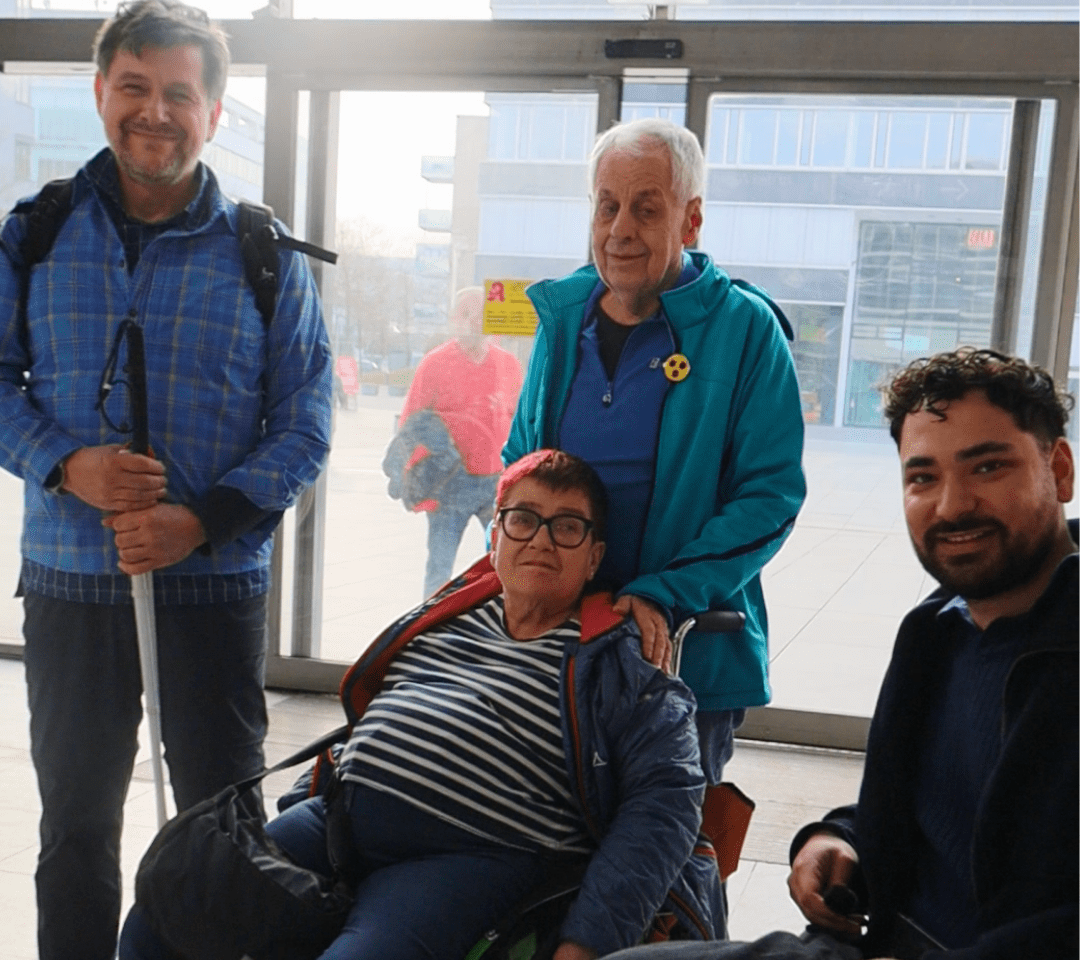
Rodan Zeybek, a city councilor from Darmstadt representing the SPD (Social Democratic Party), has voiced strong criticism of the accessibility at Darmstadt Central Station following a self-test. Together with members of the Club for the Disabled and their Friends in Darmstadt and the Surrounding Area (CBF), he examined the situation on-site for people with walking and visual impairments.
“Navigating the main train station in a wheelchair is a real stress test,” Zeybek explained after the visit. The station is a central transport hub for the city, but for many people with disabilities it remains full of obstacles.
Study identifies fundamental flaws
According to Zeybek, the CBF has been pointing out problems for years. A study by Darmstadt University of Applied Sciences on accessibility at the central bus station came to an overall poor rating. The overall assessment was therefore "unsatisfactory".
Among the problems identified are incomplete or barely perceptible tactile paving for the visually impaired, as well as a lack of orientation systems between the train station, bus station, and platforms. The design of many areas also makes movement difficult for wheelchair users.
Problems with the disabled toilet
Criticism has also been leveled at the accessible toilet in the train station. According to Zeybek, it was unusable without assistance on the day of his visit. He reported recurring malfunctions, inadequate equipment, and an emergency call system that was intermittently unreliable.
"The fact that the toilet is unusable is disgraceful. The fact that people have to wait a long time for help in an emergency is extremely dangerous," said the city councilor.
Demand for improvements
Furthermore, it is particularly problematic that there is no continuous guidance system for the blind in the historic station hall and that important destinations such as the travel center, platforms or toilets are difficult to find.
Zeybek hopes that the new Hessian law on the protection of historical monuments will lead to greater attention being paid to accessibility in historic buildings. "Accessibility is not a niche issue. It determines whether people can participate in everyday life independently," he explained.
(DARMSTADT – RED/SPD)