

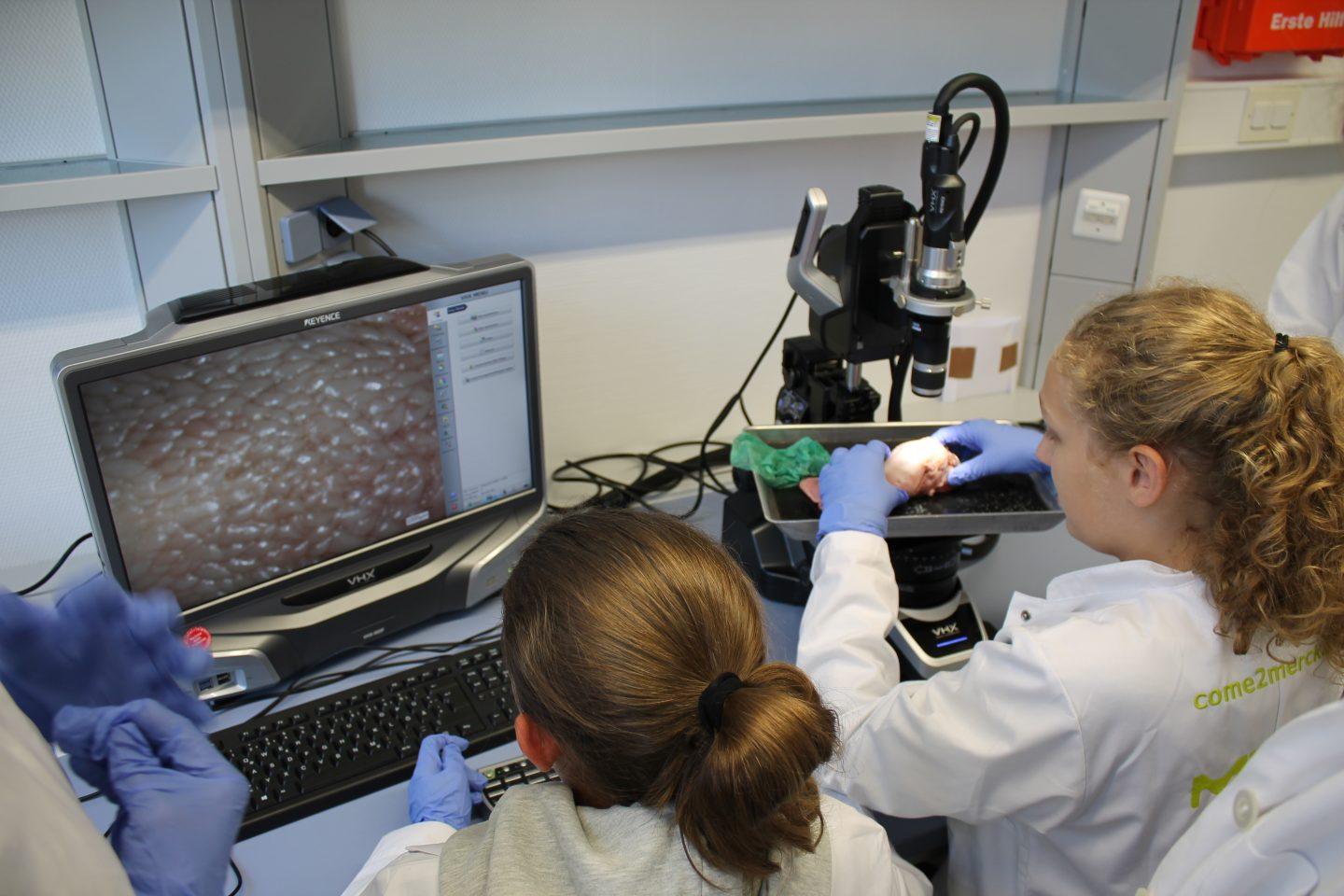
Cooperation between university and companies creates practical access to science
For DA.nwes, Alexander Götz with Dr. Guido Klees (TU Darmstadt) and Dr. Thomas Eberle (Merck) .
The Merck-TU Darmstadt Biology Learning Lab at TU Darmstadt combines research, teaching, and enthusiasm. In cooperation with Merck , around 2,500 students discover each year just how exciting molecular biology research, among other fields, can be. Dr. Guido Klees, head of the learning lab, and Dr. Thomas Eberle, head of STEM* promotion at Merck, discuss responsibility, ethics, and the power of experimentation – and explain why research should begin in school.
Dr. Klees, Dr. Eberle, how did the biology learning lab come about?
Dr. Guido Klees:
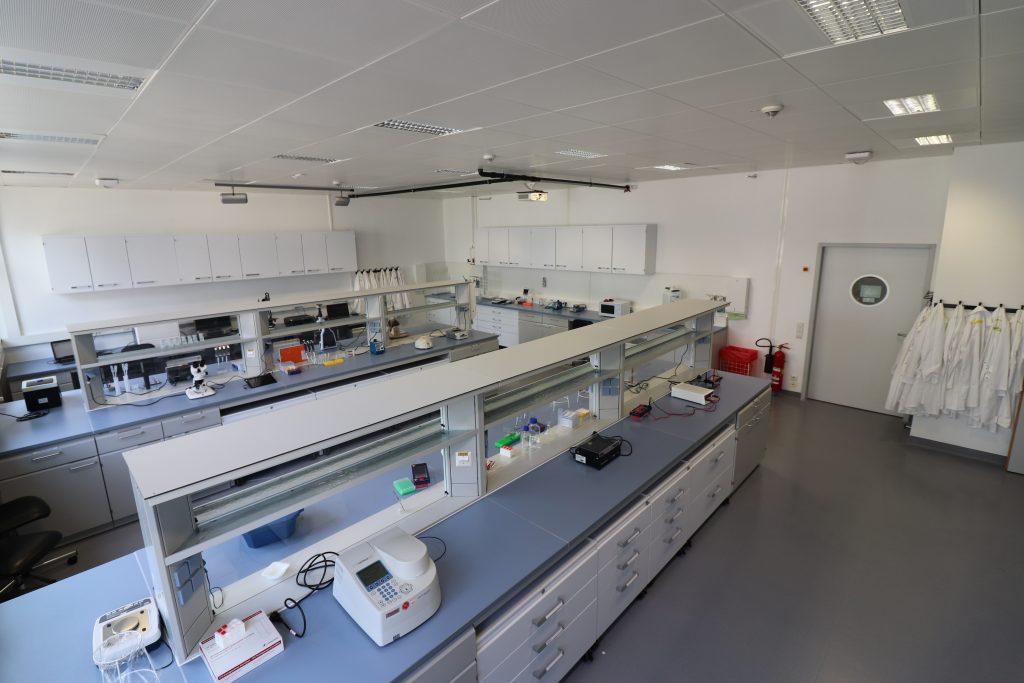
The Biology Learning Lab was established in 2015/2016 – inspired by the already successful Junior Chemistry Lab. The idea was to create a lab that would give young people genuine insights into the working methods of today's scientists. In May 2016, I was tasked with setting up the lab. Since then, it has gradually developed into an integral part of the educational landscape in southern Hesse. From the outset, we wanted more than just a classroom with microscopes. It was to be a true research facility, with equipment comparable to the department's research labs, which also allows for genetic engineering work at biosafety level 1.
Dr. Thomas Eberle:
For Merck, the biology learning lab was a logical extension of our educational initiative. We have been working closely with TU Darmstadt for many years – in research, prizes, and scholarships. At some point, the idea arose to do something together for schools. We wanted to create a place where science can be experienced practically – and we have succeeded brilliantly.
What is the overarching goal of the learning lab?
Dr. Guido Klees:
We want to awaken curiosity, create enthusiasm – and at the same time promote scientific thinking. Students should experience how research works: from observation and hypothesis formulation to experimentation, data collection, and analysis. In doing so, they learn that biology is more than theory – it is a process that constantly produces new things. And they should understand that research also entails responsibility.
Dr. Thomas Eberle:
For Merck, this project is part of our social commitment. We want to promote education, not through advertising, but as a contribution to equal opportunities. The lab day is free for schools; all materials are provided. This allows everyone to participate – regardless of financial resources or the school's technical equipment. That's what we call taking responsibility seriously.
What exactly happens in a typical day in the lab?
Dr. Guido Klees:
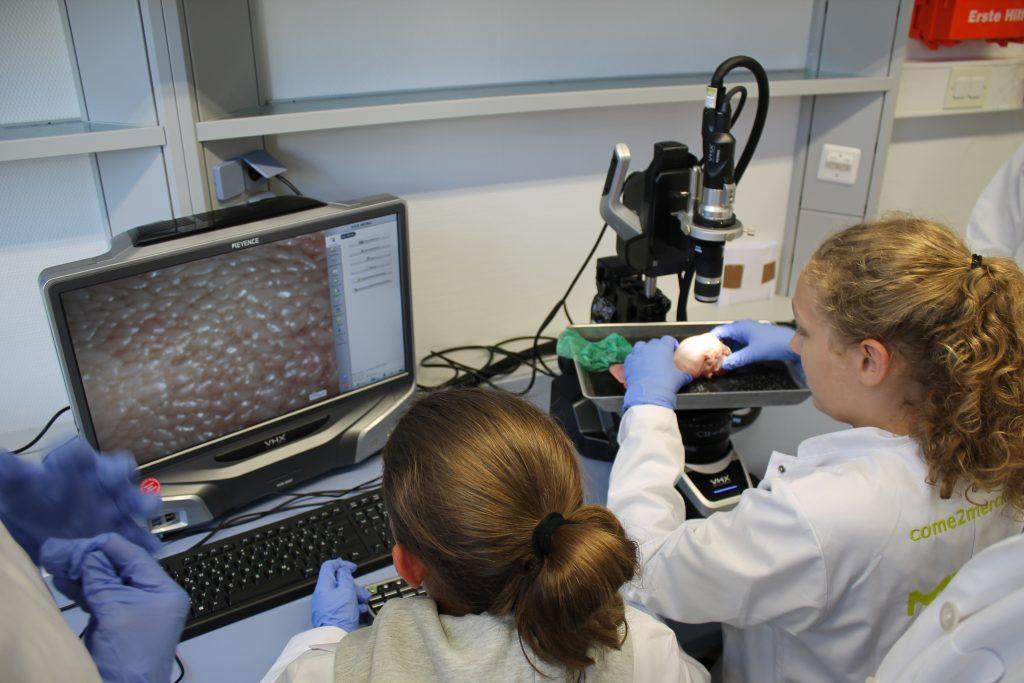
The classes arrive in the morning, are greeted, and receive safety instructions for the lab and an explanation of the theoretical principles behind the experiments. Afterwards, they work in small groups in the lab. They isolate DNA, conduct genetic analyses, or observe cell cultures, for example. Sometimes they work with enzymes or conduct electrophysiological studies. The students are highly focused, but also visibly enjoy themselves. At the end of the day, they not only have results, but also a genuine understanding of biological processes.
Dr. Thomas Eberle:
Many schools lack the equipment for such experiments. The learning lab fills this gap. Here, students experience that science isn't learned by rote, but by experimentation. This hands-on activity – pipetting, measuring, observing – conveys something that no textbook can. And often it is precisely this moment that influences a later career choice.
What topics are the focus of your work?
Dr. Guido Klees:
We address current topics in biological research – from cell biology and genetics to modern methods like CRISPR-Cas. This genome editing is already part of the Hessian Abitur (university entrance exam), so we prepare teachers and student teachers to teach it thoroughly. At the same time, we integrate aspects of ethics and sustainability. It's not just about technology, but also about responsibility.
Dr. Thomas Eberle:
This is very important to us. Biological research always raises societal questions: Are we allowed to do everything we are capable of? What are the consequences of innovations? Such discussions are now an integral part of education. We want young people to understand that research is not a black box, but a human, reflective process.
Sustainability also plays a central role in the biology lab. How do you implement this in practice?
Dr. Guido Klees:
On the one hand, in practical terms: We pay attention to using materials sparingly, avoid single-use products wherever possible, and reuse resources. On the other hand, in terms of content: Many experiments relate to sustainability and demonstrate ecological and biotechnological possibilities. This places us precisely at the interface between basic research and application.
Dr. Thomas Eberle:
At Merck, we pursue the same approach. Sustainability is no longer an add-on topic, but rather an integral part of our innovation strategy. When young people see in the lab that science can help conserve resources or avoid emissions, they understand that biology or chemistry can be part of the solution. This is a shift in perspective that we want to support.
What role do teachers play in this concept?
Dr. Guido Klees:
A crucial one. The learning lab rests on three pillars: the student lab, the teaching and learning lab, and teacher training. Teacher trainees develop their own teaching formats here and test them practically with students in the lab. At the same time, we regularly offer professional development courses for practicing teachers. The lab is therefore not only a place of learning, but also a place for exchange and further education.
Dr. Thomas Eberle:
That's precisely where the great added value lies. We need teachers who can confidently handle modern scientific topics – from genetic engineering to sustainability. Here they acquire the necessary subject-specific and pedagogical skills. And when they then pass that on to their students, the effect is multiplied.
How much interest do schools have?
Dr. Guido Klees:
Very large. We have around 120 to 140 events annually with approximately 2,500 participants. Dates are usually fully booked within a few hours. Many classes return every year, some teachers even with new groups, because they see how lasting the learning effect is. And for students who work here as tutors, it's a valuable experience on their path to becoming teachers.
Dr. Thomas Eberle:
This shows how established the learning lab has become. It has developed into a permanent institution that is equally valued by schools, universities, and businesses. This continuity is the best thing that can happen to an educational project.
What personally excites you about this work?
Dr. Guido Klees:
I'm thrilled when initial hesitancy turns into genuine curiosity. When students suddenly say, "Now I understand how that works!" – then I know why we do this. Biology explains life itself, and when young people grasp that, it's a pivotal moment.
Dr. Thomas Eberle:
I'm impressed by the enthusiasm that's generated here. Young people are much more open than you'd think. When you give them the opportunity to do their own research, they take responsibility, ask questions, and want to know how things are connected. Science thrives on wonder – and that's exactly what happens here every day.
Dr. Guido Klees:
And often this enthusiasm remains. We repeatedly hear from alumni who later study biology or medicine – and say that the learning lab was the trigger. Such feedback is the greatest compliment.
Liveable Darmstadt
powered by MerckMerck is actively committed to a region worth living in. Together with its partners, the company creates an environment where science education, sports, and the arts can flourish. Through its support of social institutions and charitable projects, Merck contributes to a better community in Darmstadt.
In the field of science education, the collaboration between Merck and the Technical University of Darmstadt plays a central role. Together, they operate student laboratories in biology and chemistry. Furthermore, Merck supports STEM* activities at schools in the region and sponsors numerous competitions for young STEM talents, including "Jugend forscht" (Young Researchers), the International Chemistry Olympiad, and the Day of Mathematics. Every year, Merck awards the Merck Abitur Prize to talented students from Darmstadt and the surrounding area and offers professional development courses for teachers.
*The now well-established acronym STEM stands for the fields of mathematics, computer science, natural sciences and technology