


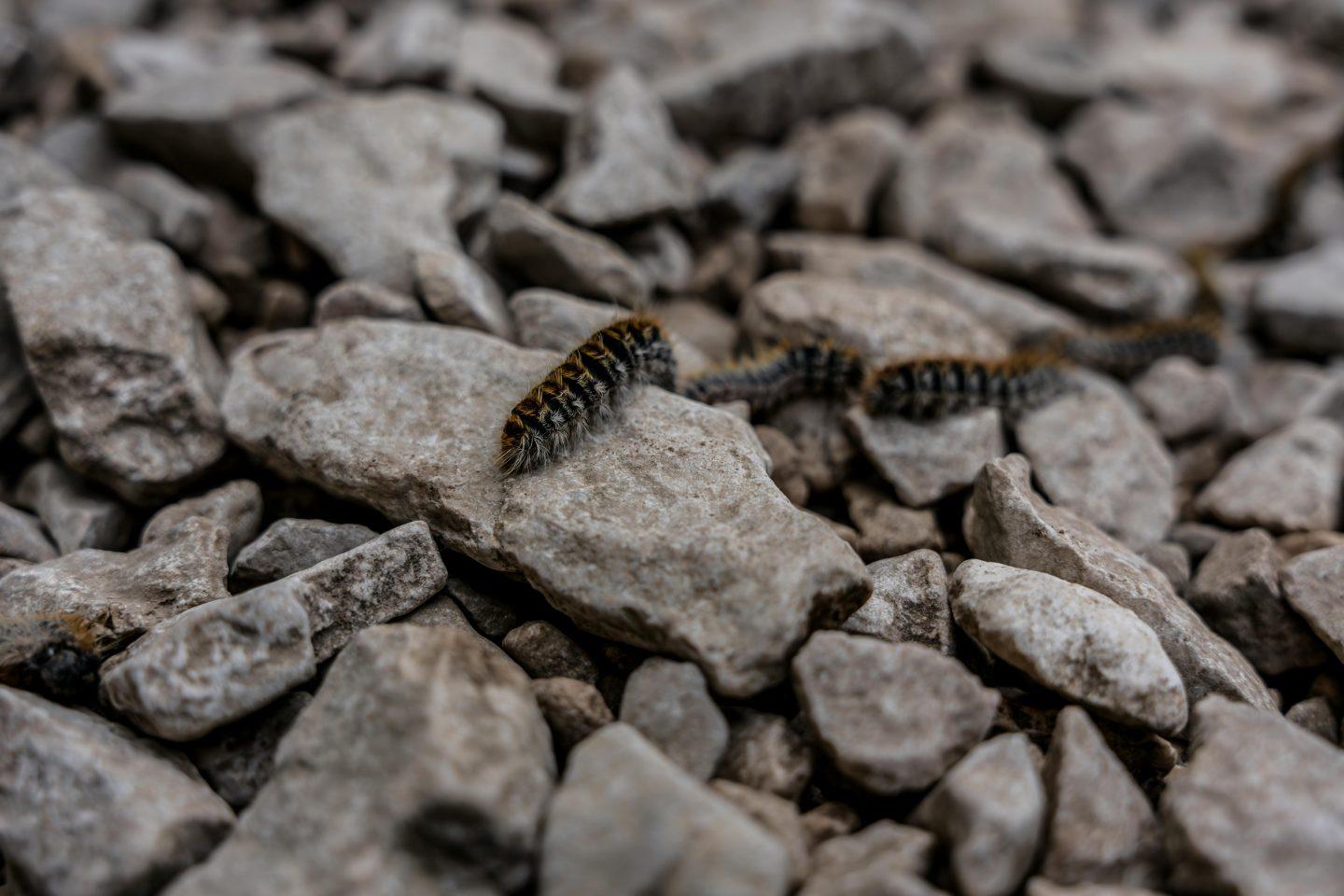

The city is treating thousands of trees to protect the population
Darmstadt is expected to resume measures against the oak processionary moth from mid-April 2026. The aim is to protect the population from health risks posed by the caterpillars.
Health hazard from stinging hairs
The caterpillars' fine, stinging hairs can skin irritation, itching, and allergic reactions, even leading to respiratory problems, upon contact. Because the hairs are easily spread through the air, there is a risk even without direct contact.
Treatment of approximately 3,600 trees
3,600 oak trees throughout the city are undergoing preventative treatment. These include locations at:
playgrounds and cemeteries,
public green spaces and streets
, schools, daycare centers and outdoor swimming pools
A biological agent based on Bacillus thuringiensis is used. The treatment is carried out using high-performance sprayers.
Measures also taken at bodies of water and by helicopter
In addition, measures are planned for several bodies of water, including:
Großer Woog
Steinbrücker Teich
Grube Prinz von Hessen
Erich-Kästner-See
Arheilger Mühlchen
Nematodes are used here, which can only be applied in the evening and night hours.
In addition, helicopter operations are planned, including at the forest cemetery and the Orplid recreation area. Short-term closures may occur in these areas.
Second treatment planned
Since the control measures will be carried out in two phases, a further measure is for the end of April 2026 .
Background to the spread
The oak processionary moth has spread rapidly in recent years due to mild winters and hot summers. The caterpillars live on oak trees and often move to their feeding grounds in characteristic "processions".
The city provides further information online at
www.darmstadt.de .
(DARMSTADT – RED/PSD/dk)