

From Darmstadt to Burkina Faso: Qualification and participation for over 40 years
For over 40 years, Werkhof Darmstadt e.V. has been committed to vocational training, qualification, and social inclusion. Its focus is on young people who face significant challenges accessing education and employment through traditional pathways. With its production school approach, Werkhof combines practical activities with socio-educational support, opening up new perspectives. In addition to projects in Darmstadt, the organization has been active internationally for decades, particularly in Burkina Faso, where it has established vocational training centers in partnership with other organizations. Wolfgang Jakob, board member of Werkhof Darmstadt e.V. and project manager for the Africa projects, discusses societal needs, educational approaches, and the importance of long-term collaborations.
For many years, Werkhof has been committed to vocational training and employment in Darmstadt. What societal need does your work address – and why is it particularly important today?
For over 40 years, Werkhof has supported unemployed and disadvantaged young people on their path to training and employment. Our approach ranges from initial orientation and low-threshold entry into working life to full apprenticeships in recognized trades. Many young people cannot find direct access to the job market due to dropping out of school, difficult family situations, mental health issues, or a lack of prospects.
This is where we come in with stabilizing, qualifying, and meaningful programs. Especially against the backdrop of growing social inequality and increasing insecurity among young people, it is more important than ever to develop viable prospects. Our work also has an international dimension, particularly through long-standing partnerships in Burkina Faso and other countries of the Global South.
What distinguishes the Werkhof's approach from initiatives that directly aim at training or job placement?
Our primary focus is initially on stabilizing daily life. Regular attendance, reliable structures, and clarifying personal goals are often the first steps. Only then does the introduction to qualifications and employment follow.
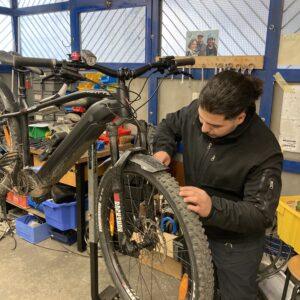
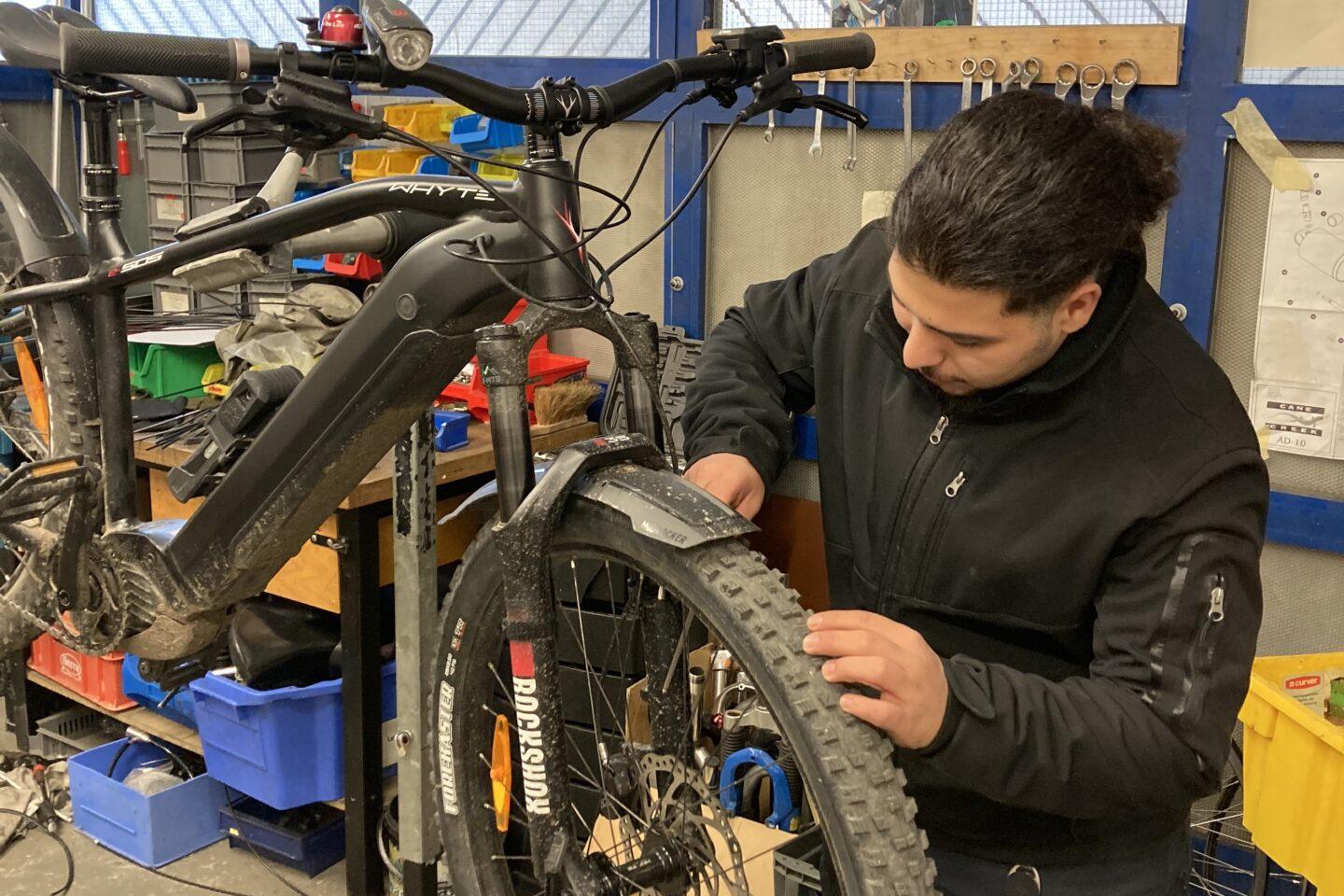
Social work support is complemented by practical activities, such as workshop projects, working in the kitchen, or gardening. These opportunities foster community, structure, and initial successes. Placement in training and employment comes at the end of a shared development process, not at the beginning.
Another key component is co-determination. In regular plenary sessions, staff and young people jointly decide on issues relevant to the day-to-day work of the project. This grassroots democratic approach strengthens responsibility, self-efficacy, and motivation.
What obstacles do participants most frequently encounter – and how do you succeed in building trust and providing them with a sense of purpose?
Many young people come to us feeling lost, experiencing academic difficulties, facing unstable life situations, or lacking self-confidence. Trust isn't built through programs, but rather through reliable relationships, consistent points of contact, and shared experiences.
Joint activities like cooking, craft projects, or leisure activities create spaces where young people can explore their abilities without immediate pressure to perform. When they experience that their contributions matter and their opinions are heard, their confidence in their own abilities grows step by step. From this, realistic and motivating perspectives develop.
What role does the combination of practical training and socio-educational support play in sustainable integration into the workforce?
This combination is at the heart of our work. Sustainable integration only succeeds when the development of professional skills goes hand in hand with personal stability. Young people should develop their own goals and identify with their chosen path.
Our aim is not short-term placement, but rather long-term social participation. Work is understood as part of a broader life context in which responsibility, recognition, and self-determination play a central role.
Can you give an example from your experience that illustrates this development?
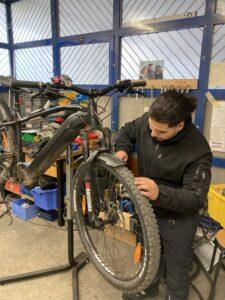
Young people often start with simple tasks, such as in the kitchen or gardening. Through structured daily routines, small areas of responsibility, and participation in youth meetings, their self-confidence grows. Step by step, they are then introduced to vocational training, for example, in a trade.
In many cases, this process leads to an apprenticeship and long-term employment. Crucially, however, it is the self-assurance gained and the ability to actively shape their own lives that is paramount.
The workshop is supported by Merck, among others. What significance does this partnership have for your work?
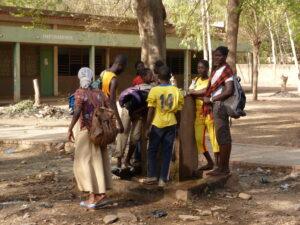
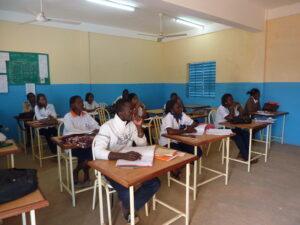
Merck's support goes beyond purely financial assistance and represents a shared commitment to education and inclusion. In addition to local work, the cooperation primarily focuses on projects in Burkina Faso. A vocational training center has been established there, which is now attended by more than 1,600 students and trainees.
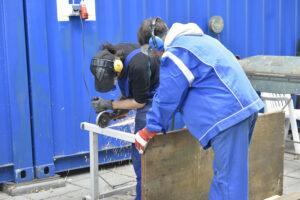
Another center is currently being built in a rapidly growing district of Bobo Dioulasso, combining vocational training with entrepreneurial approaches, for example in the fields of photovoltaics, electrical engineering, metalworking, and food processing. The goal is to offer young people concrete prospects and strengthen the local economy.
The partnership demonstrates that it's not just about funding, but about a shared responsibility for educational equity in Darmstadt and internationally.
Liveable Darmstadt
powered by MerckClubs and associations are the heart of a community. They foster social integration and bring people together. They enrich local life through cultural and sporting activities, offer educational opportunities, and are involved in social projects. In short: they make a city like Darmstadt a great place to live.
But this costs money. Membership fees aren't always enough. In this series, we present selected Darmstadt clubs and associations that are supported by Merck – be it in sports, culture, community service, or science education.
Each of these clubs has a unique story and contributes to strengthening the community in its own way. We asked the organizers what makes their club special and how the partnership with Merck not only provides financial support but also fosters growth and development.
Learn more about the diverse club and association scene in Darmstadt and how Merck and its partners are achieving more together – for a region worth living in.