

The research project focuses on collections from colonial contexts, particularly from East Africa and Tanzania
German museums still house tens of thousands of objects that came to Europe during the German colonial period. Often, the circumstances of their acquisition are unclear , and many collections remained unexplored in storage for decades. The Hessian State Museum Darmstadt (HLMD) has been intensively researching this chapter of its collection for several years and is now, as part of a research project, specifically cataloging its ethnological holdings from East Africa, particularly from Tanzania .
The origins of the Hessian State Museum in Darmstadt date back to the 17th century Germany's oldest universal museums developed , opening to the public at an early stage. To this day, the museum continues to impress with its exceptionally broad range of exhibitions.
Ethnological collection largely unexplored for a long time
In addition to art and natural history objects, the HLMD's collection also includes an extensive ethnological collection from around the world , assembled by researchers, colonial officials, and merchants. It reflects the historical perspective of German travelers on other cultures.
“The ethnological collections have rarely been included in exhibitions in recent decades. This was mainly due to the fact that our institution's scientific focus lies on art and natural history. It is therefore all the more gratifying that since 2022, with the help of state funding, we have been able to employ an ethnologist to conduct scholarly research on these holdings,” explains Dr. Martin Faass , Director of the HLMD.
Over 4000 objects systematically recorded
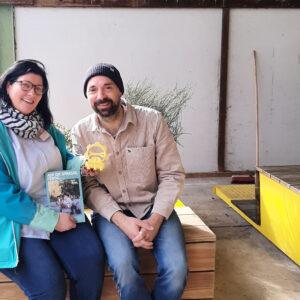
Ethnologist Dr. Sylvia Kasprycki undertook the comprehensive review of the objects and the associated archival materials. Over 4,000 ethnological objects – from American and Asian pieces of the late 18th century to extensive collections from the former German colonial territories – were unpacked, identified, and documented.
“The initial inventory of the long-inaccessible collection was a particular challenge. Often, genuine detective work was required. However, the effort was worthwhile – the rediscovery of these ethnographic treasures is of great scientific value,” said Kasprycki. Now, the next phase of targeted research begins in collaboration with the communities of origin .
Provenance research as an ongoing task
Beyond mere cataloging, the project pursues a clear societal goal. Hesse's Minister of Science and Culture, Timon Gremmels, emphasizes the importance of provenance research:
"It's about correctly understanding and transparently presenting the history of our cultural institutions. This also includes making historical injustices visible and keeping them in the public consciousness. Provenance research is therefore an ongoing task – both with regard to confiscations resulting from Nazi persecution and colonial contexts."
Visiting scholar from Tanzania involved
Dr. Jan Küver, a visiting scholar living in Tanzania, has been specifically examining the HLMD's holdings from East Africa. His work is funded by the Coordination Office for the Processing of Collection Items from Colonial Contexts at Hessian State Institutions.
“The collection in Darmstadt is little known in Germany. My delight at the discoveries was all the greater – one of the largest collections even comes from Iringa, the place where I live in Tanzania,” said Küver.
Close collaboration with international scientists and communities of origin should not only contribute to clarifying the acquisition contexts , but also make museums places of dialogue, encounter and exchange .
(DARMSTADT – RED/PM/HLMD)
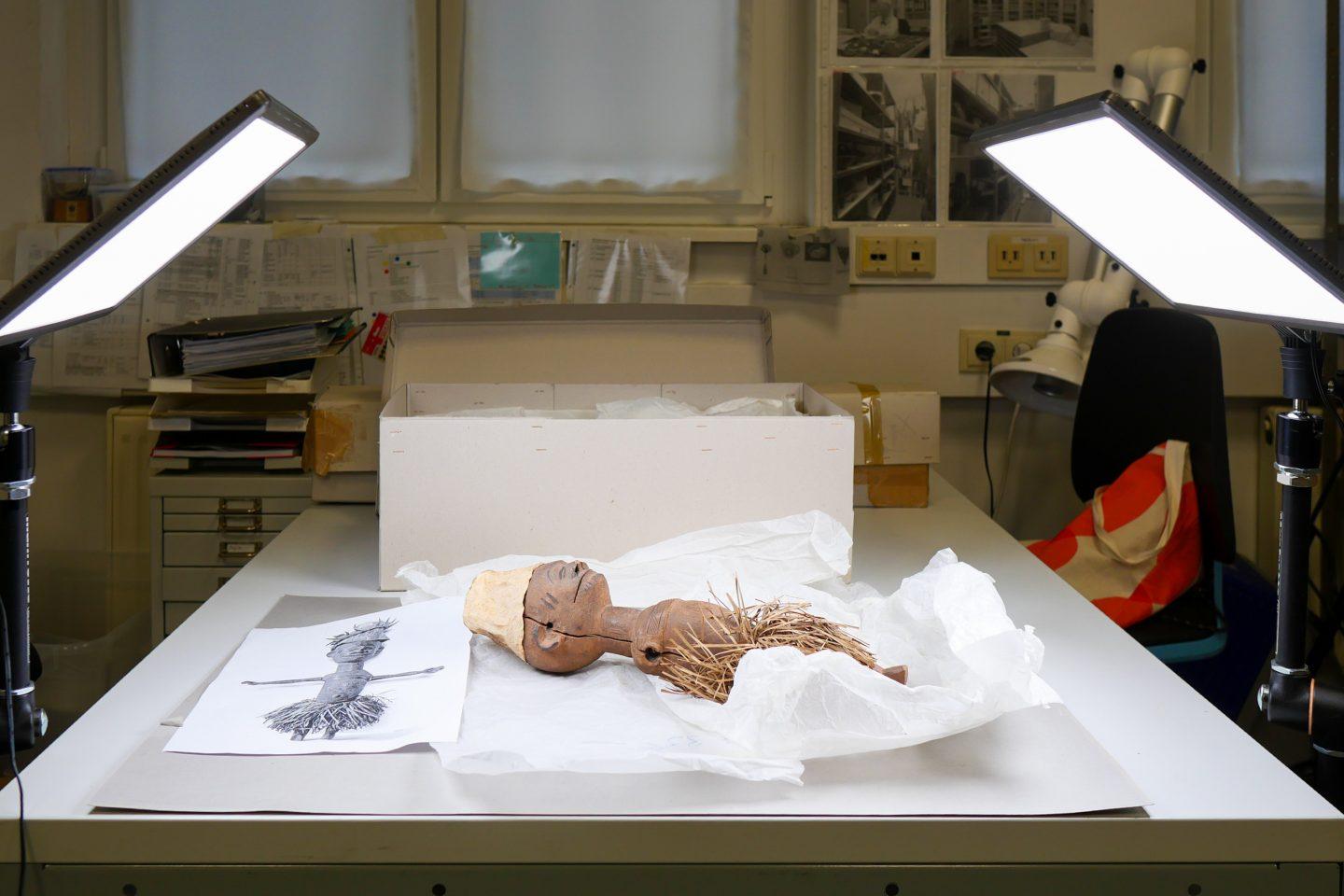
Featured image: Figurative representation of Chief Mkwawa, Tanzania, photo A. Ebert, HLMD