

ADVERTISING
Conservation project launched in southern Hesse to preserve endangered species
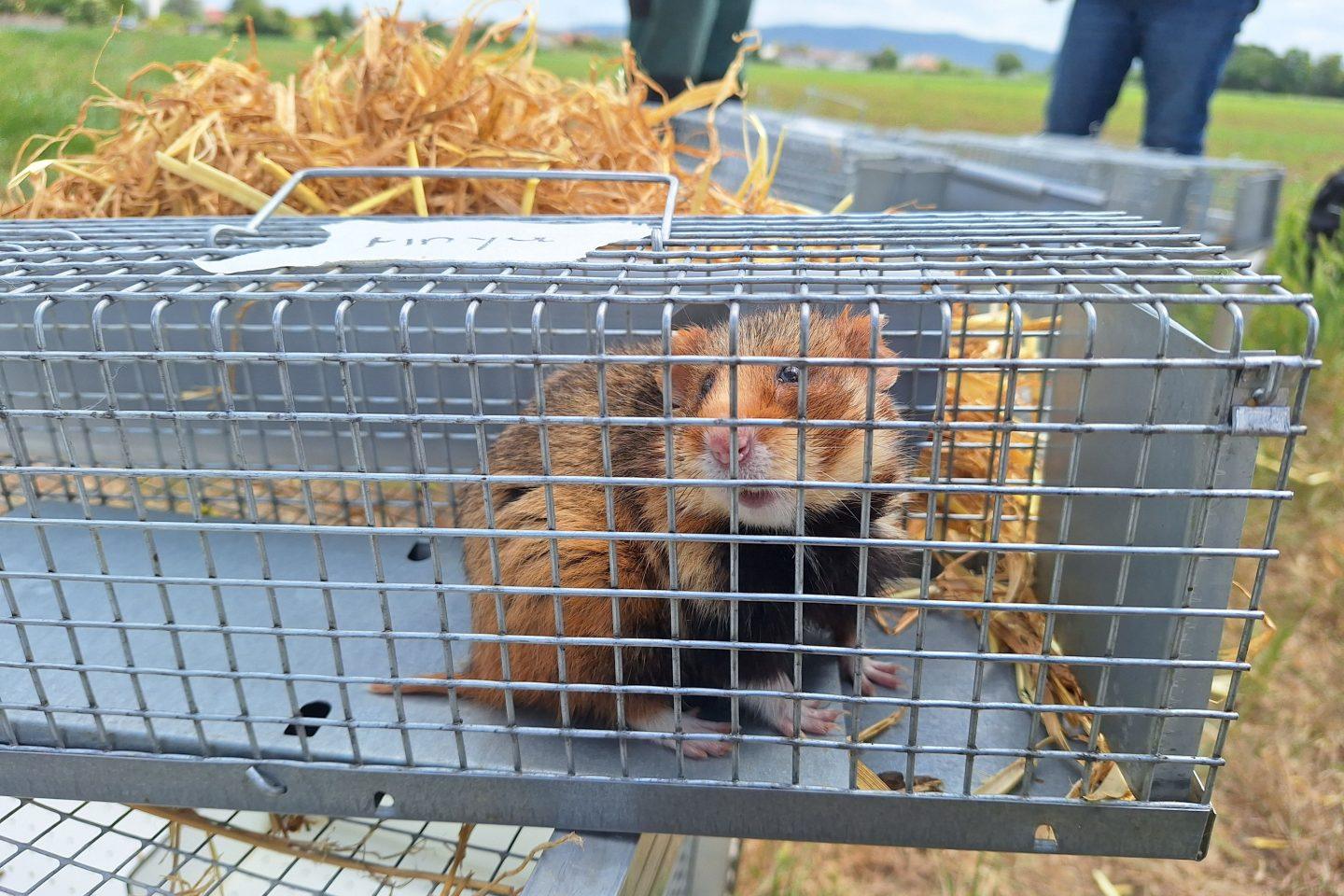
As part of a statewide species conservation project, the Darmstadt Regional Council (RP) 30 European hamsters near Pfungstadt . The aim of the measure is to establish a self-sustaining population of this species, which is threatened with extinction in Hesse and worldwide, in the "Eschollbrücken" area.
The project was carried out in close cooperation with the Darmstadt-Dieburg Landscape Conservation Association , the Hessian State Breeding Station , the Darmstadt-Dieburg District Landscape Conservation Department , and the Hessian Society for Ornithology and Nature Conservation (HGON) . The selected agricultural area near Pfungstadt is one of the few remaining European hamster populations in southern Hesse.
“Hamster Hotel” ensures a start to freedom
The animals were placed in prepared burrows within an area protected by an electric fence , the so-called " hamster hotel ." This proven method is intended to ensure successful acclimatization and early reproduction within the same year. The 30 hamsters come from the breeding station of the state of Hesse , which will continue to provide animals for the project for the next five years.
Monitoring ensures scientific support
Extensive monitoring measures are planned to control the project's success:
- Mapping of hamster burrows
- Camera traps
- Thermal imaging drones
- Telemetry
- Capture-recapture investigations
The collected data should show whether a permanent population can develop.
Background: European hamsters in Hesse are highly endangered
The European hamster (Cricetus cricetus) is severely threatened in Germany and Europe. In Hesse, the number of known populations has plummeted from 58 to just ten. This decline is primarily due to intensive agriculture, habitat loss, and a lack of suitable refuge areas.
Further information about the project can be found on the official website of the Regional Council:
👉 RP Darmstadt – Nature Conservation
(RIEDSTADT – RED/RP)