
A contribution by Pauline Dörrich for the project “What’s going on there?!” by students at h_da
Short on cash again? Why not boost your finances with a flea market sale? But does it actually work? A report from the flea market in Dieburg's castle gardens.
Dieburg, Friday afternoon, shortly after 3:00 p.m. The castle gardens on the edge of the old town are bustling with activity on this hot summer day. In less than 24 hours, this usually quiet spot will transform into the city's largest flea market, a true paradise for bargain hunters. Cars drive slowly along the gravel path. Around the large lawn in the park, tables, benches, and pavilions are being unloaded from cars and set up for the next day. A few passersby stroll past, seemingly indifferent to the scene. Others have settled comfortably in the shade on park benches and watch the activity with interest.
5:00 PM. The first vendors have left after setting up. The flea market is now ready for sales.
Flea market from a circular economy perspective
Jonas Barth, an expert in circular economy at the Institute for Production Management, Technology and Machine Tools in Darmstadt, views the concept of flea markets positively: "From a circular economy perspective, flea markets are the prime example of how to sell used goods and thereby create additional value. Reselling products not only conserves resources but is also good for the carbon footprint. Furthermore, it is more economically efficient to pass on products than to recycle them, for example. No further processes are required to make the product functional again. Generally speaking, every product that doesn't need to be manufactured from scratch reduces the environmental impact and is better for the circular economy."
Flea market, meeting place and tradition
For almost thirty years, the Young Union Darmstadt-Dieburg has organized the flea market in the Dieburg castle gardens. It is known for its colorful and diverse selection of goods. Setting up a stall is possible from 3:00 p.m. on Friday until 5:45 a.m. on Saturday. Prior registration is not required. Stall fees vary depending on size, but generally cost four euros per square meter. A ten-euro waste deposit is also required. The market is open to potential shoppers from 6:00 a.m. to 1:00 p.m.
The bargain hunt can begin!
Saturday morning, 9:00 a.m. At one of the many stalls stands Vicky, a young woman in her mid-twenties, together with her friends Jack and Vanessa. For them, the flea market started much earlier. At 5:45 a.m., to be precise. "I hardly slept last night," Vicky reveals, sounding a little tired. "Maybe an hour." Nevertheless, the atmosphere at her stall is good. Relaxing music plays from a speaker. The first customers are already there, taking advantage of the cool morning hours to stroll through the market at their leisure, without the crowds.

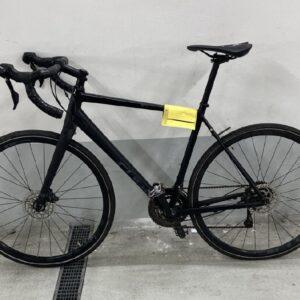
Vicky sells clothing, kitchenware, a wide selection of books and CDs, jewelry, cosmetics, and a very well-preserved Nikon SLR camera. Expert Jonas Barth approves of Vicky's product range: "Products that I think are well-suited for flea market sales include clothing, so anything in the textile category. Bicycles are also absolutely perfect. I recently sold a bicycle through classified ads, and it worked out great. You can find some fantastic bargains, which is a big advantage for everyone involved. I also see potential in home furnishings in general, such as furniture and tables. The key is: you have to walk through the flea market and think, 'Oh, look, this thing looks amazing, I'd love to have it.'"

Vicky approaches her customers in a friendly and open manner. She states the price of each product and engages in conversation with interested buyers. Payment can be made either in cash or via PayPal QR code. She learned how to interact with customers at a fast-fashion company, where she worked as a sales assistant and received discounts on her purchases. "You accumulate quite a bit," she says. For expert Jonas Barth, Vicky, as a flea market vendor, is a good example of a functioning circular economy. She has grasped a crucial point. Barth hopes that society will become more aware of the resources it uses and willing to make compromises in some areas. "By that, I don't mean that we should consume less overall or restrict ourselves more, but rather that we should consider where products come from and how they can be passed on. In other words: sell instead of throwing away."
In the midst of heated negotiations
Vicky is a passionate flea market vendor. She gladly accepts the early mornings for it. "It's not about making a lot of money for me. I want the items to continue being worn and used, and to find happy buyers. It would be nice if I at least covered the stall fees at the end of the day. However, I don't have a specific amount I want to earn today." She usually sells at flea markets together with her mother. Just not today.
For Vicky's friend Vanessa, it's her first time selling at a flea market, but selling itself is nothing new to her. She works in a duty-free shop at Frankfurt Airport. Her sales strategy: With every item sold, she offers a small free gift, such as hair ties, magnets, or keychains. Barth finds flea markets very promising for private sales: "From my perspective, the advantage of flea markets is that you have a platform. People simply drop by and browse. So you don't have to do any extra advertising to attract customers, and used items are often cheaper than new ones."
Vicky sells her clothes for one to two euros each. She knows the exact price of one of her bags by heart. It's a designer bag that she once bought herself for a lot of money. She'd like to get 30 euros for it. A young girl in a white dress with blonde hair is interested in the bag. She wants to buy it for 20 euros. That's clearly too little for Vicky. The two negotiate and finally reach an agreement. "I'm a little sad that I sold the bag for 23 euros. I had hoped for much more. But I'd also had it listed on Vinted for 50 euros for a while, and now I'm glad I sold it."

Negotiations also take place over the SLR camera. A young man asks, "How much do you want for it?" "220 euros," Vicky replies. "It's still in really good condition, with all the accessories, and only used very rarely." She smiles and declines a counteroffer of 120 euros. "Cheeky offers come up every now and then. It's important to stand your ground. That's something my mother instilled in me from the very beginning."
Lots going on - a chance for pickpockets
People are almost constantly queuing at Vicky's stall, which an older woman takes advantage of. Just as Vicky is deep in conversation with someone, the woman pockets one of her blouses without paying and leaves the stall without a word. Before Vicky notices, the woman is gone. But this is nothing new for Vicky: "My mother taught me to only display one shoe at a time to prevent potential theft. It's not about me not making any money on the item, it's about the principle." Barth also points out the downsides of this opaque economic model. "The money changes hands without an invoice, making it difficult to track. Furthermore, the sales are private individuals, meaning there's no warranty and the quality isn't checked."

It's 12:30 pm. The sun is now directly overhead. The heat is almost unbearable. Vicky's stall is now also in full sun. The flow of customers is gradually slowing down. The first stalls are being dismantled. About 15 minutes before closing time, Vicky starts neatly packing her wares into clear plastic boxes. Her movements are practiced and efficient. "It's over so quickly," Vicky remarks, taking a deep breath. "Next time I'll be at the flea market in Schaafheim, and the week after that in Bad König."
The cash count
1:00 PM. The flea market is over. What does the till say? Vicky has taken in about 35 euros, including the stall fees. "On good days, I've taken in as much as 300 euros, but then the flea market went on much longer. So it's always a surprise how much money I'll have made at the end of a flea market day."
This article was created as part of the "Was da los" project – a student-run newsroom run by students of the Online Journalism program at Darmstadt University of Applied Sciences (h_da). DA.news supports the project and publishes selected articles on its platform. Further information and articles can be found here and at: www.was-da-los.de