
The brochure explains participation, election rules and tasks of city politics
What will happen to the outdoor swimming pool? What will become of the youth center? Where should a new residential area be built? The city council of the district town of Groß-Gerau will decide on these and many other questions. It will be newly elected in the local elections on March 15, 2026 .
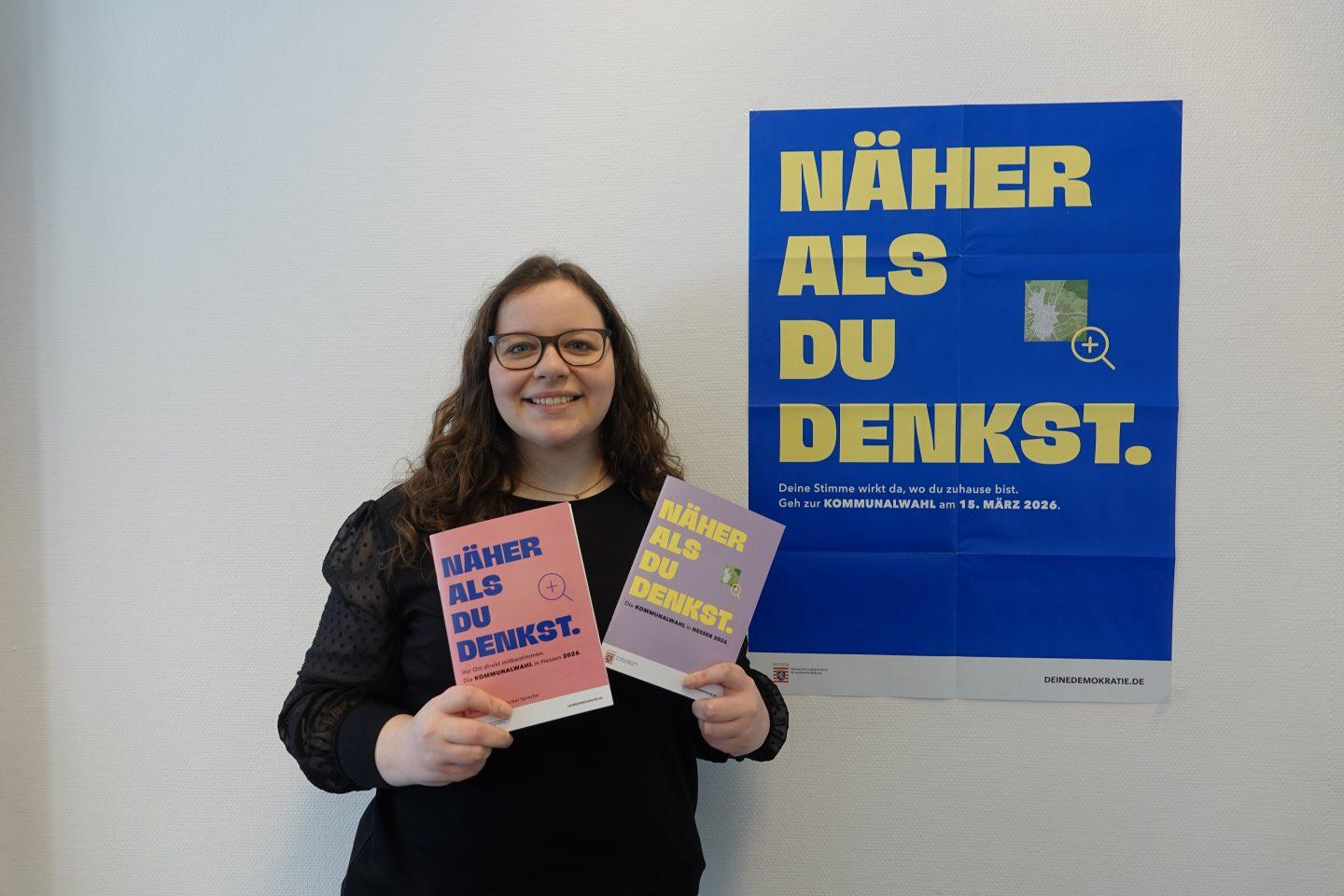
“Closer than you think. Have your say locally. The 2026 local elections in Hesse.” explains how local politics works, who is eligible to vote, and how the voting process actually works. It is aimed primarily at young people and was published by the Hessian State Center for Political Education.
The booklet is free of charge at the information desk of the Groß-Gerau town hall (Am Marktplatz 1) simplified version is also available. Furthermore, the brochure can read or downloaded digitally – both in the regular version and in simplified language – via the information portal Deine Demokratie (Your Democracy ).
Who is eligible to vote and how does the voting process work?
The brochure clearly explains the basic rules of democratic elections. All persons who are at least 18 years old on election day, have resided in the city for at least six weeks, and hold German citizenship or the citizenship of another European Union member state are eligible to vote. The significance of the voter notification is also explained.
For those who are not in Groß-Gerau on election day, postal voting . Information on how to apply for postal voting and the applicable deadlines is also included in the brochure.
Cumulative voting, preferential voting and list voting explained in an easy-to-understand way
The instructions also describe in detail how to fill out the ballot. Voters can distribute their votes among different parties and voter groups (panachage), give multiple votes to individual candidates (cumulative voting), or select a party or voter group by marking a party list. If only a party list is marked, all votes go to the candidates on that list.
Municipal tasks and further opportunities for participation
Furthermore, the booklet provides information on the tasks undertaken by municipalities and the responsibilities of local councils. The city council makes political decisions and determines how the county seat spends its money.
In addition, other forms of democratic participation are presented, such as advisory councils for children, young people, and senior citizens, the foreigners' advisory council, and the integration commission. Instruments such as citizens' initiatives and referendums are also explained.
(GROSS-GERAU – RED/PSGG)