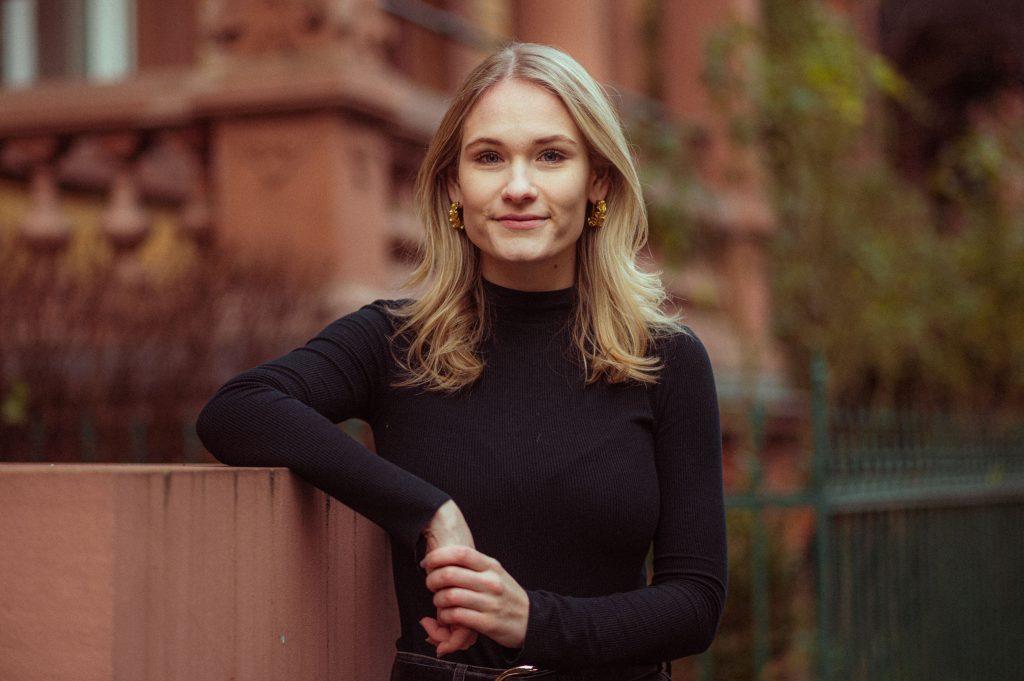
Five questions for Viola Gebek
How do you intend to strengthen the educational landscape at the federal level, and how can schools and educational institutions in your constituency specifically benefit from this?
Education and research are the keys to personal advancement and a self-determined life – regardless of background or circumstances. The most socially responsible policy is one that empowers people to earn their own living. A reform of the federal education system with uniform national standards is urgently needed. This will create the foundation for directly and efficiently supporting schools. With a freely allocated "opportunity budget," schools can decide locally where the money is best spent.
What measures do you support at the federal level to better manage migration, and how do you intend to ensure that these are implemented in a socially responsible manner in your constituency?
Immigration for skilled workers must be urgently facilitated, because we need these talents. At the same time, many municipalities are overwhelmed by the high influx of people into the asylum system, making integration difficult. We need swift procedures and clear decisions in migration policy. Asylum seekers should find safety here, but they must also be able to start working more quickly in order to integrate and secure their own livelihoods. Work-integrated language and integration courses are essential for this. Anyone who wants to immigrate to our social security system without the right to remain, or who poses a threat to our security, should face greater difficulties.
Small and medium-sized enterprises (SMEs) are considered the backbone of the German economy. What federal policy measures do you plan to implement to strengthen SMEs, and how can you provide targeted support to companies in your region?
The German economy is suffering from high energy costs, a shortage of skilled workers, and excessive bureaucracy; small and medium-sized enterprises (SMEs) are particularly feeling the strain. Jobs and our prosperity are increasingly at risk. Now we need the courage to reform existing structures and give companies the freedom to grow independently. Darmstadt, with its diverse range of companies and universities, offers enormous potential for growth, innovation, and startups. To foster this, better conditions for collaboration between academia and industry must be established.
How do you intend to promote a sustainable energy transition nationwide, and how can local initiatives and projects in your constituency be given greater support?
Climate protection remains one of the greatest challenges of the century. However, a truly sustainable energy transition cannot be achieved through further regulations or bans, but only through technological openness, innovation, and a market-based framework. The science city of Darmstadt is already a strong research location. If the right framework is established now, the ideal conditions for the innovations and technologies of tomorrow will emerge!
What federal policy priorities do you set to advance the expansion of infrastructure in your constituency, and how can you ensure that the interests of your region are heard in Berlin?
The South Hesse region has enormous potential – thanks in part to its proximity to the Rhine-Main economic area and its airport as an international hub. However, this requires a high-performance infrastructure with optimal connections. Modern infrastructure is the key to growth and prosperity: bridges, roads, railways, and airports create real added value. Our goal is to halve planning times for infrastructure projects, including those in the digital sector. Direct contact with local residents, businesses, and organizations is important to me, so that local interests are heard in Berlin.
Summary of the election program for the 2025 election
A central concern of mine is equal opportunity: opportunities for advancement should no longer depend on one's family background, but solely on individual performance and motivation. The accusation that young people are less willing to work hard is a misconception – they too want to build something for themselves, but often encounter obstacles. I am committed to making it easier to acquire property and to provide for one's own retirement. At the same time, I am aware that fears of poverty in old age are also real. Instead of pitting generations against each other when it comes to pensions, it is essential to fundamentally rethink the pension system and also take a look at our neighboring countries. Countries like Sweden, with their equity-based pensions, demonstrate how stability and intergenerational fairness can be achieved.
Germany's economic strength urgently needs to be reignited. Our country still possesses enormous potential, but bureaucracy, a complex tax system, and high energy prices are hindering our competitiveness. Bold reforms are now needed to create growth and a better framework. The goal must be to bring Germany back to the forefront, and this can only be achieved with a strong economy – here in southern Hesse and beyond.