The municipal utility company of Groß-Gerau relies on closed construction methods
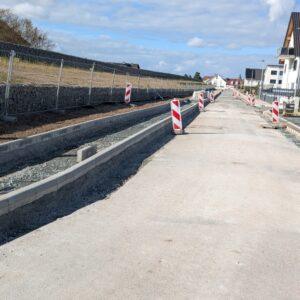
In Wallerstädten, the Groß-Gerau municipal utilities are currently renovating the sewer line on Am Schlag street – from the church to the edge of town in the direction of Geinsheim. The work is being carried out using trenchless technology, so the road surface does not need to be opened up.
“Closed-end rehabilitation saves us costs, and it’s significantly faster,” explains Jasmin Werner, team leader for urban drainage. This method is particularly preferred in main traffic areas.
Pipe lining instead of torn-up road
In a process called cured-in-place pipe (CIPP) lining, existing sewer pipes are lined with a resin-impregnated, fiberglass-reinforced plastic liner. First, the sewer is flushed, then the liner, weighing several tons, is pulled through the pipe. In a 125-meter section, it weighs 3.1 tons.
After being pulled into place, the hose is inflated with compressed air. In this area, DN700 pipes with an inner diameter of 70 centimeters are used. A 2000-watt UV light source ensures that the material hardens. Finally, the house connections are reopened using a milling robot.
Investment of approximately 500,000 euros
In total, around 800 meters of sewer line are being repaired in Wallerstädten. The cured-in-place pipe (CIPP) lining method is being used on approximately 400 meters, while another 400 meters are being repaired. The costs amount to around 500,000 euros. 590 meters of sewer line in the same district were already renewed in the fall of 2024.
The work is on schedule. The finishing touches should also be completed by the end of March. Temporary disruptions for residents – such as reduced water consumption during certain work phases – each lasted no longer than one day.
152 kilometers of canal network in Groß-Gerau
The sewer network of the city of Groß-Gerau is approximately 152 kilometers long – 109 kilometers in the city center and 43 kilometers in the outlying districts. In addition, there are about 5,000 manholes and around 30 structures such as pumping stations and stormwater retention basins.
Because the gradient in the Ried area averages only 0.3 percent, the operation of the system presents particular challenges. To ensure watertightness, stability, and operational safety, the network is regularly inspected using cameras. On average, approximately eleven kilometers are checked annually.
Based on these studies, the municipal utility company creates a priority list for necessary renovations. They invest approximately two million euros annually in the maintenance and renewal of the network.
(GROSS-GERAU – RED/PSGG)
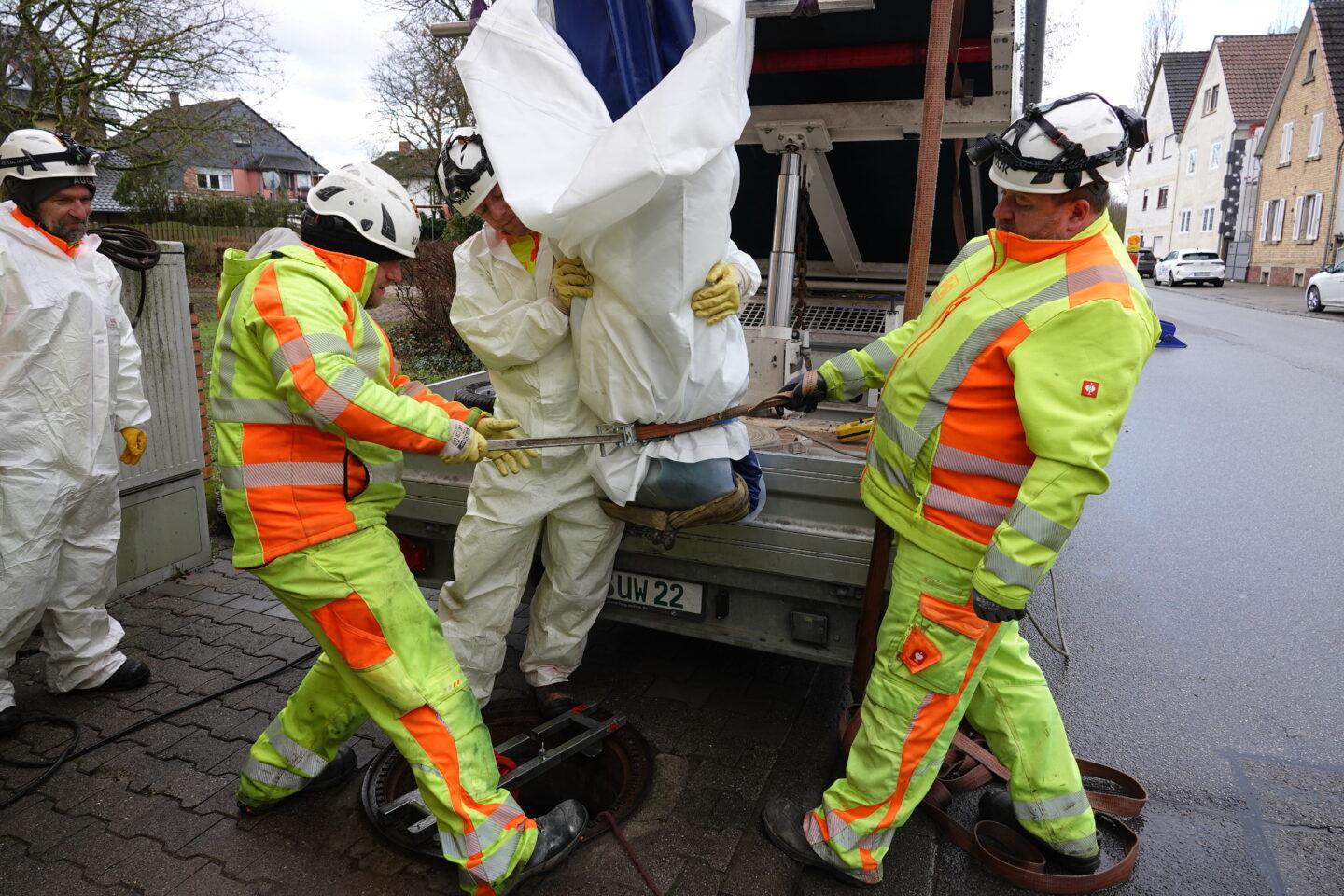
Featured image: In Groß-Gerau/Wallerstädten, the special liner is lowered into the sewer via the manhole. It is then inflated in subsequent steps and cured with UV light, creating a new liner within the existing sewer pipe. Photo: Groß-Gerau/Jörg Monzheimer