On August 12th, the sun will be almost 90 percent obscured over Darmstadt – Arthur Schönbein photographs the total eclipse in northern Spain for DA.news
A rare celestial spectacle is about to unfold: On Wednesday, August 12, 2026, a solar eclipse will be visible across much of Europe. While the moon will obscure almost 90 percent of the sun in the Rhine-Main region, the path of totality will pass through northern Spain, among other areas. DA.news will report live from within the umbra: Photographer Arthur Schönbein is traveling to northern Spain and will document the total solar eclipse exclusively for DA.news.
The exact location for the recordings will be decided at short notice. The decisive factor is the weather on Wednesday. Depending on cloud cover, Schönbein will choose the observation point during the day that promises the clearest possible view of the low-lying sun. His camera equipment has been specially fitted with filters for solar observation.
Deep partial solar eclipse over Darmstadt
Even those staying in Darmstadt and the Rhine-Main region will be treated to an extraordinary natural spectacle. The eclipse begins around 7:20 p.m., when the moon slowly moves in front of the sun.

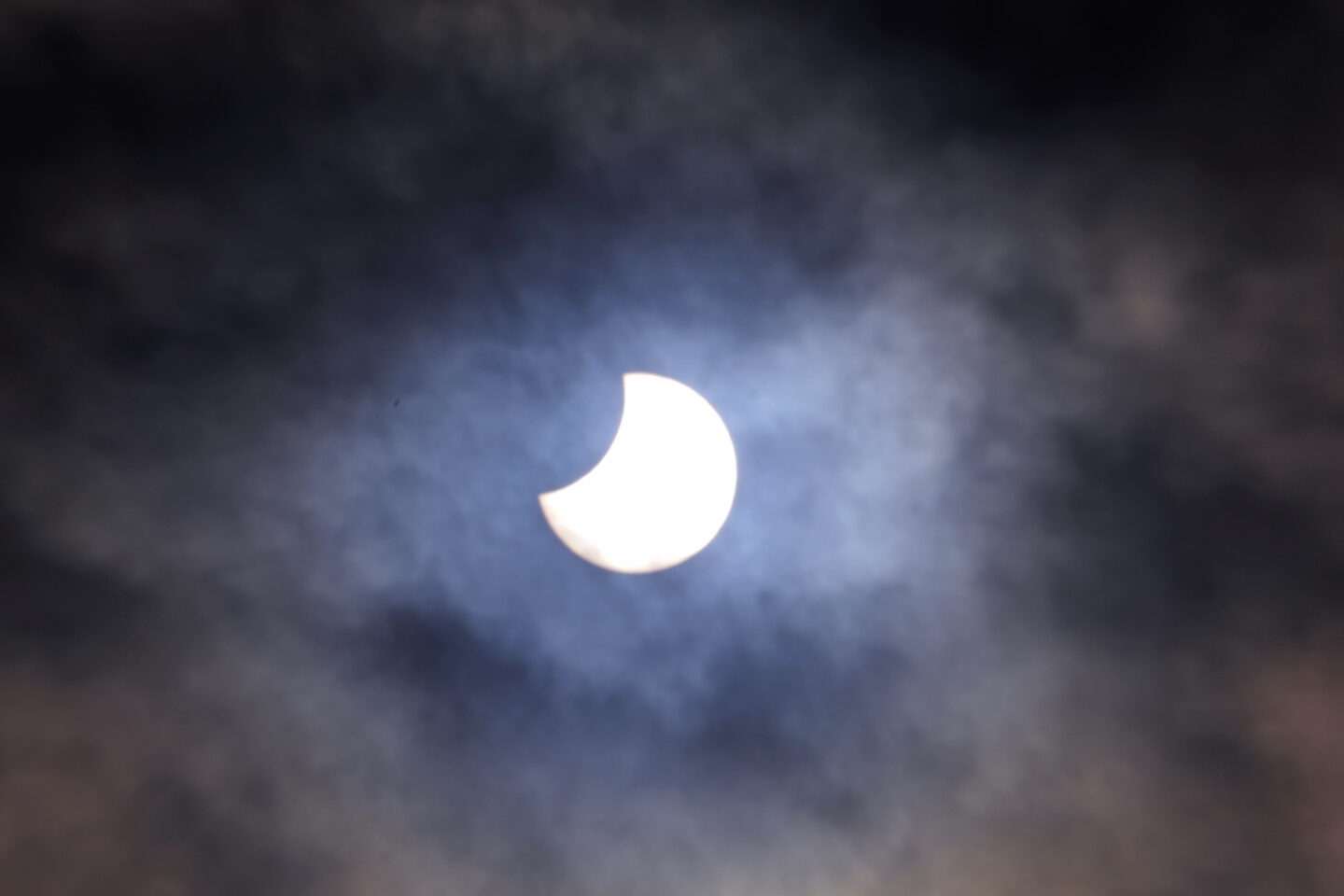
around 8:14 p.m. In the Rhine-Main region, almost 89 percent of the sun's disk be obscured by the moon. Only a thin crescent of the sun will remain visible.
The timing of the event is particularly appealing: the eclipse takes place in the late evening. At its maximum, the sun will already be very low in the sky and will set shortly afterward, still during the eclipse. Under suitable weather conditions, this could create an extraordinary sight on the western horizon.
Unobstructed view to the west is crucial
Anyone wishing to observe the solar eclipse in Darmstadt should find a suitable location in good time. Above all, an unobstructed view to the west to northwest.
Since the sun will be only slightly above the horizon at the time of maximum eclipse, trees, houses, or other obstacles can already obstruct the view. Elevated locations or open areas with an unobstructed western horizon therefore offer the best conditions.
Never observe a solar eclipse without protection
Proper eye protection is especially important. Looking directly at the sun without suitable protection can cause permanent eye damage. Only eclipse glasses specifically designed for this purpose should be used for direct observation. They should comply with the ISO 12312-2 and the filter film should be checked for damage before use.
Normal sunglasses are just as unsuitable as improvised aids made from CDs, emergency blankets, blackened glass or film strips.
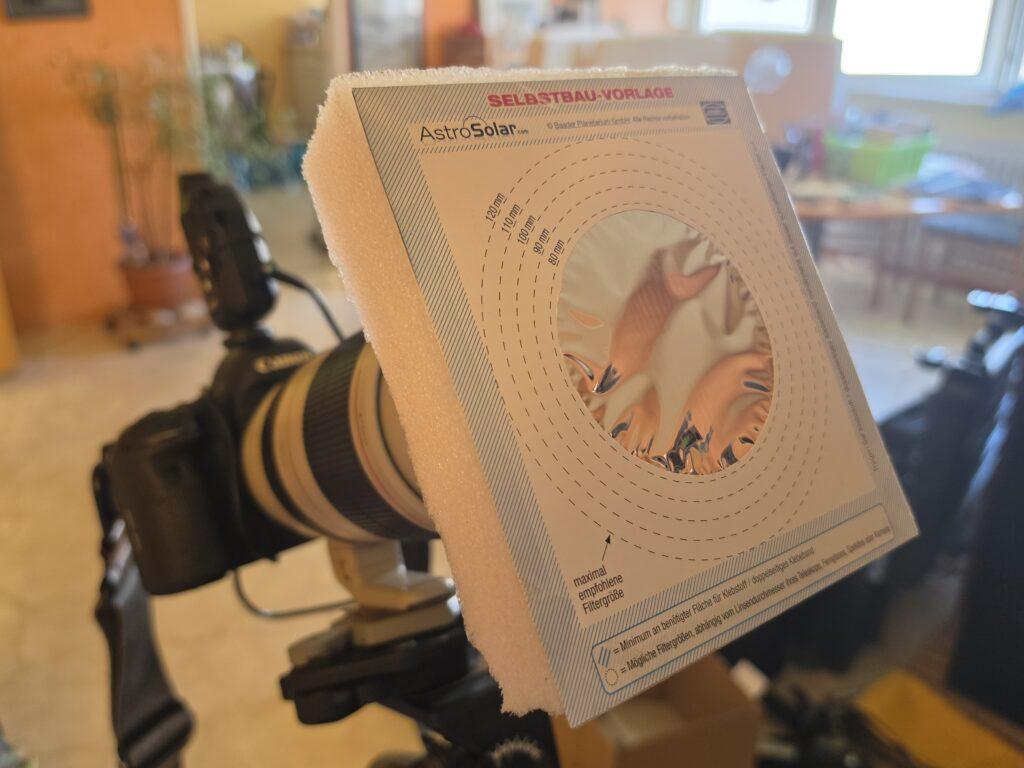
Even greater caution is required when using binoculars, telescopes, and cameras. Their optics concentrate sunlight, so suitable solar filters must to the lens . Cameras also require an appropriate filter for taking appropriate photographs.
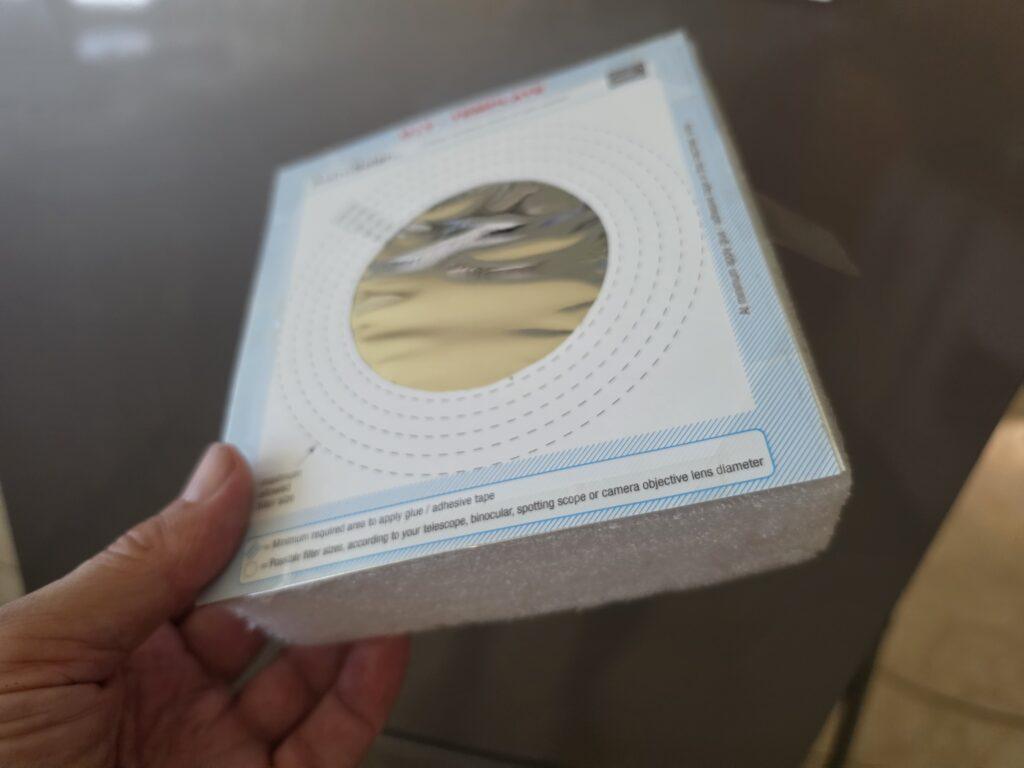
DA.news travels to the total solar eclipse
While only a partial eclipse can be experienced in southern Hesse, it will be completely dark for a short time within a narrow strip in northern Spain: There, the moon's umbra passes over the earth and the sun is completely obscured.
That's exactly where DA.news photographer Arthur Schönbein is headed. However, due to the weather-dependent nature of a solar eclipse, the exact location for his photography hasn't been determined yet. The current weather and cloud forecasts will ultimately decide where he'll be photographing from on Wednesday.
DA.news will subsequently report on the total solar eclipse with a photo gallery directly from the umbra.
(DARMSTADT/BURGOS – RED/as)
(Featured image: Partial solar eclipse over Darmstadt 2022. Archive photo: Arthur Schönbein)