

Five public lectures in the second half of 2026 will address the big questions of the universe and artificial intelligence
GSI/FAIR will continue its public lecture series "Science for All" The events will be held in a hybrid format and are aimed at anyone interested in current research and science. Visitors can attend the lectures either in person at the GSI/FAIR lecture hall in Darmstadt after prior registration or participate online via video conference.
The series kicks off on Wednesday, August 19, at 2 p.m. by theoretical physicist Professor Dr. Hannah Elfner from GSI/FAIR and Goethe University Frankfurt. In her talk, "Why doesn't nothing simply exist?", she explores how matter originated after the Big Bang and what insights modern heavy-ion physics provides about the earliest moments of the universe.
Later this year, further topics from cutting-edge research are on the agenda. Dr. Wolfgang Heenes from the Hessian AI Center hessian.aijust how powerful artificial intelligence actually is today. Dr. Sonja Bernitt will provide insights into high-precision X-ray spectroscopy and its significance for atomic physics, astrophysics, and metrology. Dr. Tim Wagner will demonstrate how cosmic radiation can be replicated in the laboratory using particle accelerators, while Dr. Daniel Severin, together with colleagues, will give a review of the scientific experiments at the GSI/FAIR accelerator facility in 2026.

The lecture series aims to explain complex scientific concepts in an understandable way and make research accessible to a broad audience. Speakers include scientists from GSI/FAIR as well as renowned universities and research institutions.
Program overview
- August 19, 2 p.m.: Why doesn't nothing simply exist? – Prof. Dr. Hannah Elfner
- September 16, 2 p.m.: How smart is AI really? – Dr. Wolfgang Heenes
- October 21, 2 p.m.: High-precision X-ray spectroscopy – Dr. Sonja Bernitt
- November 18, 2 p.m.: From space to the laboratory – Dr. Tim Wagner
- December 9th, 2 pm: Who was beaming? – Dr. Daniel Severin and team
Information on participation and the possibility to register are available on the GSI/FAIR website.
(DARMSTADT – RED/GSI)
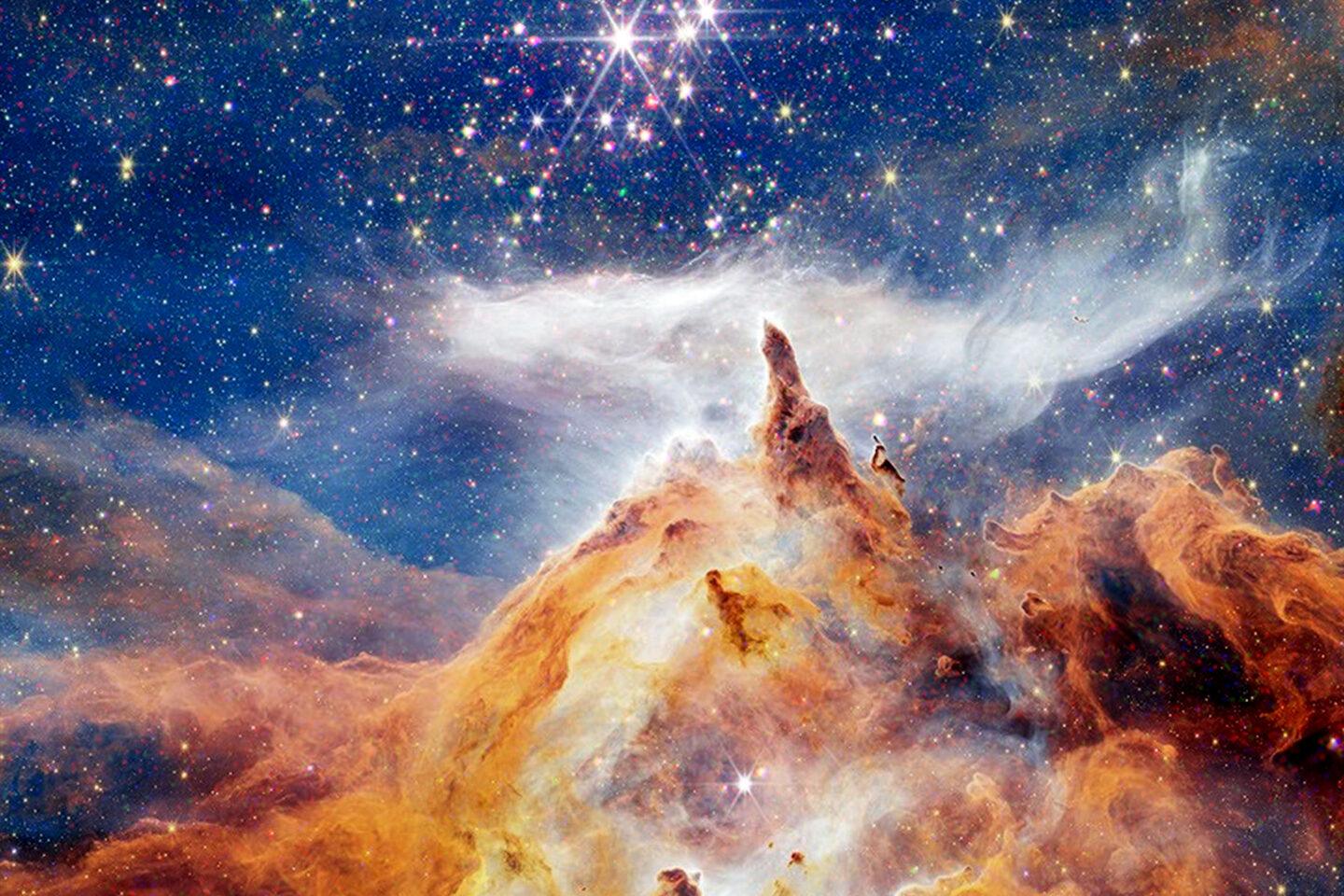
Featured image: The nebula NGC 6357 contains the young star cluster Pismis 24. As home to a vibrant stellar nursery and one of the closest sites of massive star formation, Pismis 24 offers rare insights into large and massive stars. Photo: GSI