


Children and young people clean Stolpersteine – Commemoration on November 9th connects remembrance of Nazi crimes with responsibility for the present
With a Stolperstein cleaning ceremony and a joint memorial service, the municipality of Nauheim commemorated the victims of Nazi persecution on November 9, 2026. The occasion was the 88th anniversary of Kristallnacht, the Night of Broken Glass, on November 9, 1938. The participation of young people was particularly important: for the fifth time, the Children's and Youth Parliament (KiJuPa) took part in cleaning the Stolpersteine. At the subsequent memorial service in front of the Old Town Hall, it became clear that confronting the crimes of National Socialism remains a task for all generations.
Children clean 18 stumbling stones in Nauheim
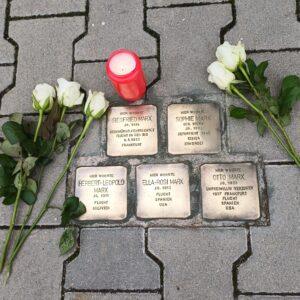
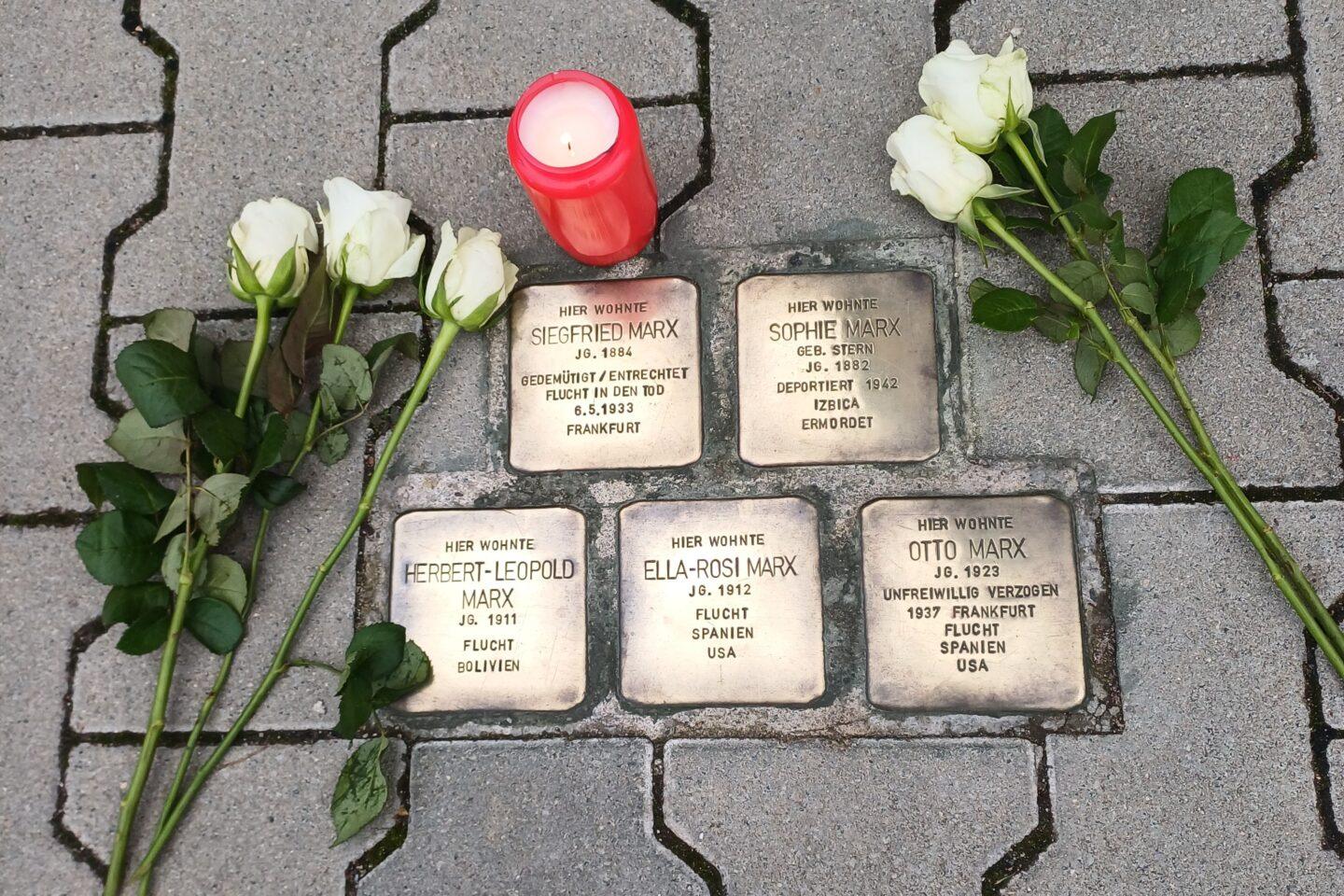
In Nauheim, a total of 18 Stolpersteine (stumbling stones) commemorate people who were persecuted during the Nazi regime. These small brass plaques, embedded in the ground, bear the names and dates of birth and death of the victims, thus keeping alive the memory of their personal fates.
For the fifth time, the children's and youth parliament organized a cleaning campaign at the Stolpersteine (stumbling stones).

Together with youth worker Brindusa Salzgeber and Lothar Walbrecht, board member of the Nauheim local history and museum association, the children set off.
Starting in Waldstrasse, the brass surfaces were carefully cleaned until the names were clearly visible again and the stones shone.
The children laid down white roses in remembrance.
Personal fates make history comprehensible
The cleaning operation was also an opportunity to engage with the people whom the stumbling stones commemorate.
Lothar Walbrecht explained to the children the personal life stories behind the names and made it clear that the Nazi persecution also affected people from Nauheim.
These stories showed how Jewish citizens were disenfranchised, persecuted, and murdered.
It was precisely the connection between the historical events and the concrete life stories on site that made engaging with the past particularly impactful for the young participants.
Memorial service in front of the Old Town Hall
In the late afternoon, the municipality of Nauheim and the local history and museum association invited people to a joint memorial event.
Hans Joachim Brugger, assessor of the local history and museum association, recalled in his speech the historical background of the November pogroms of 1938.
He explained how the National Socialists used the murder of a German diplomat for propaganda purposes to justify organized violence against the Jewish population.
The Nazi regime portrayed the attacks at the time as a supposedly spontaneous reaction of the population. In reality, they were targeted and organized violence against Jewish people and institutions.
Mayor: Anti-Semitism has no place
In his speech, Nauheim's mayor Marc Friedrich emphasized the connection between historical remembrance and present-day responsibility.
"November 9, 1938, represents a night in which Jewish citizens in Germany were persecuted, humiliated, and deprived of their rights. Synagogues burned, shops were destroyed, people were mistreated, deported, and killed."
However, remembrance should not be limited to the past alone.
“When we remember this today, we do not only look back. We also do so with a view to our present and, above all, with a view to our responsibility for the future,” Friedrich emphasized.
The mayor concluded his speech with a clear message:
"Nauheim should be and remain a place where hatred and anti-Semitism have no place."
Young generation takes responsibility
The children's and youth parliament also participated in organizing the memorial service.
Emil Winkelmann spoke on behalf of the KiJuPa and read a speech by the chairwoman Désirée Wippel.
It particularly emphasized the responsibility of the younger generation in dealing with history.
"We are not responsible for the crimes of the past, but we are responsible for the conclusions we draw from them."
Behind each of the fates commemorated by the stumbling stones was a person with family, friends, hopes and a daily life that was often not so dissimilar to their own.
It is precisely this personal perspective on the victims that makes it clear why remembrance remains important for young people.
Prayers and flute playing to conclude the service
The churches also participated in the memorial event.
Pastor Stefanie Bischof of the Protestant church and Elisabeth Gulla, chairwoman of the Catholic parish council, led the celebration with prayers and intercessions.
The joint commemoration in front of the Old Town Hall ended with a flute performance.
The two events clearly demonstrated how historical remembrance and the engagement of young people can be linked. While the Stolpersteine (stumbling stones) commemorate the individual victims of Nazi persecution, the speeches simultaneously focused on the responsibility to confront antisemitism and misanthropy in the present day.
(NAUHEIM – RED/PSN)