
Darmstadt's mayor on housing, infrastructure and the future of the Ludwigshöhe district
The Ludwigshöhe district is one of Darmstadt's largest urban development projects. Around 3,100 people are expected to find a new home on the former barracks site. But a new neighborhood consists of more than just apartments: schools, daycare centers, public transport, social infrastructure, and, not least, its own distinct identity must be created. Mayor Hanno Benz discusses the standards by which the project must be measured, the costs, his criticism of previous decisions, and why he finds an artificially created neighborhood unconvincing.
Mr. Benz, the Ludwigshöhe district is one of Darmstadt's largest urban development projects. In ten years, how will you measure its success?
First and foremost, it must be completed. And it must be a residential area that guarantees what constitutes quality living: good amenities, good public transport connections, a socially balanced neighborhood, and the necessary social infrastructure.
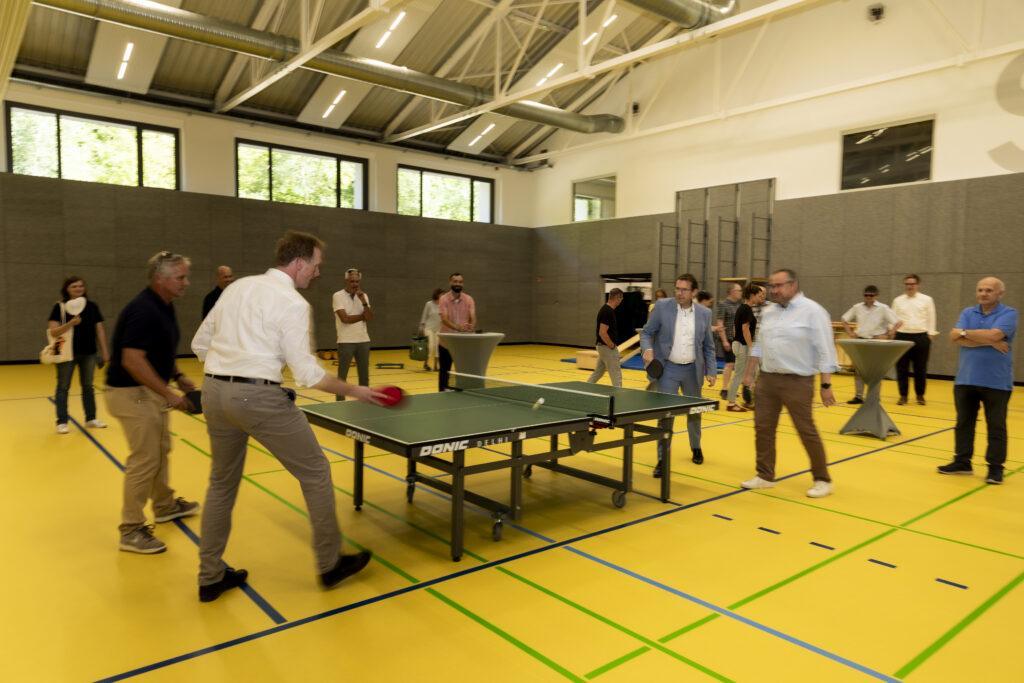
I believe we are on the right track. The Ludwigshöhe Hall has now been inaugurated, the landscaped steps are finished, and further projects are planned. We are also building a school here. Ultimately, what matters is that all these things not only exist but also function effectively.
At the same time, affordable housing and senior-friendly living are pressing issues given rising costs. How can the Ludwigshöhe district remain socially diverse?
In Darmstadt, we fundamentally face the problem of excessively high rents. Therefore, we must also provide affordable housing for people with middle incomes. This also applies to older people and senior-friendly housing. Against the backdrop of a growing city with high demand for housing, this is a crucial task.
In newly developed neighborhoods, it is important to achieve the broadest possible social mix. We want to prevent a homogenous resident structure from developing. This is particularly important in the Ludwigshöhe district, as it is ultimately intended to house around 3,100 people. That's not a small number.
However, the real estate and construction industry has suffered massively in recent years due to various crises. As a result, privately financed housing construction has practically collapsed. This has also led to a certain unevenness in development in the Ludwigshöhe district.

A new neighborhood brings not only housing but also additional demands on schools, daycare centers, and other infrastructure. How does the city ensure that this development keeps pace?
A newly emerging residential area needs the appropriate social infrastructure. This includes schools, daycare centers, community meeting places, and a family center. But it also needs people who can attend to the needs of the new residents. Therefore, it is right that there should be a neighborhood manager or coordinator.
We also face an important task regarding the school. Initially, there are temporary buildings; the permanent construction now needs to be initiated and completed as quickly as possible.
At the same time, we must examine the costs very closely. Especially with functional buildings, I believe that we need to consider more cost-effective and modular construction methods in the future.
That also sounds like a certain amount of self-criticism. Were there any decisions regarding the Ludwigshöhe district that you would make differently today?
The fundamental decisions were made before I took office. Therefore, the principle "Pacta sunt servanda" applies to me – agreements must be kept. That's why it's right to implement the project as planned.
However, if I could draft an urban development contract today, I wouldn't commit myself in the same way. Especially with schools, daycare centers, and other functional buildings, I would focus more on cost-effective, modular construction.
This doesn't mean that such buildings have to be inferior. They can still meet climate protection requirements and be of high quality. But they can be more cost-effective. And given the way construction costs are rising, we need to discuss this.
A new neighborhood can be structurally sound and yet initially feel somewhat anonymous. What does the Ludwigshöhe district need to foster a genuine sense of community?
I believe it primarily needs the willingness of the people who live there to identify with this place. This can't be artificially created. It doesn't necessarily happen through neighborhood associations or festivals initiated from the outside.
If I look at Lincoln, for example, there's an association that bakes bread together and has built a bread oven for this purpose. There are organized neighborhood festivals. I find much of this rather artificial and not very organic.
A neighborhood has to develop from within its people. You can't mandate that from the outside.
Does the Ludwigshöhe district even need to develop its own identity – or could it become more integrated into an existing neighborhood?
Perhaps it doesn't need a completely independent identity at all. A strong connection to an existing neighborhood can be just as beneficial. For example, the Ludwigshöhe district has a natural connection to Bessungen.
It's rare for a neighborhood to emerge entirely on its own and develop as a standalone entity. New districts are usually part of an existing neighborhood. That could be the right approach here as well. After all,
Ludwigshöhe itself is located up there. The new district down below is primarily a former military barracks area being converted for civilian use. We're creating much-needed housing there. But it's not an artificial city that's being built.
Does the Ludwigshöh district thus represent the end of a classic urban expansion or the beginning of further large-scale projects?
That depends on how the population develops. I fundamentally believe that we cannot consider urban development in isolation. We must think about it regionally.
If the influx of people continues, the question naturally arises as to where we will create further housing in the future. The largest neighborhood development project we currently have is the hospital grounds in Eberstadt. However, it is nowhere near as large as the Ludwigshöh district.
In my opinion, we should also give greater consideration to people's need for detached and single-family homes in future neighborhoods. We deliberately did not do that with the Ludwigshöh district
Therefore, I initiated the planning for the hospital grounds in Eberstadt to also take this question into account. Urban development will thus continue to occupy us even after the Ludwigshöh district.
(DARMSTADT – RED)
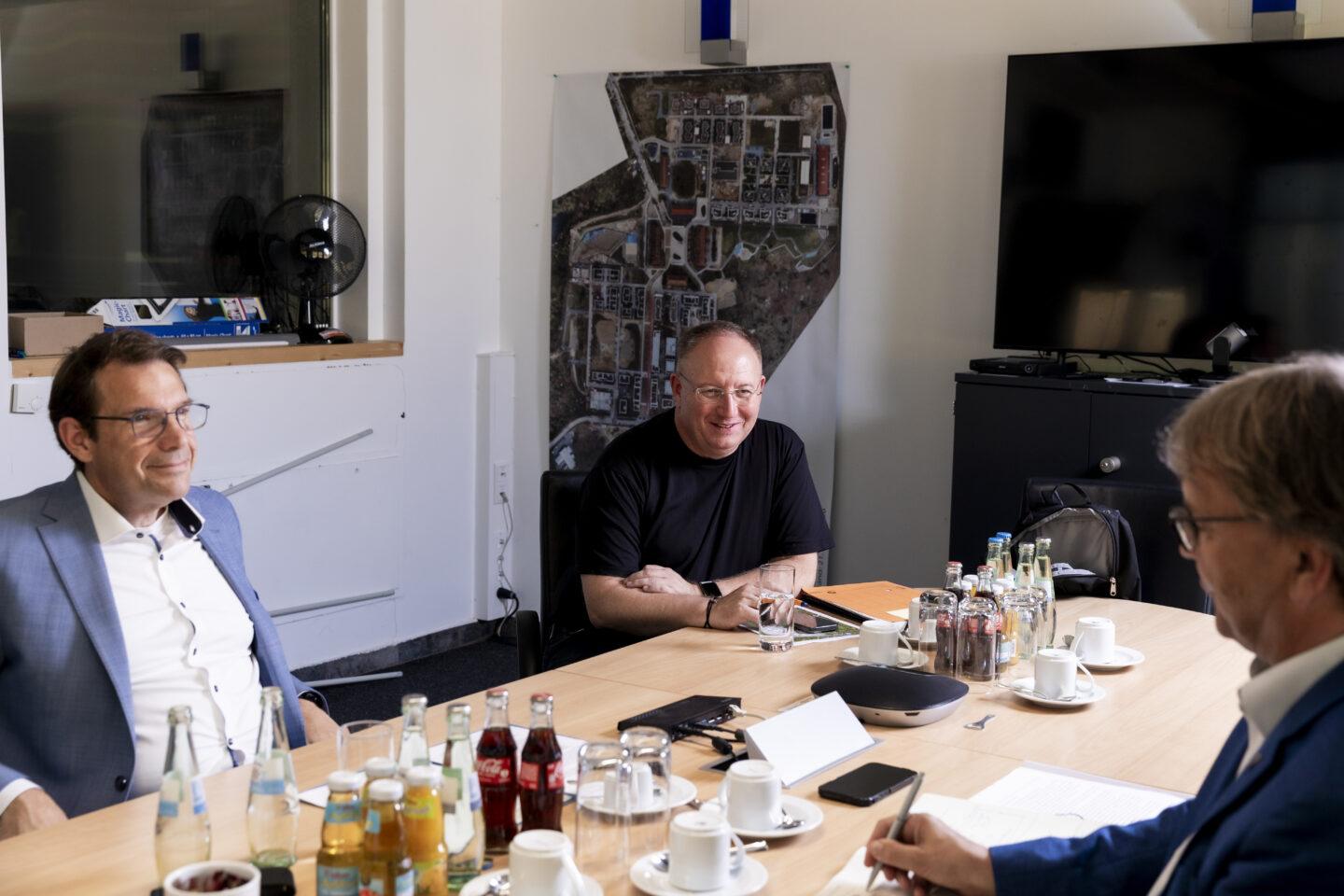
Featured image: Mayor Hanno Benz and press spokesman Frank Horneff in conversation with Ulrich Diehl. Photos: Marc Bartolo