

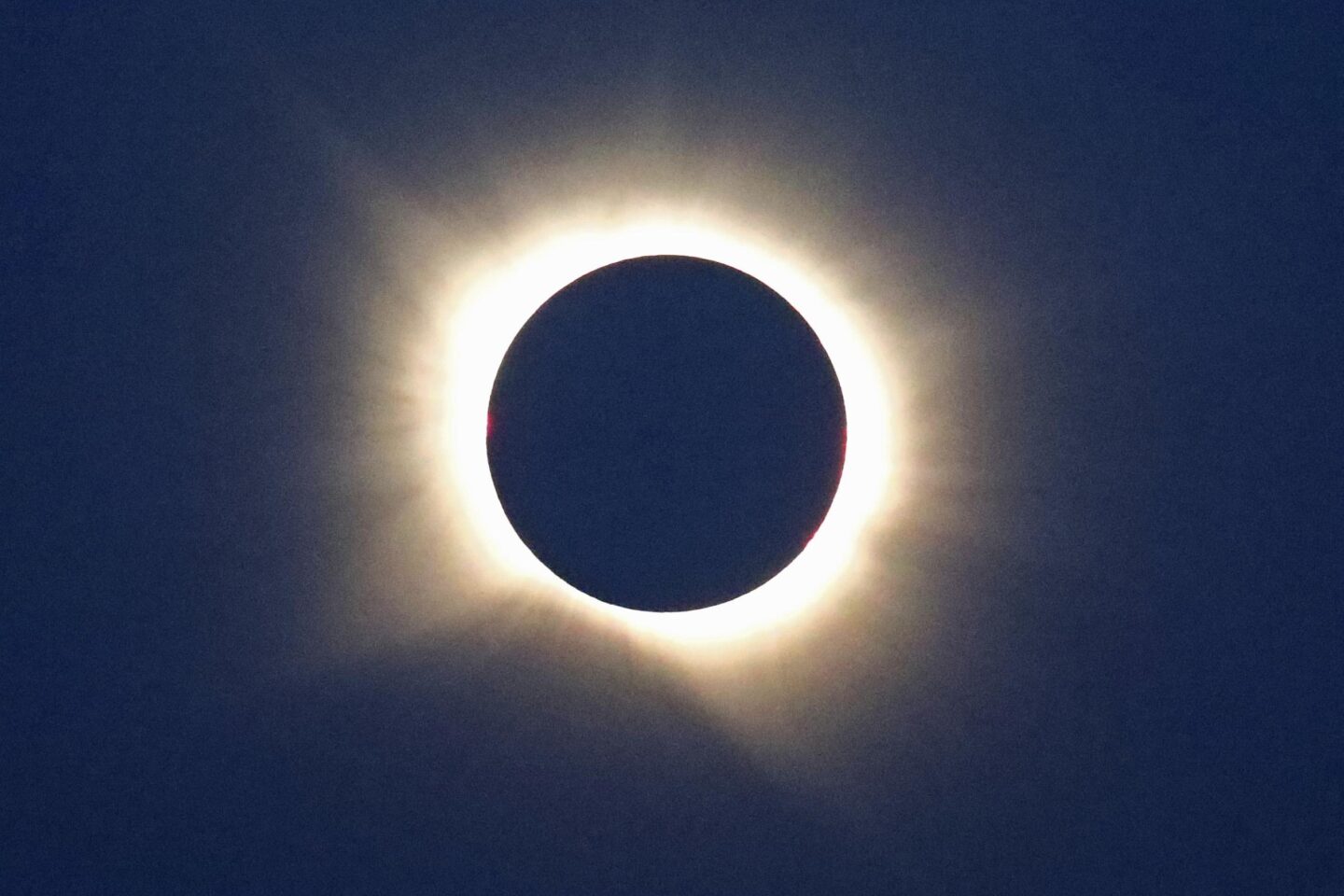

Photo gallery: Arthur Schönbein experiences and photographs totality in Castrojeriz, northern Spain
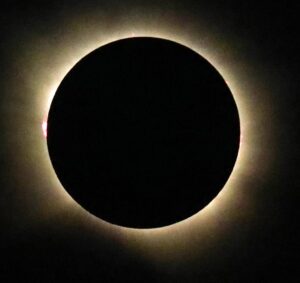
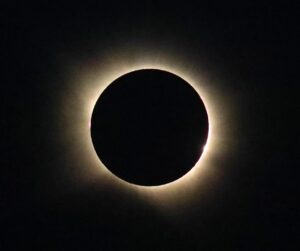
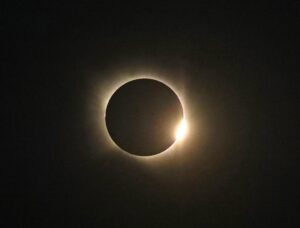
For about a minute and a half, the sun disappeared completely behind the moon: On Wednesday evening, August 12, a total solar eclipse was visible over parts of Spain. While a deep partial solar eclipse with almost 90 percent coverage was visible in Darmstadt and the Rhine-Main region, Arthur Schönbein traveled specifically to northern Spain for DA.news, heading into the umbra. After days of observing the weather, the decision to go to Castrojeriz was made at the last minute – and proved to be the right one.
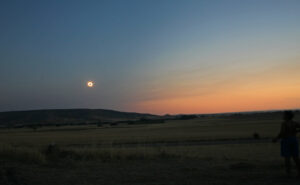
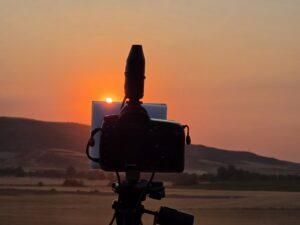
The small village on the Way of St. James lies at an altitude of over 700 meters and offered optimal conditions on Wednesday evening. A clear view towards the low sun and a cloudless sky made it possible to observe and photograph the various phases of the eclipse up to totality.
“Because the eclipse was clearly visible in Germany with up to almost 90 percent visibility, I deliberately wanted to travel into the umbra and concentrate on the totality, which lasted just over 1:30 minutes here in Spain,” reports Schönbein.

When a partial solar eclipse becomes a total solar eclipse
A solar eclipse occurs when the moon passes between the Earth and the sun, obscuring the sun's disk. However, the viewing location is crucial for the experience. Outside the narrow umbra, even with a very high degree of eclipse, a portion of the sun always remains visible. Within the umbra, on the other hand, the sun's disk is completely covered by the moon for a short time.
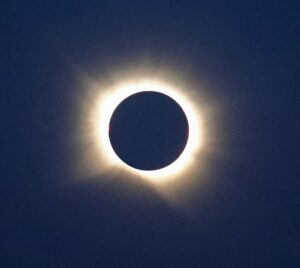
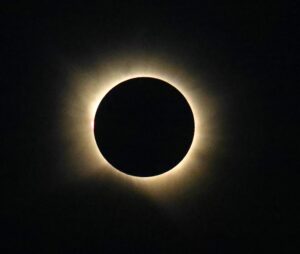
It is precisely this moment of totality that makes a total solar eclipse such an extraordinary natural phenomenon. The landscape darkens considerably within a short time, temperatures can drop, and stars and planets become visible in the sky. At the same time, the sun's outer atmosphere, the corona, which is normally obscured by bright sunlight, appears around the black disk of the moon.
"A very special darkness"
Schönbein, too, was particularly impressed by the change in the surroundings during the totality.
"Totality was a very moving event. A very special darkness, stars were visible, but not as one knows them at night. It's hard to describe, I'm glad to have experienced it."
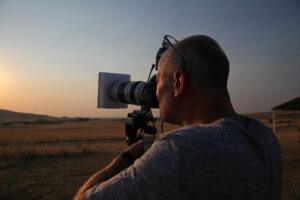
The DA.news photographer was by no means alone in Castrojeriz. The favorable conditions and the location within the umbra had attracted other eclipse observers. Some of them had arrived with extensive astronomical equipment and large telescopes.
Nevertheless, it became unusually quiet at the crucial moment.
“Around us were several other observers, some with huge telescopes. During totality it was absolutely silent, afterwards there was applause. A magnificent, peaceful, almost celebratory atmosphere,” Schönbein describes the nearly one and a half minutes spent in the shadow of the moon.
The location was only determined at short notice
That DA.news would ultimately document the solar eclipse from Castrojeriz was uncertain for a long time. In the days leading up to the event, weather forecasts, and especially the expected cloud cover along the path of totality, were being monitored. As late as Wednesday, the possibility of changing location at short notice was still being considered.
In the end, that wasn't necessary. Castrojeriz offered ideal conditions – and thus the opportunity to capture one of the rarest and most impressive astronomical events from within the umbra.
Our photo gallery shows the total solar eclipse of August 12, 2026 from Castrojeriz in northern Spain – photographed by Arthur Schönbein for DA.news.
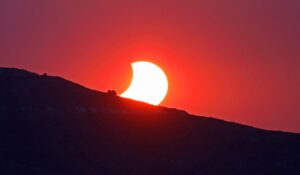
(Castrojeriz – RED/as)
Photography: Arthur Schönbein