
In the water project, the children learn where Pfungstadt's drinking water comes from and how wastewater is cleaned in Eschollbrücken.
Where does the water from the tap come from, and what happens to it when it disappears down the drain? The third-grade classes at Hahn Elementary School explored these questions as part of their sustainability project, "Water." The program included visits to the Pfungstadt waterworks and the wastewater treatment plant in Eschollbrücken.
Four million liters of drinking water in reserve
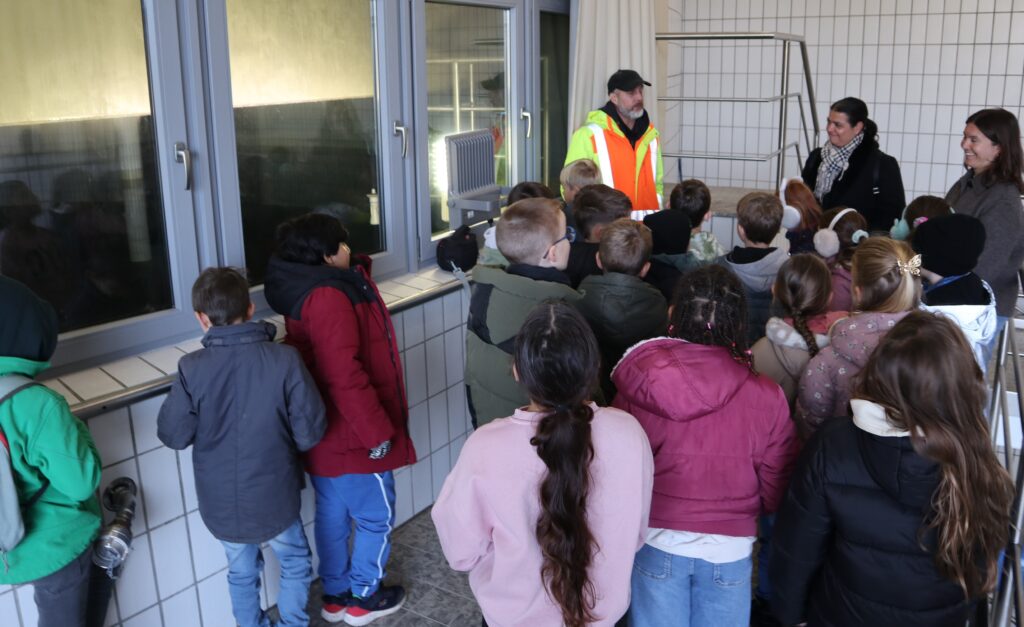
At the waterworks, employee Alexander Schneider led classes 3a and 3b through the facility. Youth worker Matthias Hirt explained how groundwater is extracted from depths of up to 100 meters, stored, and distributed to households via the pipe network. According to the municipal utilities, the water reservoir holds approximately four million liters. The children were particularly interested to learn that the waterworks team can monitor water consumption in Pfungstadt and track usage at different times.
Billions of bacteria help with wastewater purification
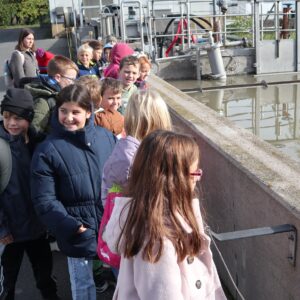
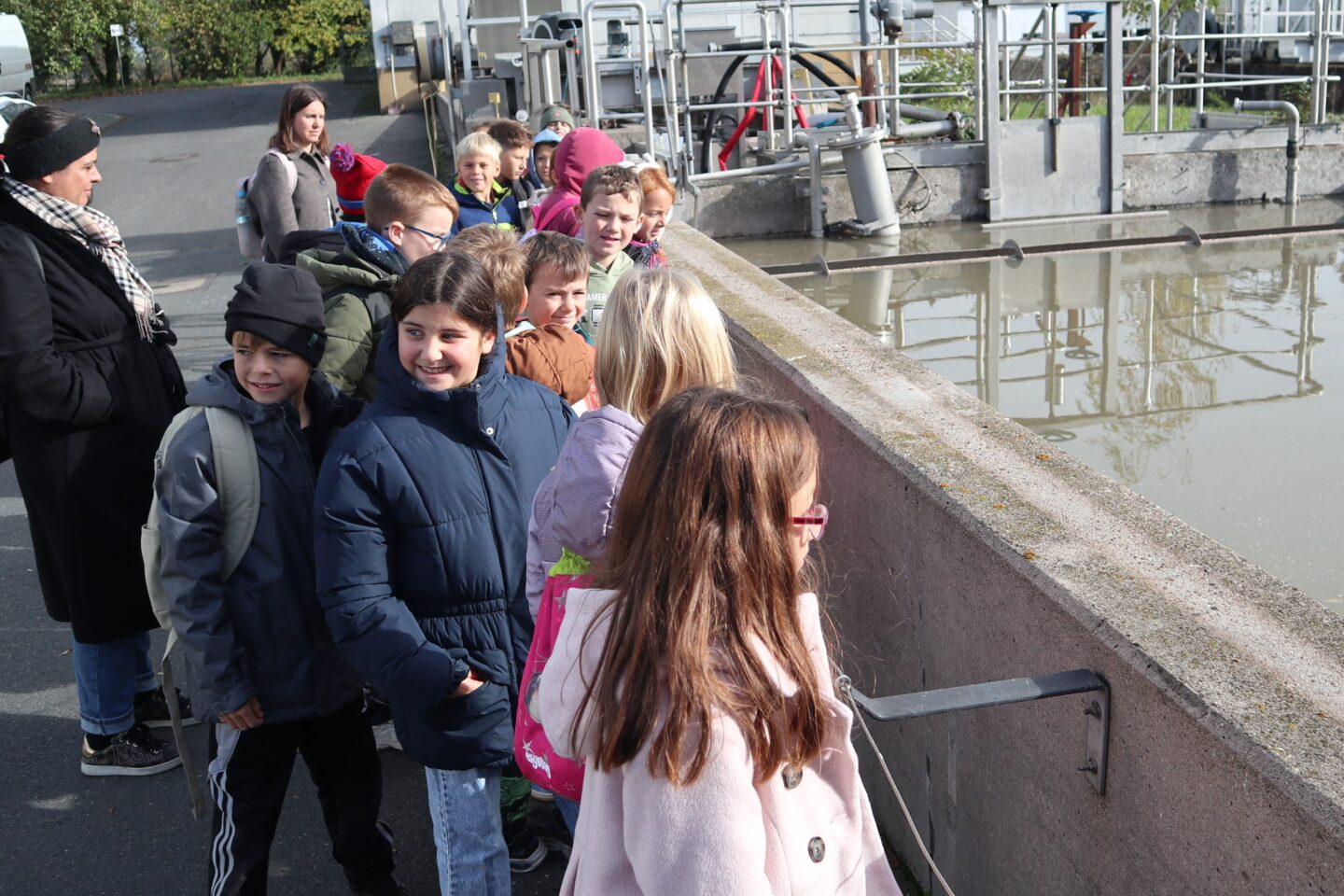
At the wastewater treatment plant in Eschollbrücken, employee Martina Jäger showed the children the various stages of purification during a tour. They learned how billions of bacteria help break down pollutants in the wastewater. Under normal weather conditions, the plant cleans approximately 900,000 liters of wastewater within 24 hours.
The Pfungstadt Youth Services department offers this project in cooperation with the Hahn Elementary School. In addition to visits, the project includes classroom activities where Matthias Hirt explores with the children, through play, why water is so essential for life.
Further information
about services in the various districts can be obtained from Matthias Hirt at 06157 988 1601 or by email at matthias.hirt@pfungstadt.de. Additional information is also available from the Pfungstadt Family Center.
(PFUNGSTADT – RED/PM/Matthis Hirt)
Featured images: City of Pfungstadt