

A broad alliance of politicians, business leaders, and scientists is demanding mandatory closures for new construction – further delays are feared
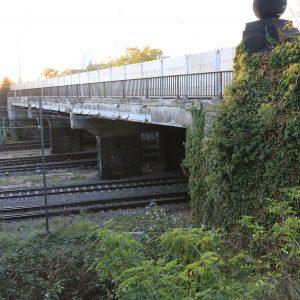
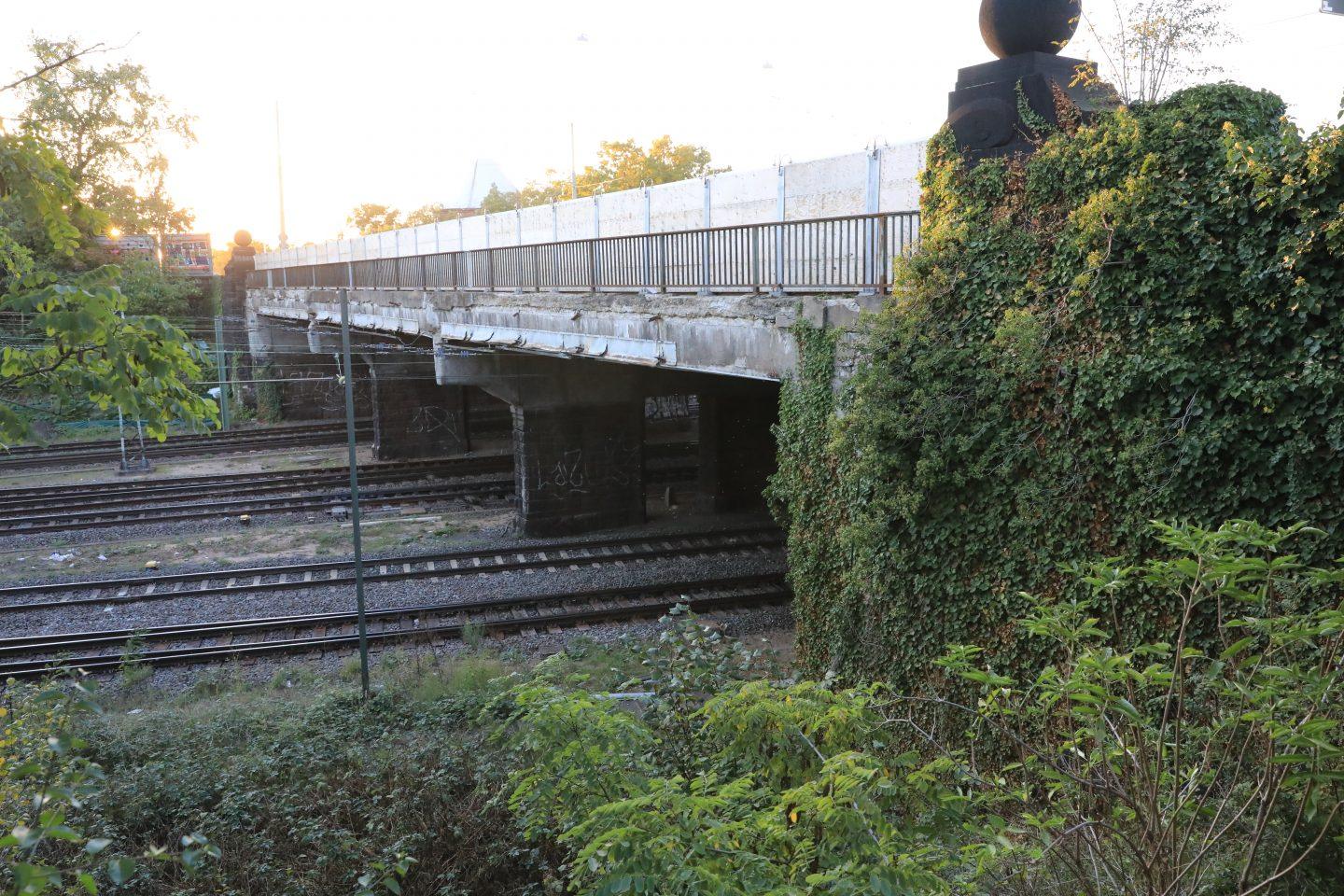
The planned replacement of the Rhine road bridge in Darmstadt is threatened with further delays of several years. This is due to changes in the track closures scheduled by Deutsche Bahn. The City of Darmstadt and a broad alliance of political, business, and scientific representatives have therefore addressed a joint letter to Evelyn Palla, CEO of Deutsche Bahn AG. They are demanding binding timeframes for the construction work and are urging a prompt personal meeting with the railway's top management.
The Rhine road bridge has been closed to car traffic since 2023. Previously, around 50,000 vehicles used this important connection daily. The consequences of the closure are clearly noticeable in Darmstadt and the entire region. Commuters have to accept longer travel times, while businesses and tradespeople suffer from restricted accessibility and additional burdens for employees, customers, and delivery traffic.
The mayor is considering legal action
For Darmstadt's mayor Hanno Benz, the situation is no longer acceptable.

“The situation has reached a point where a solution at the highest level is urgently required,” Benz explains. “This is not about a municipal construction project, but about one of the most important transport links in southern Hesse.”
The city remains committed to reaching an amicable solution with Deutsche Bahn. However, it is simultaneously examining possible legal options.
“As a city, we continue to strive for an amicable solution with the railway company. However, we are simultaneously exploring legal options – in order to keep all legal avenues open,” said Benz.
The letter to the head of the railway company is intended to underline the importance of the project for the entire region.
Tram service to Griesheim also affected
The renewed delays in the bridge reconstruction not only affect car traffic. The restoration of an efficient tram connection between Darmstadt and Griesheim is also being pushed further into the future.
Instead of a regular tram connection, the city believes that a replacement bus service lasting for years is likely.
Furthermore, there are significant financial risks. With each further delay, construction costs could increase. At the same time, the existing temporary traffic measures will have to be maintained and financed for a longer period.
For the city and the affected road users, this means a continuation of the restrictions that have already existed for years.
City warns of risks to rail traffic
The city is particularly critical of the structural condition of the Rheinstraße bridge. In its assessment, there is now a risk that the railway line below will have to be closed unexpectedly.
Such a closure could have far-reaching consequences for rail traffic between Frankfurt and Mannheim. The Main-Neckar Railway is one of Germany's busiest rail lines and is part of the European Rhine-Alpine Corridor.
In addition to regional passenger transport, nationwide long-distance transport and freight transport could also be affected.
Mayor Hanno Benz and transport commissioner Paul Georg Wandrey therefore strongly warn of the possible consequences.
“If the railway company does not allow a construction window now, it is accepting an unplanned closure with all its consequences,” they both explain.
From the city's point of view, it is now the responsibility of Deutsche Bahn to enable the necessary construction work through forward-looking planning and thus also reduce risks to rail traffic.
Required lockdown times significantly reduced
The science city of Darmstadt points out that it has already fundamentally revised its plans for the replacement building in order to meet the requirements of railway operations.
Originally, the construction work was scheduled to require a total of 246 days of closures. According to the city, adjustments to the plans have reduced this requirement to 56 days.
The planning law prerequisites for the project have also now been established.
However, binding closure periods are still lacking. Without these time slots, the city can neither put the construction work out to tender nor begin the actual replacement building.
“We have great understanding for the challenges involved in the renovation of the German rail network,” explains City Councillor Paul Georg Wandrey.
However, the postponement of railway-owned measures should not lead to a situation where no suitable construction windows are available at all for the new construction of the Rhine road bridge.
“The decisions of the railway company affect an entire region, whose legitimate interests must be adequately taken into account,” Wandrey emphasizes.
Closures demanded regardless of corridor renovations
According to the city, it has been in contact with Deutsche Bahn's representatives in Hesse for some time. A joint workshop between city and railway representatives also took place on November 12th.
From Benz and Wandrey's point of view, however, voting at the regional level is no longer sufficient.
The problem has a nationwide dimension and therefore must be addressed by the top management of the railway company.
The aim of the requested meeting with Evelyn Palla is to agree on binding closure periods for the bridge reconstruction, which will be available independently of the postponed corridor renovations of the rail network.
“The region finally needs a reliable basis for the replacement building,” explain Benz and Wandrey.
Broad support from business, politics and science
The city's demands are supported by an unusually broad alliance. Signatories include representatives from the Darmstadt Rhine-Main-Neckar Chamber of Industry and Commerce, the Frankfurt-Rhine-Main Chamber of Skilled Crafts, the German Trade Union Confederation (DGB) South Hesse, the South Hesse Employers' Association, HESSENMETALL, and the Association of Hessian Employers' Associations.
Numerous members of the Bundestag and state parliaments from various parties also support the initiative.
Participants from the municipal level include representatives from the districts of Darmstadt-Dieburg, Groß-Gerau and Odenwald, as well as the city of Griesheim.
Science is represented by the President of the Technical University of Darmstadt, Prof. Dr. Tanja Brühl, and the President of the Darmstadt University of Applied Sciences, Prof. Dr. Arnd Steinmetz.
The Döhler Group and Evonik, two major companies in the region, are also among the supporters.
The alliance makes it clear that the consequences of the bridge closure no longer affect Darmstadt alone. The replacement bridge is of considerable importance for the economy, employees, and transport infrastructure in southern Hesse.
It is currently unclear whether and when Deutsche Bahn will commit to the required mandatory track closures.
(DARMSTADT – RED/PSD/ho/stip)