

Long-term analysis shows a decline – but exceedances continue
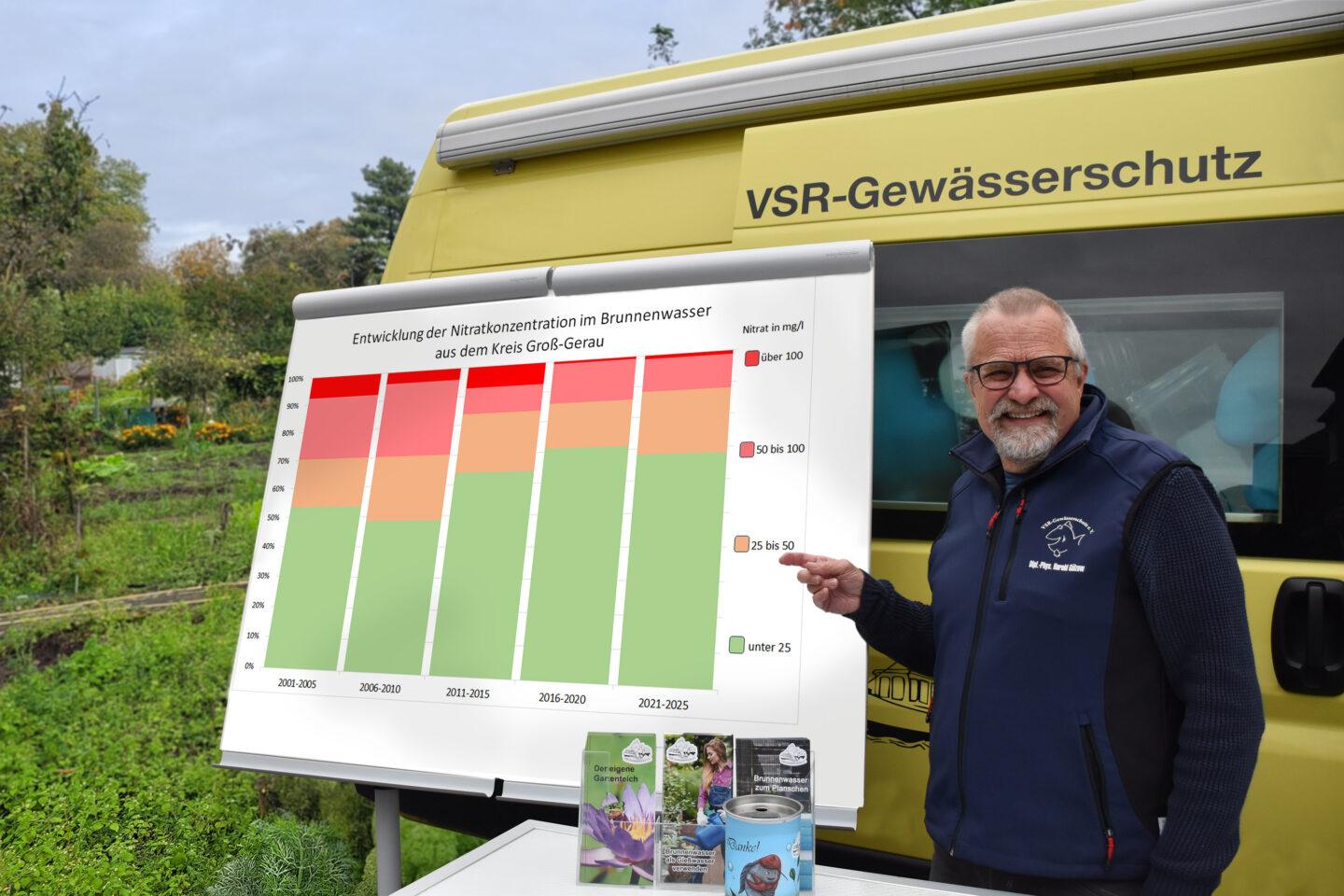
A recent analysis by VSR-Gewässerschutz (Association for the Protection of Water Resources) shows that while nitrate pollution in garden wells in the Groß-Gerau district has decreased over the past 25 years, it remains a problem. The analysis is based on approximately 1,650 water analyses conducted between 2001 and 2025.
Fewer violations – but still critical
While between 2001 and 2005 29.7 percent of the wells examined exceeded the limit of 50 milligrams of nitrate per liter, this proportion was still 11.8 percent in the period from 2021 to 2025.
Particularly striking: The proportion of heavily polluted wells with over 100 milligrams of nitrate per liter decreased only slightly to 1.1 percent over the entire period.

Agricultural measures are showing results
According to Harald Gülzow, measures in agriculture to reduce nitrate pollution have generally had an effect. However, the decline so far has been less pronounced than hoped.
Improvements have been achieved, particularly within water protection areas, through cooperation between water suppliers and agriculture. These include more efficient fertilization methods and adapted cultivation systems.
Pollution outside protected areas remains high
The situation remains problematic, especially outside designated water protection areas. Elevated nitrate levels are frequently found in garden wells there.
This pollution can not only restrict the use of well water, but also affects bodies of water. Nitrate enters larger bodies of water via streams and rivers, contributing to excessive algal growth, which threatens biodiversity.
Further investigations planned
VSR-Gewässerschutz announces that it will again be traveling around the region with a mobile laboratory in 2026 to offer further water analyses and to monitor long-term developments.
(GROSS-GERAU – RED/PM/VSR)
Featured image: Harald Gülzow explains the development of nitrate pollution in the Groß-Gerau district. Photo: Ruben Wiltsch