
District draws drastic interim conclusions – animal welfare, agriculture and hunting massively affected
One year after the first confirmed case of African swine fever (ASF) in the Groß-Gerau district, the district administration has drawn a dramatic interim conclusion. At a press conference on Friday, representatives from administration, hunting, forestry, and agriculture emphasized that the animal disease is far from over – despite massive countermeasures.
The first confirmed case of African swine fever (ASF) in the district was on June 15, 2024, after a sick wild boar shot in Rüsselsheim tested positive. "This was no drill," emphasized district veterinarian Dr. Katrin Stein. However, even at that point, the disease had already spread undetected throughout the district.
Review after twelve months: Figures and measures
Since then, a large-scale disease control operation has been underway, coordinated by the veterinary office and supported by agriculture, hunting, forestry, and disaster relief. First County Councilor Adil Oyan described it as one of the greatest challenges the county has ever faced.

- 1474 samples from wild boars, of which 601 were positive
- Over 3500 domestic pigs killed on eight farms
- 42 general orders, 40 staff meetings, around 3,000 harvest permits
- 22,000 hectares searched, many areas searched multiple times
through wildlife fences, drone operations, carcass detection dogs and close cooperation.
Wild boars as the main carriers – cause unclear
The exact cause of the outbreak in domestic pig farms remains unclear. Dr. Stein: "We only know that the virus likely originated in Southeast Europe." Wild boars are highly infectious and die a painful death – high fever, bleeding, and convulsions are typical symptoms.
Since March 2025, the district itself has been conducting the search for and recovery of carcasses. 2,000 hours of service to the culling of affected livestock alone.
Hunting, forestry, agriculture and voluntary work are needed
Markus Stifter of the Hessian State Hunting Association praised the hunting community, which actively contributes to disease control through intensive hunting. In April and May 2025 alone, 460 wild boars were killed – almost as many as the number of animals that died from African swine fever.
Forestry office director Klaus Velbecker emphasized that forestry work is severely restricted. Fencing, carcass removal, and closing culverts are additional tasks that are tying up resources.
Farmer Selina Müller from the Starkenburg Regional Farmers' Association spoke of a "catastrophe" for pig farmers. Stagnation in a sector that normally knows no stagnation – with dramatic economic consequences. "The farms need prospects," she demanded.
Groß-Gerau district: ASF remains a focus
Despite all measures, the threat remains. The district and its partners are committed to continued close cooperation and are simultaneously calling for political support at the state and federal levels. Combating African swine fever will remain a central component of crisis management in southern Hesse in the coming months.
(GROSS-GERAU – RED/PSGG)
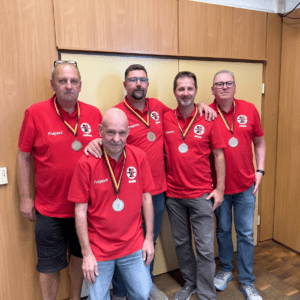
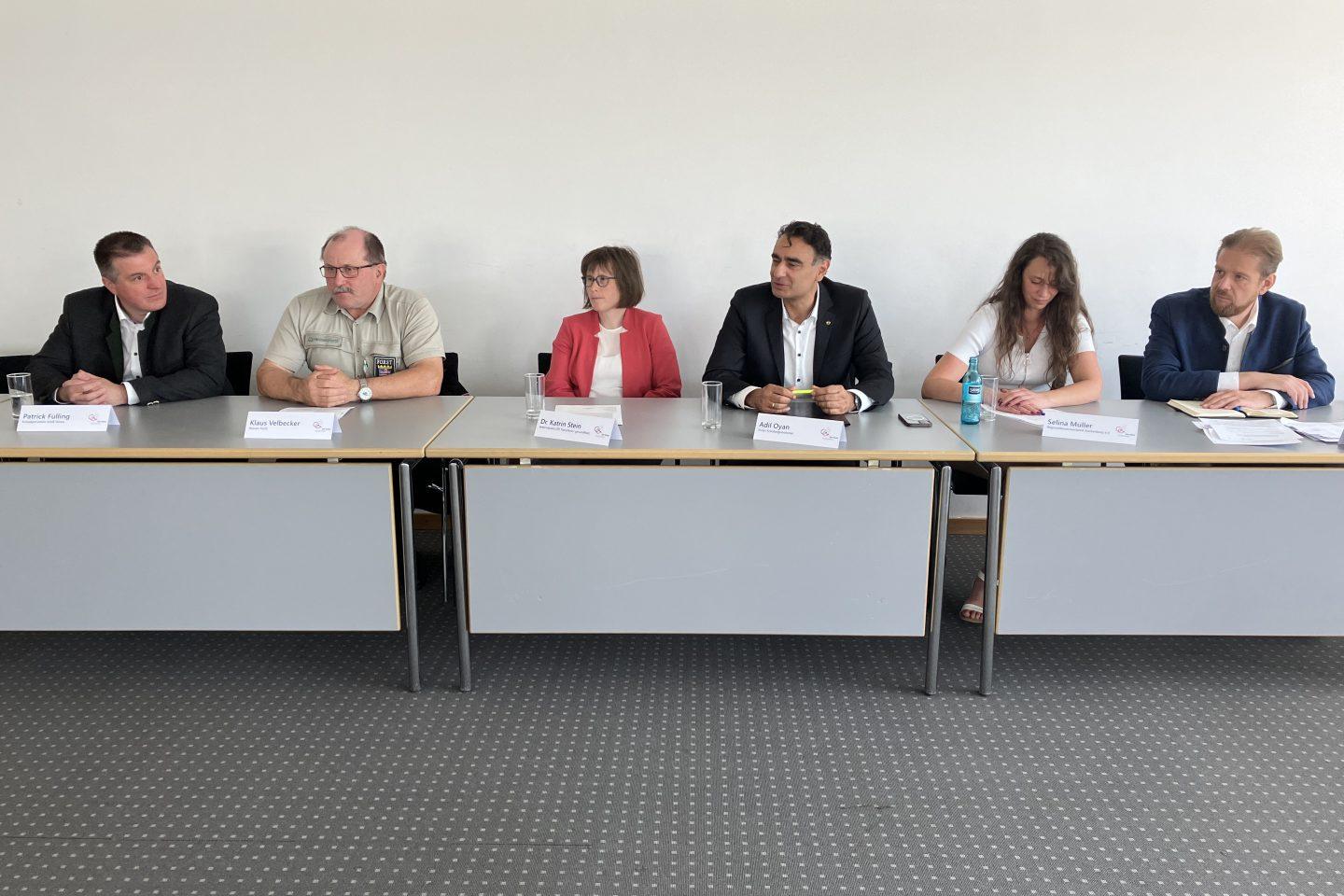
Featured image: In crisis mode for a year: The Groß-Gerau district took stock of the consequences of African swine fever at a press conference. The picture shows, from left: Patrick Fülling (Chairman of the District Hunting Association), Klaus Velbecker (Hessen Forestry), Dr. Katrin Stein (Veterinarian, Groß-Gerau District), Adil Oyan (First Deputy District Administrator), Selina Müller (Managing Director, Starkenburg Regional Farmers' Association), and Markus Stifter (Hesse State Hunting Association). Photo: District Administration