The Bürgerpark Basketball club combines sport, community and youth development in Darmstadt
With open sports programs, voluntary commitment and a clear vision for public spaces, Bürgerpark Basketball creates community far beyond sports.
What began as a commitment to basketball has long since evolved into a project with a broad social impact. The Bürgerpark Basketball club is dedicated to the further development of basketball in Darmstadt's Bürgerpark, combining sports with youth development, integration, and community. With new basketball hoops, public floodlights, events like the Night Hoops tournament, and numerous volunteer initiatives, the club strives to create an open meeting place for everyone. Adam Rieble of Bürgerpark Basketball discusses the significance of the Bürgerpark, the unique culture of streetball, and the support from Merck in this interview.
The Bürgerpark Basketball initiative has become an integral part of Darmstadt's basketball and streetball scene in recent years. What significance does the project hold today for young people and the community in Bürgerpark?
For many young people, the Bürgerpark is much more than just a basketball court. It's a place you can go to without registration, membership fees, or major obstacles. You meet people, play together, watch others, and strike up conversations. That's precisely what makes this place so special.
For many, the Bürgerpark is a social meeting place, sometimes even a second home. Here, people of different origins, age groups, and social backgrounds come together. Young people find a space where they can move freely and become part of a community. Our work has contributed to the Bürgerpark being perceived more strongly as a public meeting place. With events, new basketball courts, the floodlights, and our commitment to the further development of the park, we are demonstrating the potential this place holds.
From your perspective, what distinguishes Bürgerpark Basketball from traditional sports clubs or basketball programs in Darmstadt and the surrounding region?
The biggest difference is the ease of participation. Traditional clubs have fixed training times, memberships, and often a performance or competitive expectation. That has its value, but streetball works differently.
Anyone can simply drop by and join in the fun at the Bürgerpark. You can spontaneously find teammates and teams, regardless of background, age, or skill level. This openness is at the heart of our work.
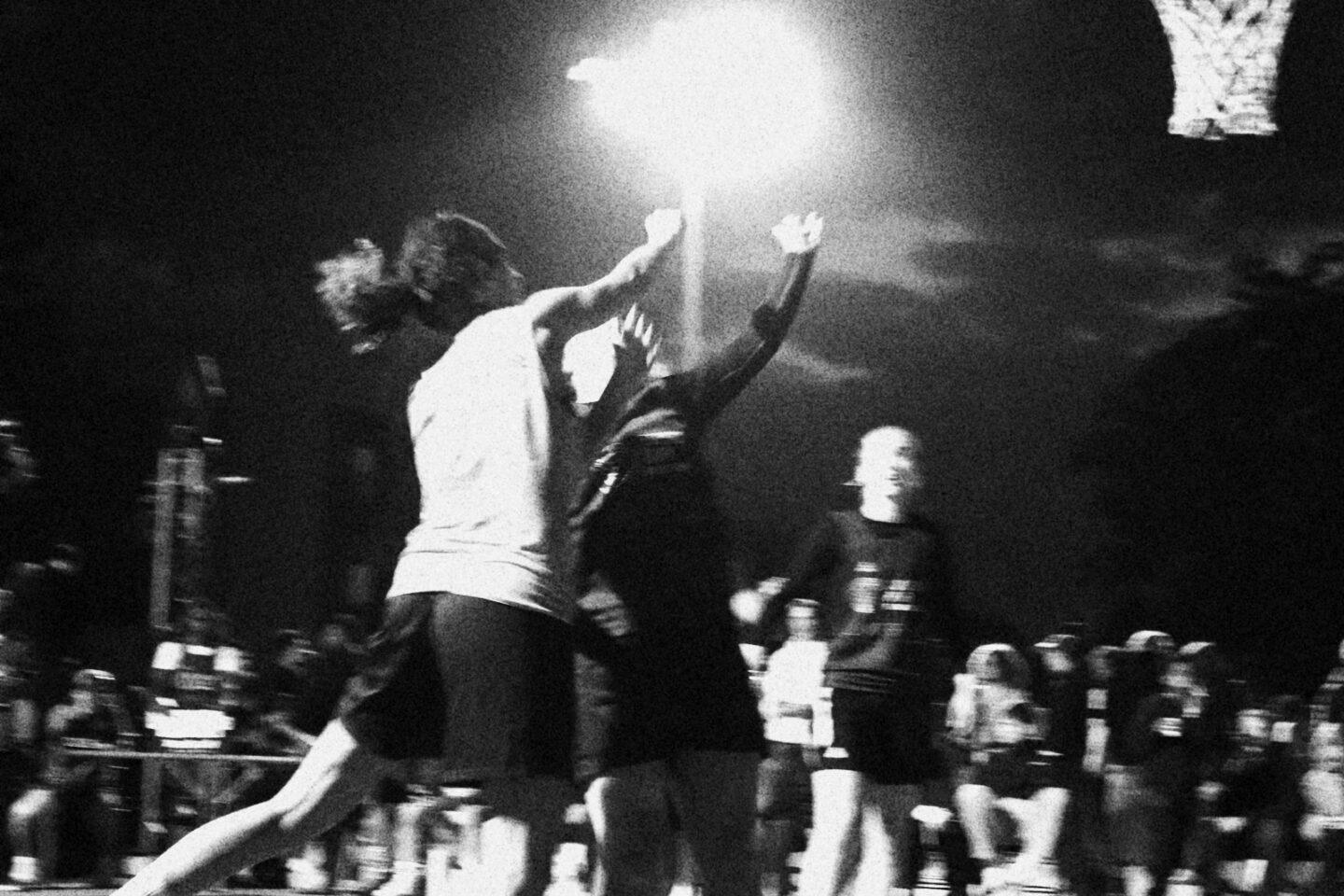
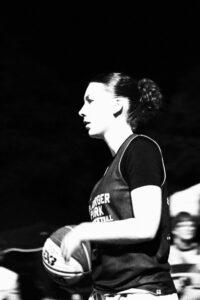
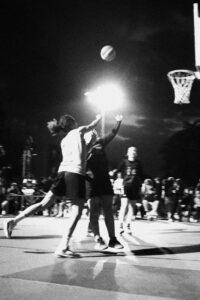
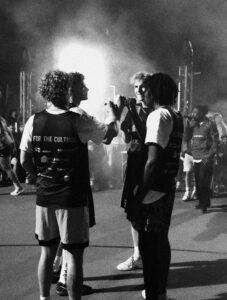
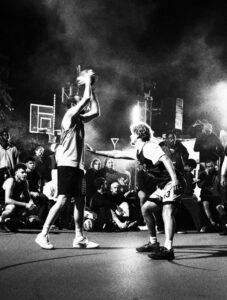
A special highlight is our Night Hoops event, the largest streetball tournament and festival of its kind in Germany. With around 1,000 spectators and 128 players, the event showcases what we're all about: basketball, but also music, art, culture, and community. Regularly featured are well-known personalities such as basketball world champion Leon Fertig, who himself started playing basketball in the Bürgerpark.
We don't see ourselves as competitors to clubs, but rather as complementary. We create open spaces for people who might not feel at home in traditional club structures.
A key focus of your work is on providing open and easily accessible opportunities for children and young people. Why is it important to you to make sports and community activities accessible to as many young people as possible?
Young people need places where they can simply be themselves – without pressure to consume, entrance fees, or memberships. Public sports fields like the Bürgerpark offer exactly this freedom.
Sport is often just the starting point. It's about community, respect, self-confidence, and belonging. Playing together automatically teaches communication, responsibility, and how to interact with one another. Streetball is particularly well-suited for this because it's open and uncomplicated. All you need is a ball, a hoop, and people who want to play.
Our goal is to create spaces where young people can have positive experiences – regardless of their social or financial background.
They are not only involved in sports, but also in the further development of the basketball facilities in the Bürgerpark. What is your vision for this location, and what role does streetball play in fostering social cohesion in Darmstadt?
Our vision is to further develop the Bürgerpark into a nationally unique venue for streetball, culture, and community. The new basketball hoops and floodlights have already been important steps in this direction. However, in the long term, we also envision a renovated court surface, an artistic design for the court, seating, and a genuine community area.
It's not just about a more attractive sports field. Streetball connects people, music, art, culture, and community in a very natural way. The public park should be a place where people enjoy coming together and interacting.
The response shows that this approach works. The announcement of Germany's first public floodlight system with presence sensors reached hundreds of thousands of people on social media. We are now in contact with initiatives from many German cities. This demonstrates that the Bürgerpark is being seen as a model far beyond Darmstadt.
Especially in a time when public spaces are often commercialized or neglected, the Bürgerpark demonstrates the social value that freely accessible infrastructure can have.
The projects of Bürgerpark Basketball are supported by Merck, among others. What significance does this commitment have for your work and the implementation of your ideas?
The support of partners like Merck is of great importance to us. Many of our projects would hardly be feasible without external support. We work on a voluntary and non-profit basis, yet we still incur costs for events, infrastructure, technology, security, and public relations.
This support is particularly helpful for our Night Hoops event, enabling us to offer a high-quality, free, and publicly accessible sports and cultural program. Furthermore, the funding also increases the visibility and recognition of our work.
In the long term, however, we would like to see even more support for the structural development of the site. Issues such as the renovation of the square, additional infrastructure, or recreational areas cannot be addressed solely through event funding. Public spaces like the Bürgerpark, in particular, create direct social value and, in our view, deserve sustained support.
Does the collaboration with Merck, in your view, go beyond financial support – for example, in the sense of shared responsibility for youth development, integration and public meeting spaces in Darmstadt?
Yes, absolutely. Financial support is important, but ultimately it's about more than that. It's about taking shared responsibility for the city.
The community park demonstrates the importance of public spaces for youth, integration, and community. When companies like Merck support such projects, they send a strong signal of local social commitment.
For us, a partnership therefore also means a shared commitment. We invest in spaces where people can come together, move around, learn from each other, and become part of an open urban society. That is precisely what the Bürgerpark (Citizens' Park) represents – and that is precisely what we are committed to.
(By Alexander Götz)
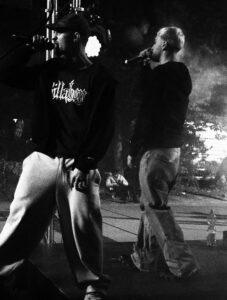
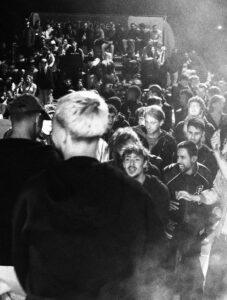
All photos in this post: @avm9tynine
Liveable Darmstadt
powered by MerckMerck is actively committed to a vibrant and livable region. Together with its partners, the company creates an environment where education, sports, art, and health can flourish.
But this requires funding. Membership fees aren't always enough. In this series, we present selected Darmstadt clubs and associations that are supported by Merck – whether in sports, culture, community service, or science education.
Each of these clubs has a unique story and contributes to strengthening the community in its own way. We asked the organizers what makes their clubs special and how the partnership with Merck not only provides financial support but also fosters growth and development.
Learn more about the diverse range of clubs and associations in Darmstadt and how Merck and its partners achieve more together – for a more vibrant and livable region.