

Following a discovery in the Bergstraße district, the regional government is drawing attention to the dangers of historical radium drinking cups and explaining how finders should behave
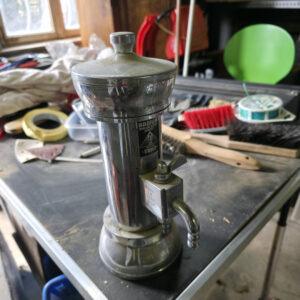
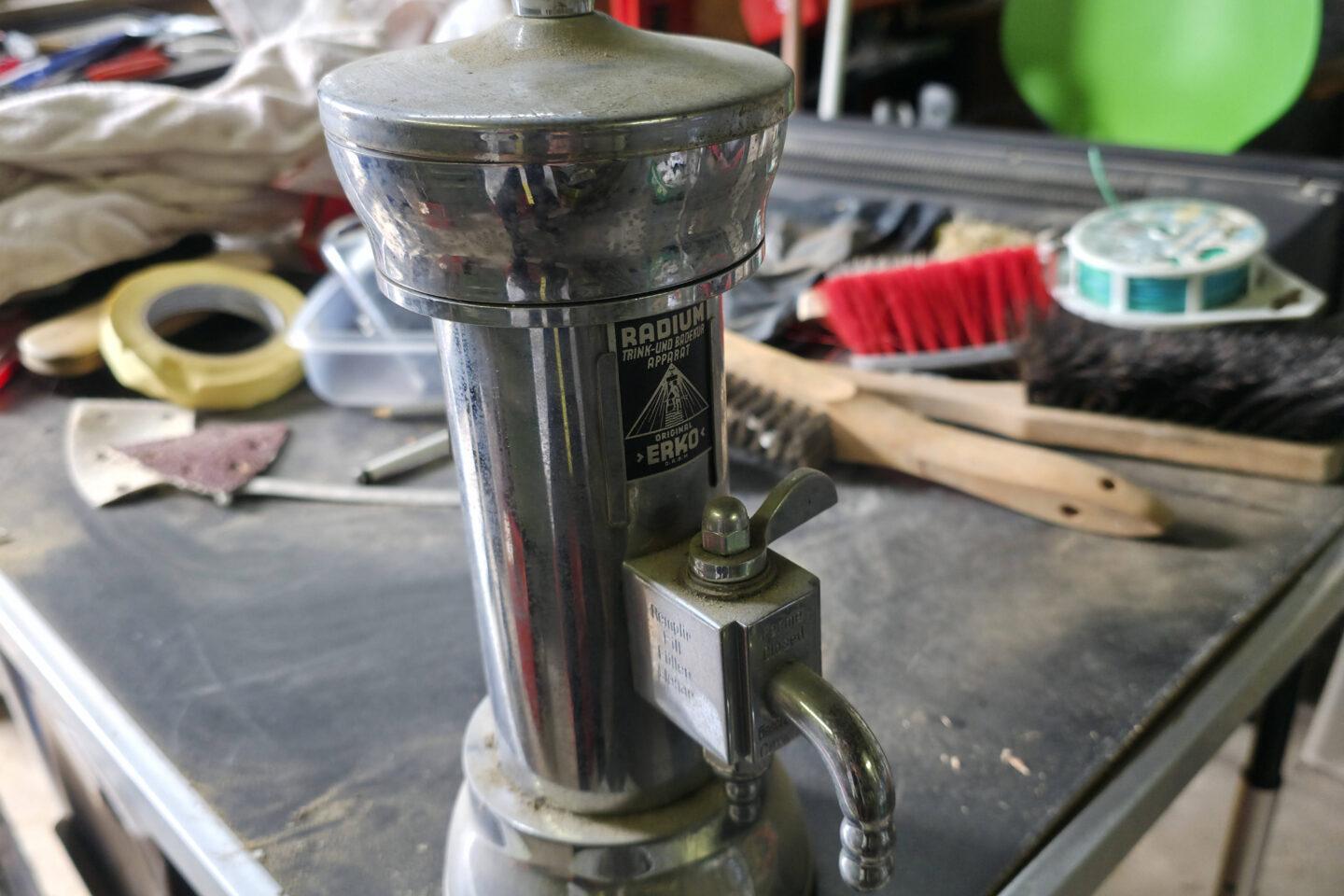
A vintage radium drinking cup triggered a response from the radiation protection authority in the Bergstraße district. Two residents discovered the device in their garage, took protective measures, and informed the Darmstadt Regional Council. Specialists subsequently secured the drinking vessel.
Measurements confirmed that the device still contained a radioactive source of radium-226. Due to its storage in the garage and the measured radiation levels, the authorities determined that there was no radiological risk to the finders or uninvolved third parties.
The Darmstadt Regional Council is using this discovery as an opportunity to warn of the potential dangers of such historical devices. Radium drinking cups can still contain significant amounts of radioactive material even after more than 100 years.
Radioactive collectibles in cellars and attics
Radium drinking cups were manufactured and sold in the first half of the 20th century. These devices were intended to enrich drinking water with the radioactive noble gas radon, which is produced by the decay of radium-226. At the time, people believed that consuming this water would have health benefits.
Today it is known that the ingestion of radioactive substances can be harmful to health. Nevertheless, numerous such historical devices are likely still in private hands.
They might be stored in cellars, garages, or attics, for example. Well-preserved examples are sometimes kept as collector's items or offered for sale at flea markets and on internet platforms.
Many owners may be unaware that the devices contain radioactive material. Others underestimate the danger because the drinking cups are already very old.
Radium remains radioactive for millennia
The age of the devices does not mean that their radioactivity has disappeared.
Radium-226 has a half-life of approximately 1,600 years. This means that only after this period will half of the original radioactive atomic nuclei have decayed.
According to the Darmstadt Regional Council, even after more than 100 years, around 95 percent of the original radioactivity is still present.
If a historical drinking cup still contains radioactive materials, it is subject to applicable radiation protection regulations. Possession may require a permit. Unauthorized possession may constitute an administrative offense.
What should you do if a radium drinking cup is found?
The regional government advises against touching suspicious devices and recommends keeping a safe distance. Containers or packaging must not be opened under any circumstances.
Anyone who has already had contact with such an object should wash their hands thoroughly.
According to radiation protection law, any discovery of radioactive materials must be reported immediately to the responsible authority. In southern Hesse, this responsibility lies with the locally responsible environmental departments of the Darmstadt Regional Council.
Radiation protection specialists take care of the necessary measures and proper disposal. This service is generally free of charge for private individuals.
Radium drinking cups must never be disposed of in household waste or at recycling centers. This could endanger other people. Furthermore, the radioactivity can trigger the incoming measurement systems of scrap metal dealers and waste disposal companies.
The most important information
What to do if you find something:
- Keep your distance and do not touch the object.
- Do not open containers or packaging.
- Wash your hands thoroughly after contact.
- Report the find immediately to the responsible regional government authority.
- Do not dispose of the item in household waste or at a recycling center.
- The necessary measures and disposal by the relevant authority are generally free of charge for private individuals.
Contact the radiation protection authority in southern Hesse during office hours:
- RP Darmstadt, Environmental Department Darmstadt: 06151 / 12-3694, Strahlenschutz-Da@rpda.hessen.de
- RP Darmstadt, Environmental Department Frankfurt: 069 / 2714-5992, Strahlenschutz-F@rpda.hessen.de
- RP Darmstadt, Environmental Department Wiesbaden: 0611 / 3309-2449, Strahlenschutz-Wi@rpda.hessen.de
In Central Hesse, the Gießen Regional Council is responsible, in Northern Hesse, the Kassel Regional Council.
The Darmstadt Regional Council provides further information and examples of radioactive material finds on its radiation protection information page.
(DARMSTADT – RED/PPDA)
Featured image: A radium drinking cup. Photo: RPDA