


Municipal utilities rely on intelligent snap traps and targeted baits – reducing poison consumption by around 95 percent
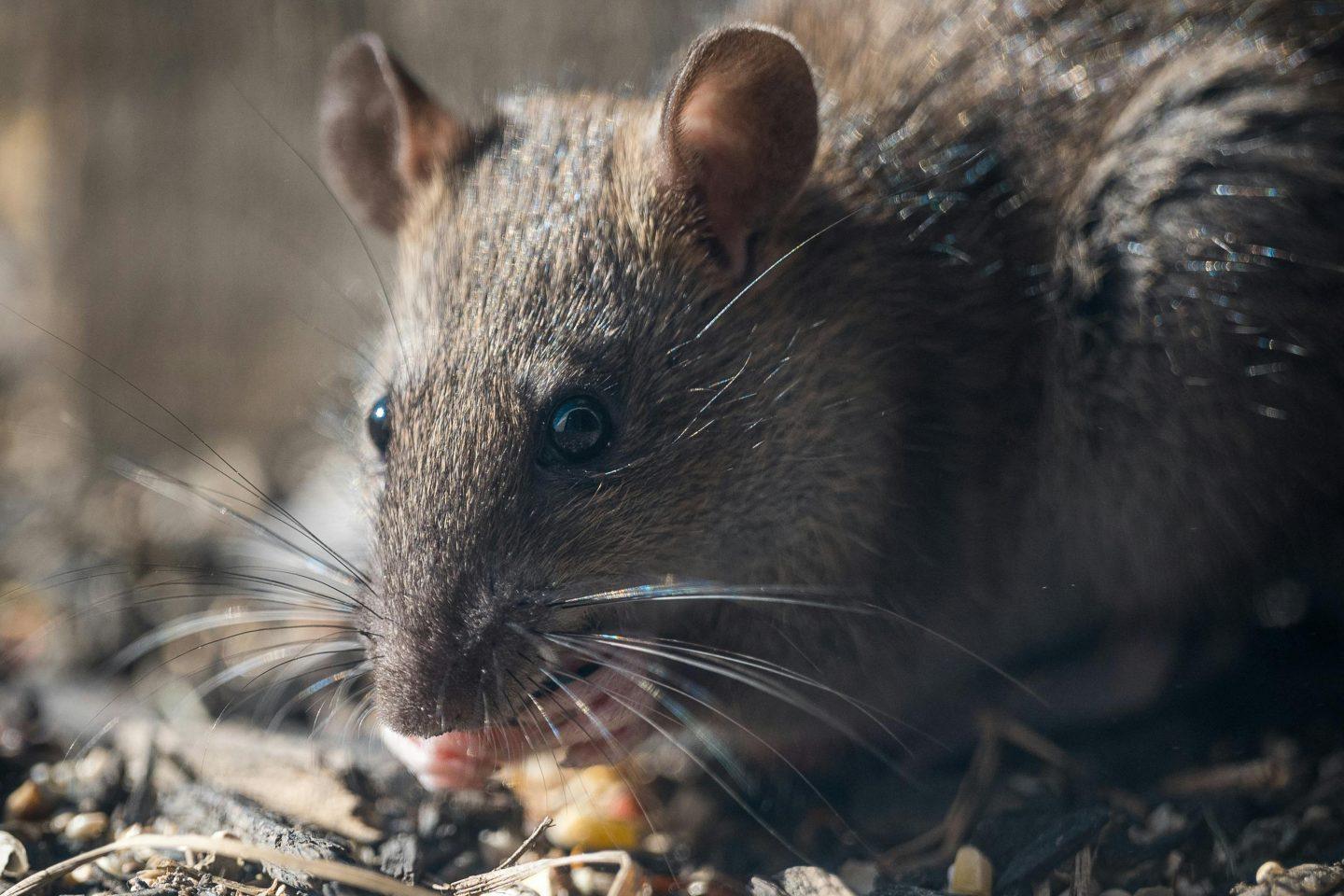
Rat sightings are currently on the rise in Groß-Gerau. The municipal utilities and city administration are receiving a correspondingly high number of reports from residents. However, this does not necessarily mean that the rat population has increased. Rather, rats are more active in the autumn, searching for food within the city. The Groß-Gerau municipal utilities are now using a new system of intelligent snap traps, protected poison baits, and digital monitoring to combat the rats. According to the utilities, this has reduced the use of rat poison by approximately 95 percent.
The changeover took place at the beginning of the year. This is due, among other things, to new regulations for the use of rat poison in sewage systems, which have been in effect since July 2026.
Why rats are more frequently seen in autumn
As temperatures drop, the food supply for rats changes. The animals find less food in fields and open countryside and therefore increasingly search for food in built-up areas.

"Rats find less food in fields and rural areas during the cold season. That's why they increasingly search for food in the city," explains Jasmin Werner from the Groß-Gerau municipal utilities.
It is estimated that there are approximately two to four rats for every person. Applied to Groß-Gerau, this would correspond to a population of around 50,000 to 100,000 animals. However, this is a calculated estimate and not an actual, determined number.
Rats are frequently observed in sewers. However, these do not necessarily serve as a permanent habitat for the animals.
“Our sewer pipes serve them more as traffic routes. They are, in a sense, the rats’ tunnel system,” explains Harald Steiger, Technical Director of the Groß-Gerau municipal utilities.
The continuous use of poison baits is no longer permitted
There have been some changes in rat control this year.
Since July 1, 2026, the so-called infestation-independent continuous baiting with rat poison has been prohibited. Poison bait may therefore no longer be laid out preventively and continuously without a confirmed infestation.
"An infestation must first be detected in order to be allowed to combat it," explains wastewater manager Timothy Reichert.
The municipal utilities of Groß-Gerau therefore already switched their pest control system at the beginning of 2026.
Instead of laying out poison baits across the board, the animals are now being targeted specifically where corresponding activity is detected.
Smart snap traps work with sensors
An important role is played by novel snap traps that are specifically suitable for use in narrow sewer pipes.
The traps are equipped with sensors that register both movement and body heat. The trap is only triggered when both signals are detected.
The rat is quickly killed by several bolts. The dead animal is then transported by the flow of wastewater towards the sewage treatment plant.
The trap resets automatically and is then ready for use again.
The municipal utility company places the snap traps in a specific neighborhood for approximately three months at a time. Afterwards, they can be deployed to other locations.
Poisoned baits must no longer come into contact with water
In addition to snap traps, poison baits are still used. However, stricter requirements apply to these as well.
Since this year, rat poison may only be used in sewers in special bait stations. These prevent the poison baits from coming into contact with water.
The municipal utilities also monitor the consumption of the bait. Regular weighing allows them to determine how much has been eaten.
The bait stations are regularly checked, restocked with new bait, and moved to other locations.
This is intended to make the use of poison more targeted and at the same time prevent toxic substances from entering the wastewater.
Digital monitoring provides data from the sewer system
Another component of the new system is digital surveillance.
Both snap traps and bait stations transmit data when activity is detected. Snap traps, for example, record when a trap is triggered. Bait stations report when rats enter them.
This allows the municipal utilities to track where particularly many activities are taking place in the sewer network.
“We have been implementing targeted monitoring since this year,” explains Jasmin Werner.
In the long term, the collected data should help to better assess developments and to control the fight against them in a more targeted way.
This year, the two systems combined have already registered a mid-four-figure number of contacts. However, this does not directly indicate how many rats have actually been controlled.
Approximately 95 percent less rat poison
According to the municipal utilities, the changeover is already showing significant effects on the consumption of toxins.
Wastewater treatment plant manager Timothy Reichert estimates the savings at around 95 percent.
Previously, practically every other sewer shaft was equipped with poison baits. However, these were often washed away by the water, causing the poison to enter the wastewater.
The new system allows the municipal utilities to react more effectively while significantly reducing the use of toxic substances.
According to Reichert's assessment, Groß-Gerau is already further ahead than many other municipalities due to the early conversion.
Particular focus of the control efforts is on large residential complexes and industrial areas. Ongoing measures against rats are being taken at known hotspots.
Who is responsible for reporting rat sightings?
Not every rat sighting falls under the responsibility of the municipal utilities.
Jurisdiction depends on where the animals are observed.
Sewerage and roads: The municipal utilities of Groß-Gerau are responsible for these.
Public squares, parks, green spaces, playgrounds and cemeteries: the city administration is responsible for these areas.
Private properties: Here, the respective owners must take care of the control measures.
According to the municipal utilities, there is a legal obligation to report rat sightings. Only when the location of the animals is known can appropriate measures be taken.
Food scraps do not belong in the toilet
The population can also contribute to reducing the food supply for rats.
It is especially important not to dispose of food scraps via the toilet or sewage system.
Food waste that ends up in sewage canals provides rodents with an easily accessible food source.
“For rats, that would be like a conveyor belt buffet,” explains Jasmin Werner.
Properly disposing of food waste also helps to make living conditions less attractive for rats in the sewer system.
Report rat sightings: Contact persons
Rats in the sewer system or in the street area
Groß-Gerau Municipal Utilities – Municipal Drainage
Telephone: 06152 93150
Email: abwasser@stadtwerke-gg.de
Rats in public places, parks or green spaces
District town of Groß-Gerau – Department of Safety and Public Order
Telephone: 06152 7163100
Email: sicherheitundordnung@gross-gerau.de
Rats on private property
Landowners are responsible for combating the pests.
(GROSS-GERAU – RED/PSGG)