


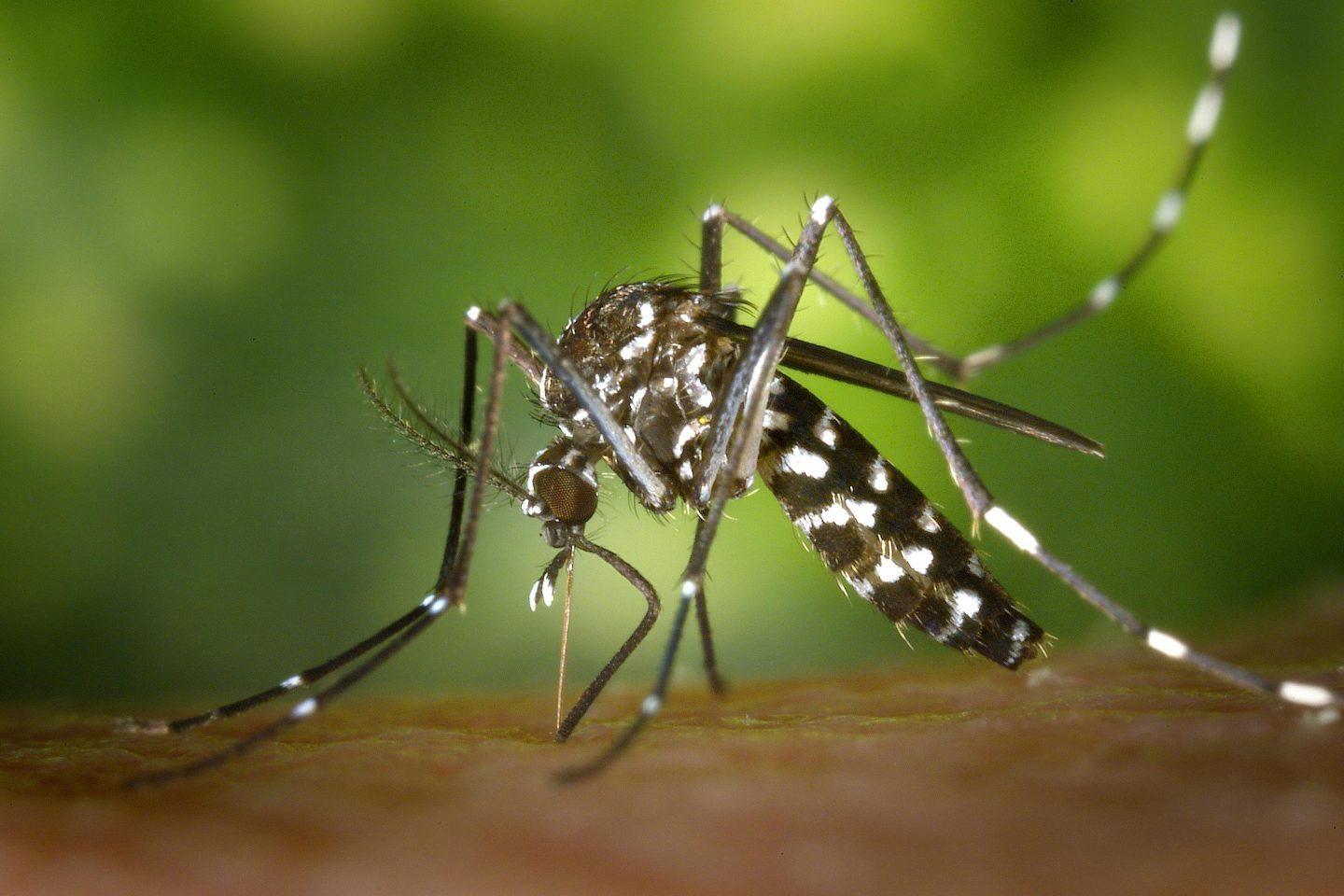

The city sees no established population yet and offers precautionary tips
Another Asian tiger mosquito (Aedes albopictus) has been found in western Darmstadt. According to the City of Darmstadt, this is a single sighting. There is currently no evidence that a permanent population of this mosquito species has established itself in Darmstadt.
The city was informed of the latest discovery by the Municipal Action Group for Mosquito Control (KABS). Previously, the Hessian State Office for Health and Care (HLfGP) had also received reports of individual mosquito sightings from Darmstadt.
The Asian tiger mosquito is considered a potential vector for various pathogens, including dengue and Zika viruses. However, the risk of transmission in Germany is currently considered low. For a tiger mosquito to transmit a pathogen to a human, it must first have ingested it from an infected person or animal.

City calls for precautionary measures
"The public health department is taking this finding very seriously because the Asian tiger mosquito poses a potential health risk," explains Health Officer André Schellenberg. If symptoms such as fever, headache, and body aches occur a few days after a mosquito bite, those affected should have the symptoms checked by a doctor.
Environmental officer Michael Kolmer points to the climatic conditions: Due to climate change and milder winters, the Asian tiger mosquito could increasingly establish itself in Germany. It is already established in numerous southern European countries.
Avoid small accumulations of water
To prevent a permanent infestation in Darmstadt, the city is calling on residents to eliminate potential breeding grounds. The Asian tiger mosquito prefers to lay its eggs in small pools of stagnant water.
Citizens should therefore avoid standing water in saucers, buckets, and watering cans, or empty them completely on a regular basis. Water in animal drinking troughs should be changed frequently. Rain barrels and cisterns should be sealed to prevent mosquitoes from entering, and gutters should be cleaned regularly.
Natural predators can also help reduce mosquito populations. These include dragonfly larvae, water beetles, amphibians, fish, bats, and birds.
Further information on the Asian tiger mosquito, possible health risks and preventive measures is available from the Hessian State Office for Health and Care.
(DARMSTADT – RED/PSD/stip)