


Delayed railway renovation throws Darmstadt's timetable into disarray
The planned reconstruction of the Rhine road bridge in Darmstadt is facing new difficulties. Because Deutsche Bahn is postponing its corridor renovation of the Main-Neckar railway line between Frankfurt and Heidelberg, originally scheduled for 2030, to a date after 2031, the city is missing crucial timeframes for the demolition and reconstruction of the bridge. This puts the existing timeline for the major project at risk once again.
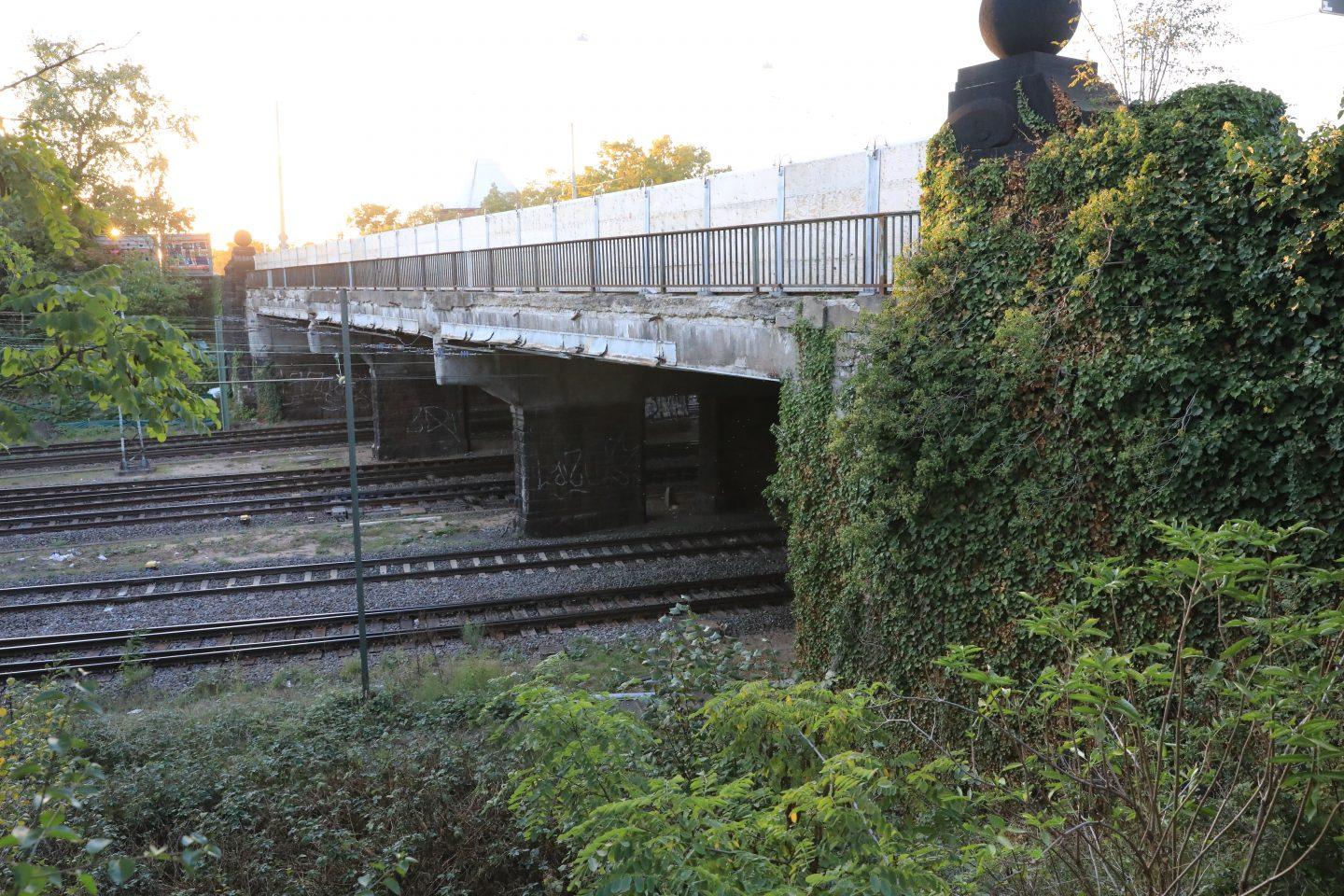
The Rhine road bridge, over 110 years old, has been closed to car traffic since 2023. Its replacement was closely coordinated with planned railway line closures over several years. Now Darmstadt must reach new agreements with Deutsche Bahn and the Federal Ministry of Transport.
Railway renovation is postponed indefinitely
Deutsche Bahn and the Federal Ministry of Transport have revised their plan for nationwide corridor upgrades. Instead of the originally planned 21 upgrades, only 13 will now be implemented between 2027 and 2031. The remaining projects will be postponed.

This also affects the Main-Neckar railway line between Frankfurt and Heidelberg. The renovation planned for 2030 will now take place after 2031. A specific new date has not yet been set.
This decision has immediate consequences for Darmstadt. The necessary track closures for the replacement of the Rhine road bridge were coordinated with the corridor renovation.
“This postponement deprives our project of its essential foundation,” explains Mobility Officer Paul Georg Wandrey. Without binding closure times, the city cannot reliably implement the agreed-upon schedule.
Demolition at the turn of the year 2027/2028 is uncertain
According to current plans, the existing Rhine road bridge was to be demolished at the turn of the year 2027/2028. A three-week closure was planned for December 2027 to facilitate this.
However, even these works are now in doubt. According to the city, Deutsche Bahn has admitted that necessary work on the overhead lines by DB InfraGO cannot be carried out by the end of 2027 as promised. The reason given is a lack of capacity at the contracted companies.
The railway company has also cancelled another planned closure period for the new construction in 2029.
This means that there are currently no binding dates for either the planned demolition or the subsequent new construction.
"Anyone who wants to demolish a bridge today needs to know when the tracks underneath will be out of service," Wandrey emphasizes. This planning certainty is currently lacking.
According to the city, it is currently impossible to reliably assess whether the dilapidated bridge could continue to be used beyond the originally planned demolition date.
City warns of significant additional costs
The city of Darmstadt, a center of science and research, has already contacted the Federal Ministry of Transport and DB InfraGO. The aim is to agree on track closures that can take place independently of the postponed corridor renovation.
However, no binding commitments have been made so far. Possible alternatives must first be examined and agreed upon.
Wandrey warns of the economic consequences of further delays. Although the project is currently within the agreed budget, additional delays could entail significant financial risks.
This includes rising construction costs as well as additional expenses for the longer necessary traffic management and a possibly extended rail replacement service.
The awarding of construction contracts is also currently blocked. Without guaranteed closure periods, the city cannot provide companies with binding completion dates. Therefore, tendering and awarding the demolition and new construction work is not possible at this time.
“We are continuing to plan, but we cannot build if nobody knows when. This is not a planning problem for the city – it is a question of commitments from the federal government and the railway,” Wandrey explains.
Planning law prerequisites have been met
The city points out that the planning and legal prerequisites for the replacement building are now in place.
The project is based on a feasibility study by the Darmstadt Urban Development Company (DSE). According to the city, a revised design without bridge piers in the track area reduced the required closure time from the original 245 days to 56 days.
The Hessian Ministry of Economic Affairs and Transport has approved the third amendment to the plan on this basis, effective June 30, 2026. The necessary approvals from other involved bodies, including the regional council, HEAG mobilo, the fire department, and the historic preservation authority, have also been obtained.
The listed bridgeheads are to be preserved during the new construction and integrated into the new structure.
Tram services interrupted during the construction period
Before it was closed to car traffic, around 50,000 vehicles crossed the Rheinstraße bridge daily. This makes it one of Darmstadt's most important traffic arteries.
During the construction work, tram services will also be suspended for approximately three years. A replacement bus service will be provided during this period.
It is currently unclear how the current delays will affect the start and duration of these restrictions.
Despite the uncertainties, the city intends to continue its planning and work with the federal government and the railway company to find viable solutions. The Rhine road bridge will also be taken into account when prioritizing future railway projects from 2032 onwards.
Mobility Officer Wandrey provides regular updates on the project's progress in quarterly reports. The Darmstadt urban development company is also preparing a detailed proposal for the city council.
(DARMSTADT – RED/PSD/ho)