The guided tour explains changes to the floodplain forest and landscape caused by human intervention and climate change
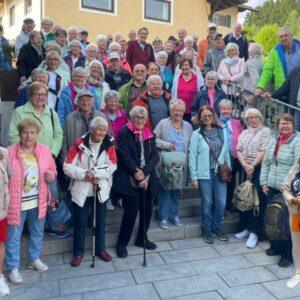
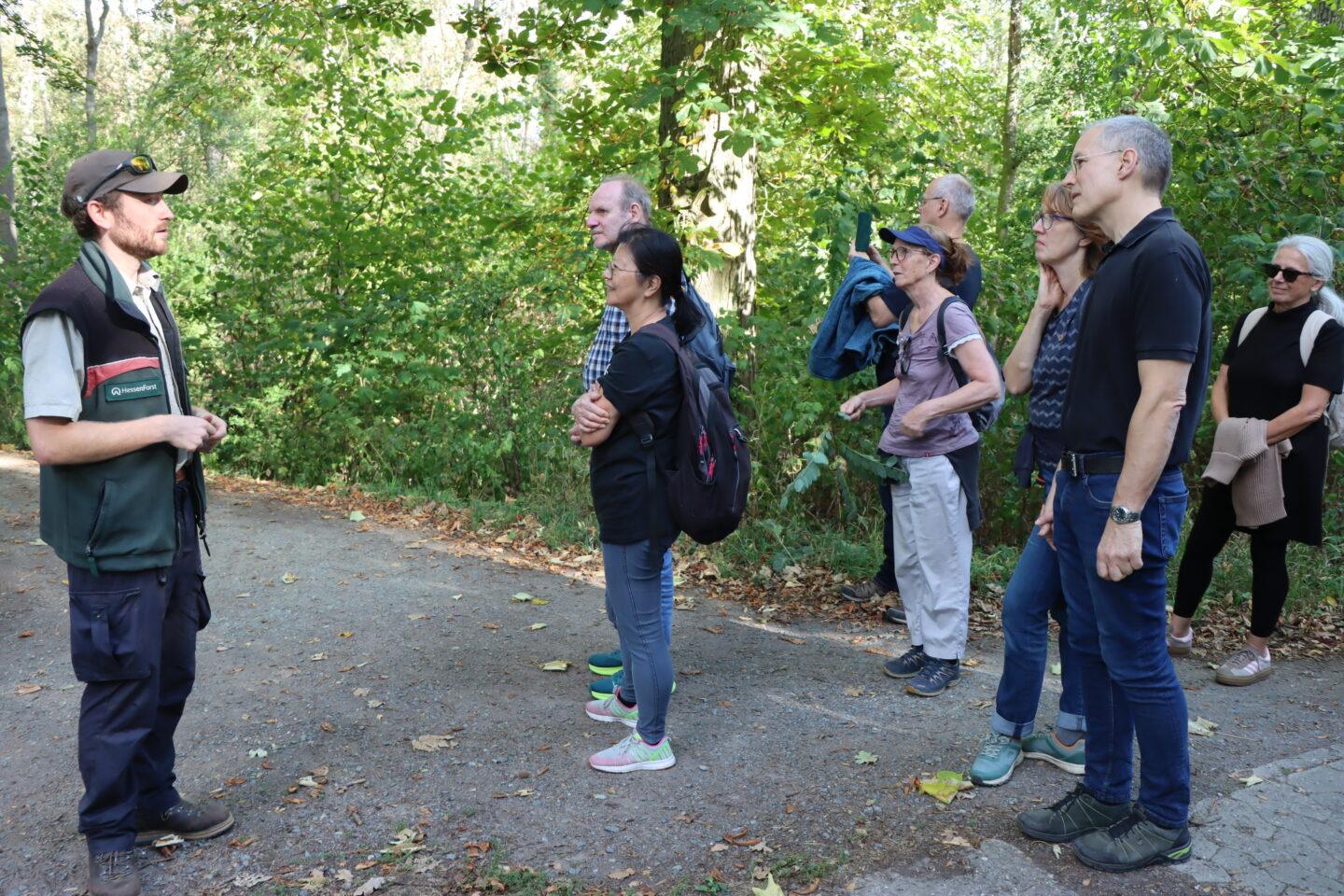
How have human interventions and changing climatic conditions shaped the Kühkopf area? A guided tour entitled "Yesterday, Today, Tomorrow – The Kühkopf Through the Ages". Around 20 participants explored the Kühkopf-Knoblochsaue nature reserve on September 18th.
The guided tour, lasting just over two hours, began at the "Schatzinsel Kühkopf" (Cühkopf Treasure Island) Environmental Education Center (UBZ). Christian Kehrenberg from HessenForst explained the development of Hesse's largest nature reserve at various stations along the way. The tour was organized by the Groß-Gerau district in cooperation with the Bergstraße-Odenwald Geo-Nature Park, HessenForst, and the district adult education center.
From river course to cultural landscape
One topic was the straightening of the Rhine around 200 years ago. The present-day Old Rhine was previously part of the actual river course and, according to Kehrenberg, was around 350 meters wide in places. The straightening facilitated shipping and led to the drainage of adjacent areas, which could then be used more extensively for agriculture and settlement.

Kehrenberg made it clear that even today's nature reserve is not a landscape untouched by humans. Intensive agriculture was practiced on the Kühkopf in the past. Dams were built and later abandoned, trees were planted, and meadows were created.
Today, one can observe, among other things, succession there – that is, the natural change in the species composition of a habitat. This development is being scientifically monitored on the Kühkopf.
Changes in the floodplain forest
The guided tour also addressed the effects of changing climatic conditions on the floodplain forest. Kehrenberg pointed to hotter and drier summers, heavy rainfall events, and changes in flood patterns.
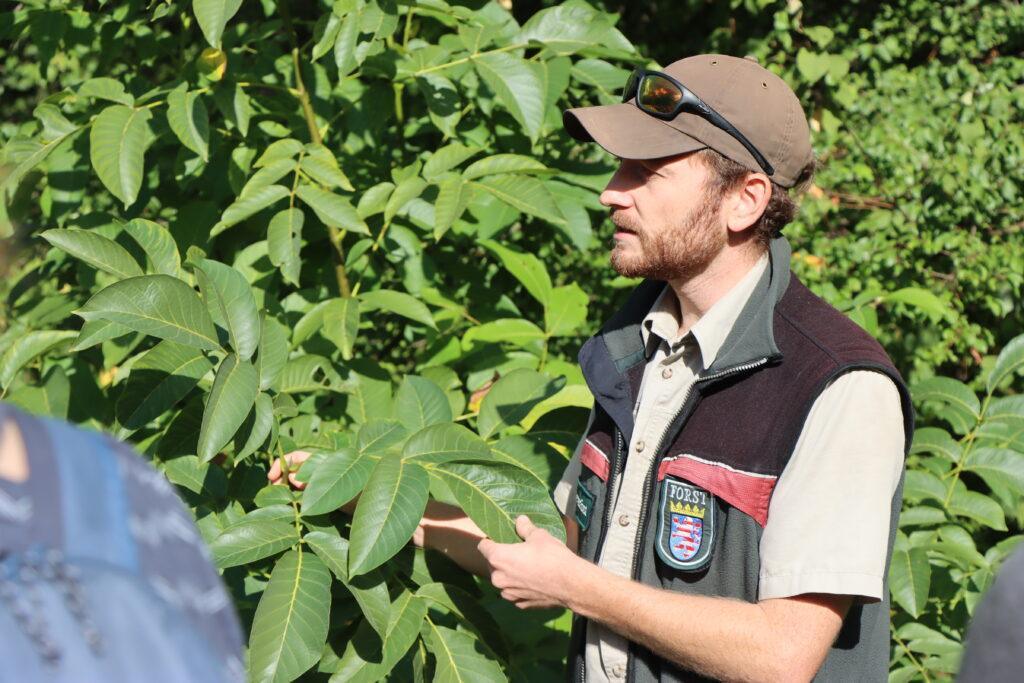
Which tree species will be able to survive in the softwood floodplain near the banks and in the higher-lying hardwood floodplain depends, among other things, on light and water. According to Kehrenberg, ash, elm, and maple are in decline, with fungal diseases such as sooty bark disease also playing a role. Walnut, on the other hand, is spreading more rapidly.
It is currently impossible to predict how the ecosystem will develop in the long term. "We don't know where this journey will ultimately lead. We are in uncharted territory," said Kehrenberg.
The nature reserve offers the opportunity to observe such changes without forestry operations. Kehrenberg therefore described the region as a kind of "experimental laboratory." In his estimation, the changes pose new challenges not only for forestry but also, in the long term, for agriculture.
(DISTRICT OF GROSS-GERAU – RED/PSKGG)
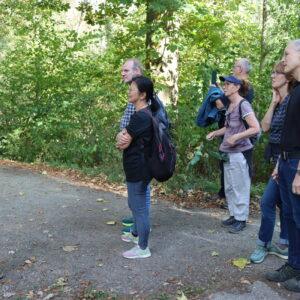
Featured image: Christian Kehrenberg from HessenForst led a guided tour on the Kühkopf last Friday, engaging interested listeners who asked many questions. Using the walnut tree as an example, Kehrenberg illustrated how the vegetation on the Kühkopf is changing. Photos: Groß-Gerau District