


After the time change, the risk of wildlife collisions increases at dusk – the state of Hesse, ADAC and the state hunting association launch a joint campaign
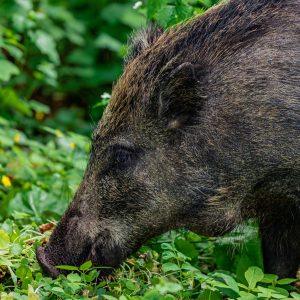
With the switch to winter time, the risk of collisions with wild animals increases for many drivers on their way to or from work. Especially during morning and evening twilight, deer, wild boar, and other animals can suddenly cross the road. The Hessian Ministry of Economic Affairs and Transport, the ADAC Hessen-Thüringen (German Automobile Club), and the Hessian State Hunting Association are therefore launching a joint information campaign under the motto "Preventing wildlife collisions – avoiding animal suffering".
Through radio broadcasts and information on social media, the partners aim to raise awareness of the dangers and teach drivers how to react correctly in an emergency. The radio broadcasts will air alongside traffic reports to reach commuters in particular.
Exercise particular caution at the edges of forests and fields
Increased vigilance is required, especially on rural roads and along the edges of forests and fields. Wild animals can suddenly run onto the road in these areas. In darkness or at dusk, drivers often have very little time to react.

Hesse's Minister of Economic Affairs and Transport, Kaweh Mansoori, therefore emphasizes the importance of an appropriate speed.
"Those who drive more slowly and attentively along the edges of forests and fields gain valuable time to brake. This protects people and animals," the minister explains.
In addition to reducing speed, experts recommend maintaining sufficient distance from the vehicle in front and carefully observing the road edges.
Drivers should also be aware of how they will react if an animal suddenly appears on the road, even before a critical situation arises.
Brake hard when wildlife is crossing, do not swerve
If a deer or other wild animal suddenly appears on the road, the correct reaction is crucial.
Drivers should hold the steering wheel with both hands, brake in a controlled and strong manner, and stay in their lane.
Experts strongly advise against risky evasive maneuvers. Swerving to avoid an animal can lead to oncoming traffic, leaving the road, or crashing into a tree. This can result in serious accidents and injuries.
“A risky evasive maneuver can have far worse consequences,” warns Prof. Dr. Jürgen Ellenberger, President of the Hessian State Hunting Association. At the same time, every prevented wildlife collision can also prevent injuries and considerable animal suffering.
Victoria Herzig, board member for traffic, environment and technology of ADAC Hessen-Thüringen, recommends driving with particular attention and being prepared to brake at all times on routes where wild animals may be crossing.
What should you do if an animal is standing on the side of the road?
Anyone who spots a wild animal on the side of the road should reduce their speed in a controlled manner and, if necessary, honk their horn.
If the high beams are switched on, they should be switched off so as not to blind the animal.
It is also particularly important to expect to encounter other animals. Deer and wild boar are often not alone. If one animal has crossed the road, others may follow.
Secure the accident scene after a wildlife collision
Not every collision can be avoided. Even at relatively low speeds, considerable forces can act on the vehicle in a collision with a large wild animal.
According to the campaign partners, the impact load in a collision with a red deer at 60 kilometers per hour is approximately five tons.
Even though many wildlife collisions result in no personal injury, vehicles can be severely damaged and animals can be seriously injured or killed.
After a collision, the accident scene must be secured immediately. The police must then be notified. If there are injuries, the emergency services must be alerted.
Motorists should absolutely keep their distance from injured wild animals. The animals may panic, react uncontrollably, or run back onto the road.
If an injured animal has fled after the collision, the police inform the responsible hunting leaseholder so that a search for the animal can be carried out.
Wildlife accident certificate for insurance purposes
For claims processing with your car insurance, a wildlife accident certificate may be required. This is issued by the police or the responsible game warden.
It is also helpful to mark the accident site or the spot where the animal fled. For example, a shopping bag or a tissue can be placed in a clearly visible spot at the roadside, provided this can be done safely.
Dead wild animals should not be touched without protective gloves due to the risk of infection. Injured animals must not be touched. Anyone who takes a wild animal without permission may be liable to prosecution for poaching.
The most important rules of conduct
Here's how to avoid wildlife collisions:
- Drive particularly carefully at dawn and dusk.
- Reduce your speed at the edges of forests and fields.
- Observe the edges of the road and maintain a sufficient safety distance.
- If you see wildlife at the roadside, brake in a controlled manner, switch off your high beams and, if necessary, honk your horn.
- Always expect to encounter other animals.
- If wildlife suddenly appears, brake hard, hold the steering wheel firmly and stay in your lane.
- Do not perform any risky evasive maneuvers.
Here's what to do after a wildlife collision:
- Turn on the hazard warning lights and park the vehicle as safely as possible on the right-hand side of the road.
- Put on a high-visibility vest and secure the accident scene with a warning triangle.
- Notify the police by calling 110 ; in case of injuries , call the emergency number 112
- Keep your distance from injured animals and do not touch them.
- Obtain a wildlife accident certificate from the police or a hunter for insurance purposes.
- If wild animals have fled, mark their escape route as safely as possible.
- Do not touch dead wild animals without gloves and under no circumstances take them with you.
Further information and tips on how to behave can be found in the joint campaign at www.wildunfall-verhindern.de.
RED/HMI)