


The municipality asks residents to report any suspected infestation as soon as possible
An infestation of the large glandular ant (Tapinoma magnum) has been discovered on Alte Bergstraße in Jugenheim . An expert commissioned by the municipality of Seeheim-Jugenheim confirmed the presence of the ant. Control measures in public areas have already begun, and regular inspections are planned.
Residents should inspect properties
The affected area is currently Alte Bergstraße between the Jugenheim fire station and the Bickenbacher Straße intersection. Residents have already been notified. Property owners on Saarstraße, Gutenbergstraße, and Bahnhofstraße are also asked to check their properties for possible infestation.
“Our goal is to raise awareness so that infestations are detected as quickly as possible, thus containing their spread,” explains Lisa Dönges from the Environment and Climate department. If necessary, properties can be checked for the presence of this ant species.

Damage to roads and buildings is possible
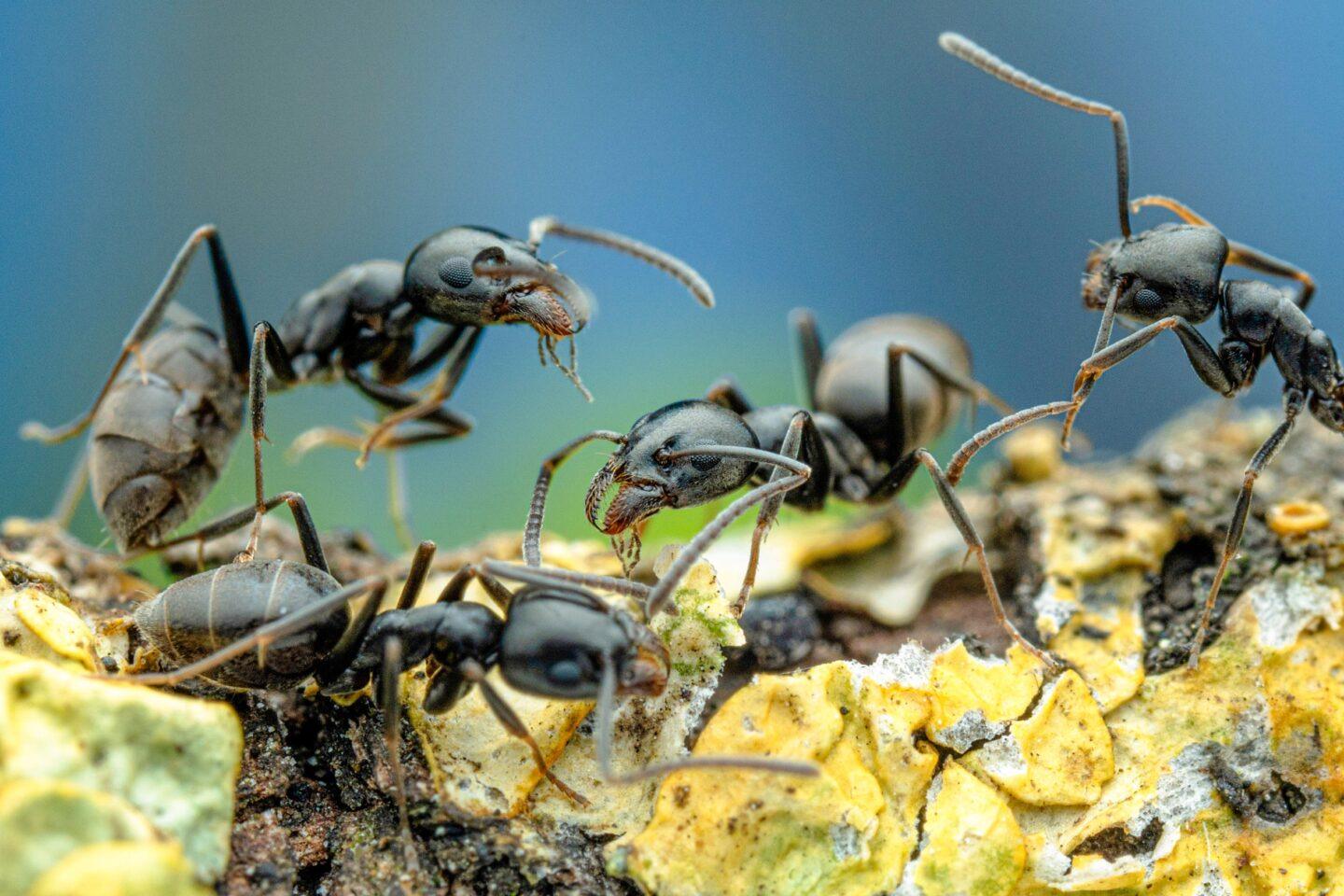
The large glandular ant, originally from the Mediterranean region, has been spreading in Germany for several years. Unlike native ant species, it forms supercolonies with multiple queens and can damage sidewalks, driveways, and technical infrastructure. In other municipalities, it has already caused damage to public facilities as well as power and internet outages.
The species can be identified, among other things, by its acetone or citrus scent when individual ants are crushed. Furthermore, the worker ants within a colony differ significantly in size.
Do not preemptively control native ants
The municipality advises against preemptively controlling native ant species. They are natural competitors of the large glandular ant and fulfill important functions in the ecosystem. Targeted control measures should only be taken once the species has been definitively identified.
While the municipality handles pest control on public land, property owners are responsible for their own private land. Hot water can help with smaller nests, but a professional pest control company should be consulted for heavier infestations.
Anyone who suspects they have encountered Tapinoma magnum should contact their local council as soon as possible. Additionally, photos or videos can be submitted via the free identification service of the Hessian State Office for Nature Conservation, Environment and Geology (HLNUG).
Contact: Lisa Dönges, Department of Environment and Climate, Tel. 06257/990-206, E-Mail lisa.doenges@seeheim-jugenheim.de.
Further information about the identification service can be found at:
www.hlnuh.de/grosse-druesenameise
(RED / PM / Sabine Milewski, Seeheim-Jugenheim Municipal Administration)
Featured image: State Museum of Natural History Stuttgart (SMNS) – A. Bellersheim