

The environmental working group takes stock – sightings of house martins and barn swallows can still be reported until the end of September
So far, 182 occupied nests of barn and house martins have been reported for the "Riedstadt Swallow Summer 2026" project. The environmental department of the town of Riedstadt is thus drawing up an initial interim report at the end of the breeding season. Further reports are still possible until the end of September.
The campaign is prompted by the nationwide decline in the populations of both swallow species. In Hesse, both house martins and barn swallows are on the Red List of endangered species. Contributing factors include a reduced insect supply, a lack of suitable nesting sites, and a shortage of open ground with the clayey material the birds need for nest building.
108 house martin nests and 74 barn swallow nests
In the spring, the town of Büchner once again appealed to residents to report occupied swallow nests within the town limits. So far, 108 house martin nests and 74 barn swallow nests recorded. The actual number is likely higher, as probably not all existing nests have been reported.

Erfelden leads the way with 44 reported nests for house martins. It is followed by Goddelau with 27, Crumstadt with 18, Leeheim with ten, and Wolfskehlen with nine nests.
The situation is quite different for barn swallows: Of the 74 nests reported so far, 44 are located in Wolfskehlen and 24 in Goddelau. Three nests each have been reported from Erfelden and Crumstadt. No occupied barn swallow nests have yet been reported from Leeheim.
Different requirements for their breeding grounds
The two species differ in their choice of nesting sites. House martins prefer to build their nests on rough exterior walls of buildings and often under eaves. However, such suitable locations are increasingly disappearing due to renovations and thermal insulation.
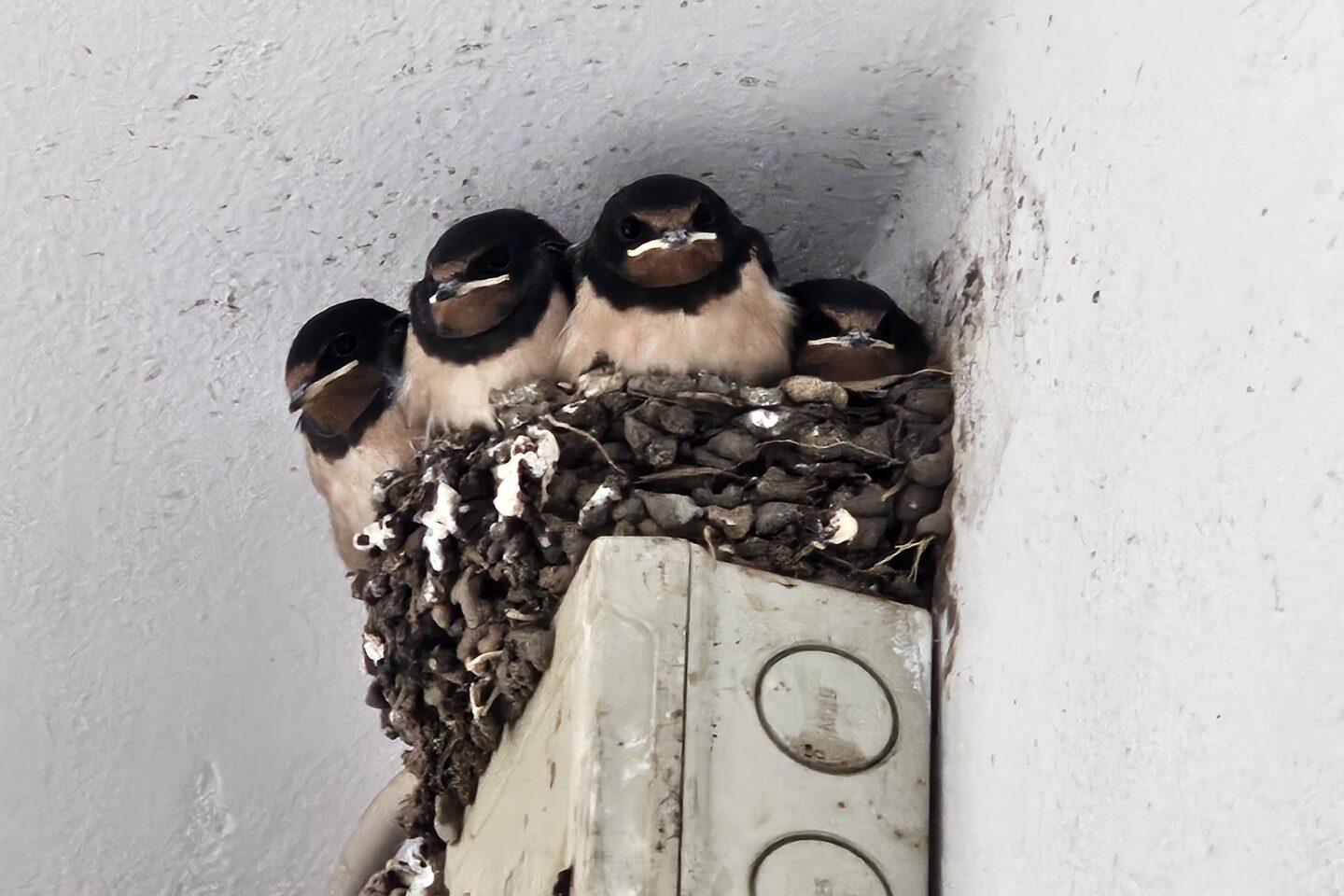
Barn swallows, on the other hand, prefer the interiors of old stables, barns, and outbuildings. Warehouses or garages are also suitable, provided there is an open entrance throughout the breeding season. Suitable conditions are therefore particularly common in parts of towns and villages with old farmsteads and former livestock farming.
Submissions are still possible until the end of September
The environmental working group is now hoping for further information from the public. Additions to previously reported sightings are also welcome. They need the street address and house number, the number of occupied nests, and the specific swallow species.
Holger Schanz can be contacted at 06158 181-320 or preferably by email at h.schanz@riedstadt.de . Those who also provide their name and address will be entered into a drawing for a book prize.
The "Swallow Summer" is part of the Büchner town of Riedstadt's program for the conservation of biodiversity. Hesse bears a special responsibility for both swallow species and has included them in the Hessian species conservation catalogue.
Swallows' nests are protected
The city also points out that swallows and their nests are strictly protected. Nests must not be destroyed and the birds must not be disturbed during the breeding season.
If renovation or refurbishment work on a facade requires interventions that necessitate the removal of nests, prior consultation with the Lower Nature Conservation Authority of the Groß-Gerau district is required. Otherwise, fines may be imposed. According to the expert group, solutions involving artificial nesting aids, which meet the needs of both the swallows and the homeowners, can often be found.
(RIEDSTADT – RED/PSR)