



The Lower Nature Conservation Authority of the Groß-Gerau district explains how hedgehogs, bats, amphibians and butterflies survive the cold season
As the days grow shorter and temperatures drop, many native animal species seem to disappear from nature. Amphibians, butterflies, and bats are rarely seen during the cold season. But where do they spend the winter months, and how do they protect themselves from the frost? The Lower Nature Conservation Authority of the Groß-Gerau district explains the different overwintering strategies and provides tips on how people can help these animals.
Depending on the animal species, the strategies differ considerably. While some animals hibernate, others enter a state of torpor. What they all have in common is that they drastically reduce their energy consumption and depend on undisturbed places of refuge.
Amphibians spend the winter in frost-free hiding places
Smooth newts, common frogs, and common toads are among the amphibian species that seek out sheltered winter quarters in autumn. These include piles of stones and leaves as well as abandoned rodent burrows.

Unlike mammals, amphibians cannot regulate their own body temperature. It adapts to the ambient temperature. If this drops sufficiently, the animals enter a state of torpor.
In this state, they remain largely motionless in their hiding places until temperatures rise again in spring. Then they leave their winter quarters and make their way to their spawning waters.
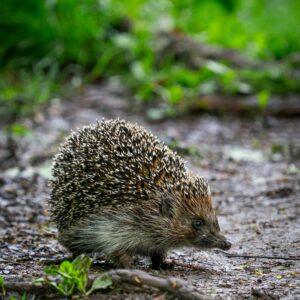
Piles of leaves offer shelter to hedgehogs
For hedgehogs, leaves, twigs, and deadwood are also important components of a suitable winter shelter. They particularly like to seek out sheltered piles of these materials to spend their hibernation.
Meanwhile, their body temperature drops significantly. Heart rate and respiration are also greatly reduced so that the animals expend as little energy as possible.
For garden owners, this means: Once a pile of leaves or brushwood has been created, it should ideally not be moved or removed during the winter months. A hedgehog sleeping in it could be disturbed or injured.
Dormice sleep for up to seven months
Besides hedgehogs, bats and dormice are also true hibernators. They significantly reduce their bodily functions during the cold season.
The dormouse's hibernation lasts a particularly long time. The animal can spend up to seven months in its hiding place.
To survive this period without regular food intake, the dormouse builds up extensive fat reserves as early as late summer. In doing so, it can even double its body weight.
Tree and rock cavities serve as winter quarters, where it builds nests from materials found in its surroundings. If suitable natural shelters are lacking, it sometimes uses buildings and gardens as substitute habitats.
Butterflies possess a natural frost protection
Not all butterflies overwinter as eggs, caterpillars, or pupae. In Germany, there are six species that survive the cold season as adults. These include the peacock butterfly and the brimstone butterfly.
The animals seek out sheltered places such as tree hollows, cellars or sheds and fall into a state of hibernation there.
The brimstone butterfly has developed a unique survival strategy. It produces its own antifreeze substances that protect its cells from damage caused by low temperatures.
This allows it to withstand temperatures as low as minus 20 degrees Celsius.
Do not disturb winter quarters if possible
The Lower Nature Conservation Authority points out that animals should be left undisturbed as much as possible during their winter rest, hibernation or torpor.
Any disturbance or premature awakening can consume valuable energy reserves that the animals may lack until spring.
Therefore, piles of leaves and brush should be left undisturbed during the winter. Even seemingly abandoned shelters can be used by hibernating animals.
Anyone who discovers an injured or obviously helpless wild animal should seek expert help. The relevant authorities, wildlife rescue centers, and wildlife rehabilitation centers are the appropriate contacts.
The Lower Nature Conservation Authority of the Groß-Gerau district provides an overview of relevant contact points in the region on its website under "naturschutz " in the section "Downloads and Links".
(DISTRICT OF GROSS-GERAU – RED/PSKGG)