


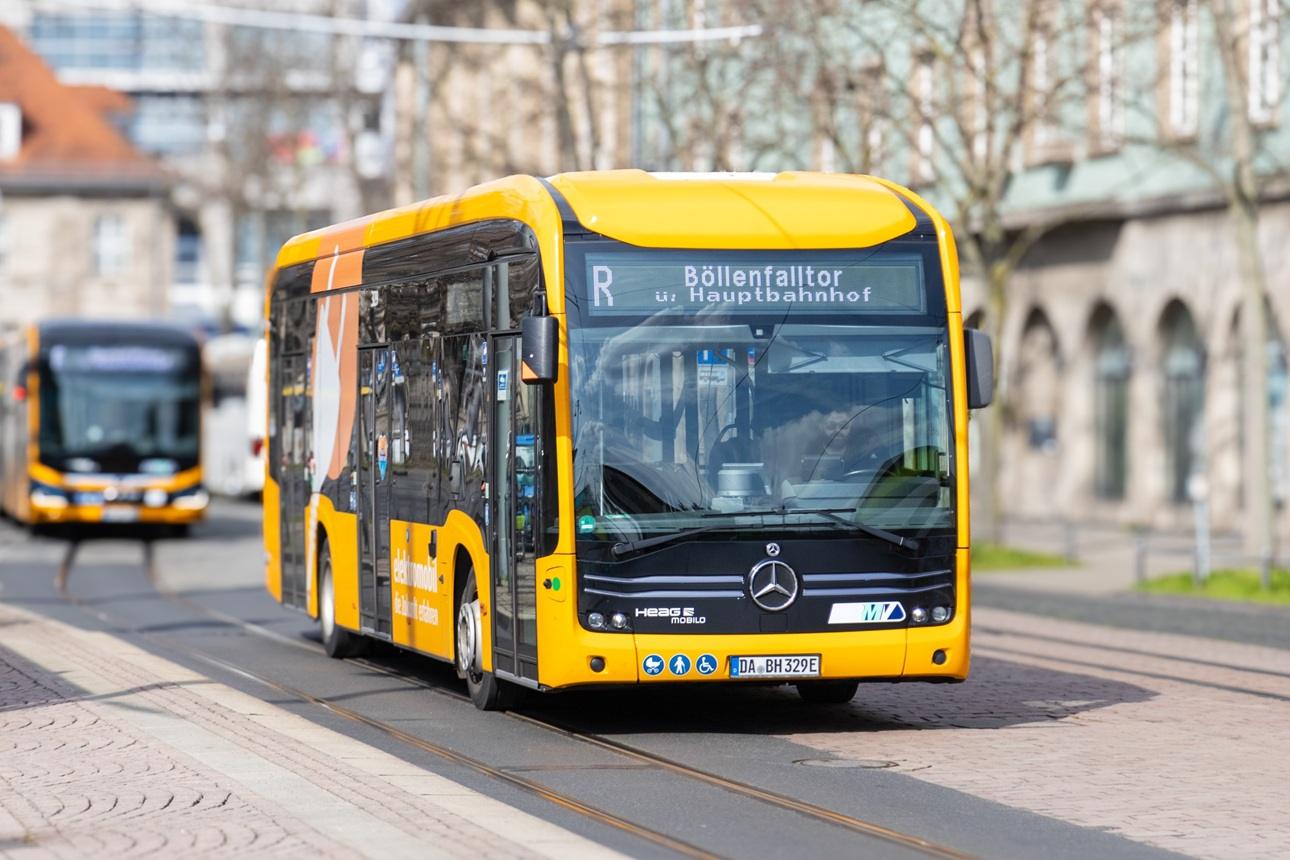

Electromobility saves CO₂ and reduces operating costs
HEAG mobilo has reached a milestone: Since switching to electromobility in 2020, the e-bus fleet has covered more than ten million kilometers – that corresponds to around 250 times around the Earth.
Significant savings in CO₂ and diesel
According to the transport company, the use of electric buses offers both ecological and economic advantages. In 2024 alone, around 2,850 tons of CO₂ and approximately one million liters of diesel fuel were saved.
Operating costs are also lower: While a daily route of about 300 kilometers costs around 210 euros with diesel, an electric bus only costs about 130 euros for the same route.

Batteries last longer than expected
Furthermore, experience to date shows that the batteries have a longer lifespan than originally anticipated. According to the company, vehicles from 2021 still retain approximately 98 percent of their capacity. This allows the buses to remain in service longer, resulting in additional cost advantages.
Expansion of the charging infrastructure
The charging infrastructure at the Böllenfalltor depot in Darmstadt is currently being expanded. Eight new charging stations with a total of 16 charging points will allow two buses to be charged simultaneously in the future.
Once the work is completed, a total of 72 charging points will be available. This means the infrastructure is designed for a fully electrified bus fleet.
Goal: A fully electric bus fleet
Since summer 2025, all standard buses operated by HEAG mobilo have been electric; around two-thirds of the entire fleet has been converted so far. The goal remains the complete electrification of the bus network.
However, the company still relies on federal and state funding for the conversion of the remaining vehicles, as electric buses are currently significantly more expensive to purchase than conventional vehicles.
(DARMSTADT / DISTRICT OF DARMSTADT-DIEBURG – RED/HEAG MOBILO/kek)
Featured image: HEAG Mobilo