

Twenty participants learn more about fossils and the history of the World Heritage Site during a five-kilometer tour
on a journey through approximately 47 million years of Earth's history during a visit to the Messel Pit. Twenty participants explored the UNESCO World Heritage Site on a guided tour and learned more about the pit's formation, the fossils discovered there, and current research activities.
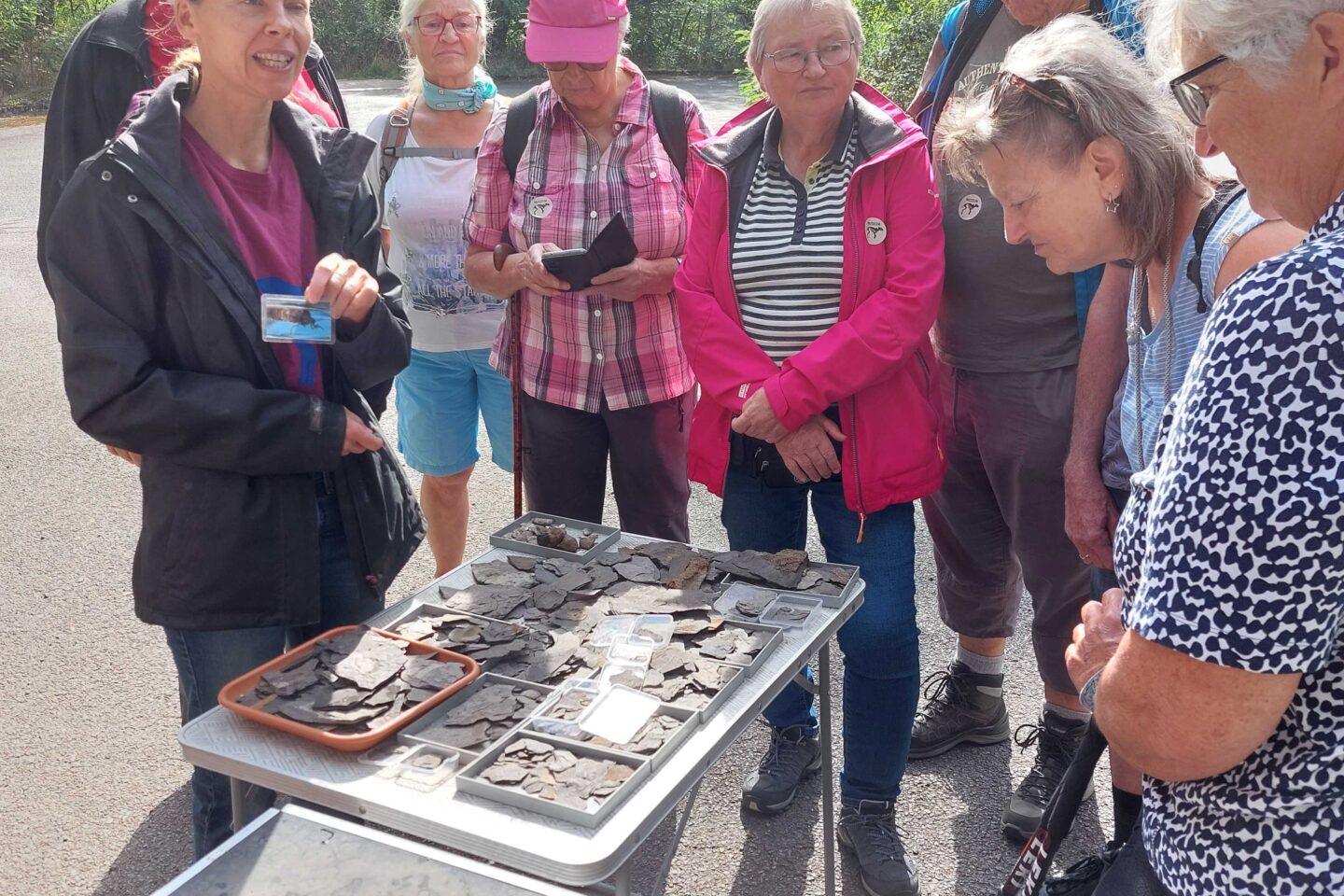
The group was accompanied by Dr. Annegret Brunner. She explained, among other things, the formation of the former maar lake through volcanic activity, as well as the current methods for excavating and preserving the fossils preserved in the oil shale.
Fossils from a tropical world
The Messel Pit offers insights into a time when the region had a tropical climate. Walking along various excavation sites, the group explored well-known finds such as the early horse and the primate fossil "Ida," as well as other animal, insect, and plant fossils. Participants were even able to examine and touch some of the finds up close during the guided tour.

The tour led down to the bottom of the former lake. One of the stops on the tour was an artesian well, which draws water from a depth of around 400 meters.
Closing ceremony in the visitor center
After the approximately five-kilometer tour, the group visited the exhibition about the Messel Pit. There, the formation of the former maar lake, different types of rock, and the development of the landscape are explained. A staged journey through time took visitors back some 47 million years into the past.
The excursion was organized by Thomas Arnold, the nature conservation officer of the Odenwald Club Groß-Gerau.
(GROSS-GERAU – RED/OWK)