


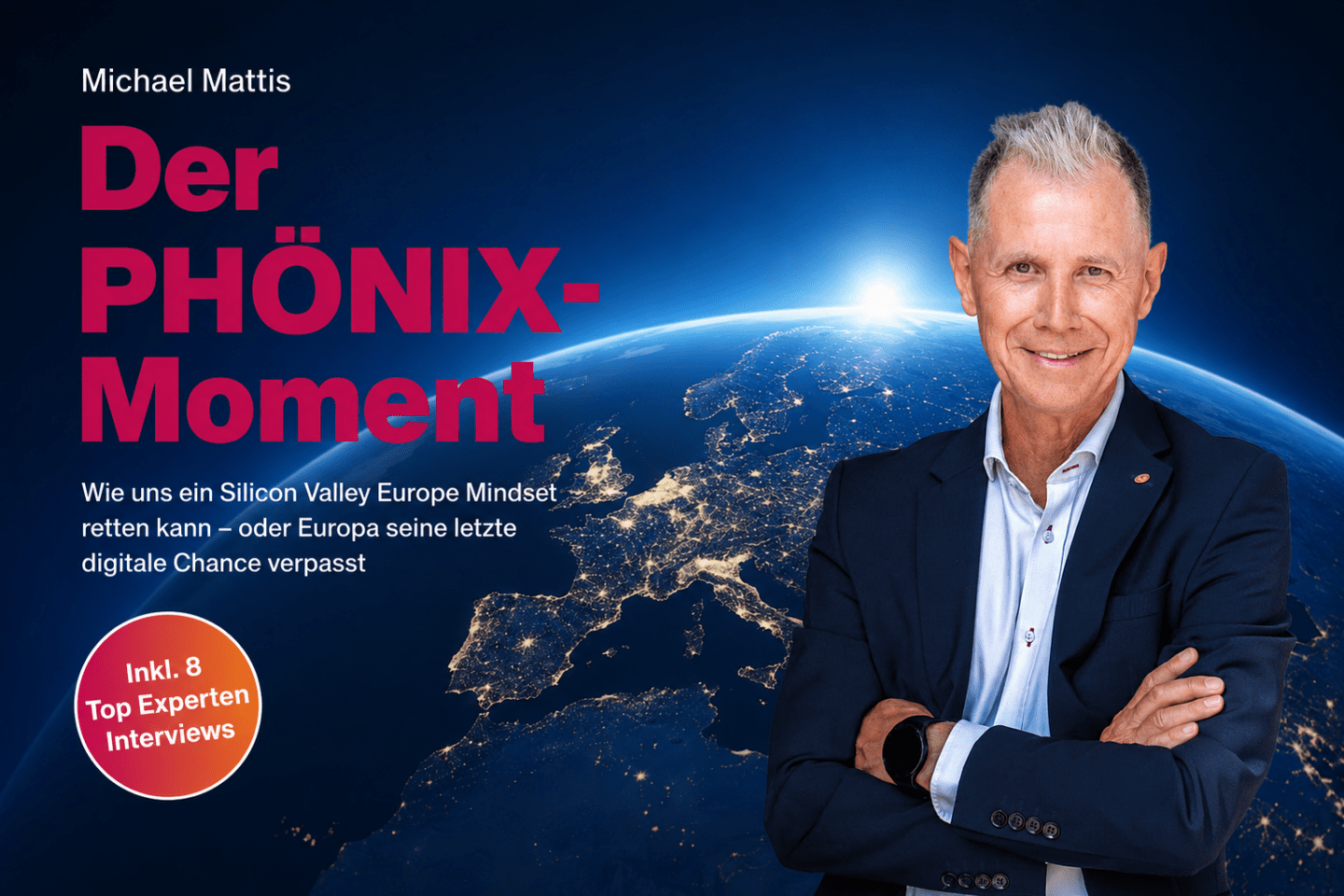
New book deals with Europe's future, technological change and societal resilience
In his new book, "The Phoenix Moment," Darmstadt-based author and entrepreneur Michael Mattis explores how Europe can respond to technological, economic, and social changes. He advocates for greater courage to embrace change, stronger networking, and the ability to use crises as a springboard for new beginnings.
The idea behind the title has been with Mattis since his childhood. In the 1960s, he saw the classic film "The Flight of the Phoenix" with Hardy Krüger in a Darmstadt cinema. The experience had a lasting impact on him and later even inspired him to study engineering.
“In the film, Kruger embodies an authentic form of resilience: the ability not to conceal setbacks, but to process them productively and reinvent oneself without losing one's own stance,” explains Mattis. He applies this principle in his book to the current challenges facing Europe.
Europe between innovation and lack of implementation
Michael Mattis has been active in the regional digital economy for many years. Among other things, he founded the Darmstadt-based AMC Media Network and initiated event formats such as dikomm and the DIGITAL FUTUREcongress.
In "The Phoenix Moment," he does not consider technological developments in isolation from their societal impact. In his view, artificial intelligence, digital business models, and the global platform economy are not only changing companies and the world of work, but also affecting social structures and European values.
A central thesis of the book is that Europe lacks neither knowledge nor inventiveness. Mattis sees bureaucracy, siloed thinking, and a lack of courage to implement successful developments on a larger scale as the real obstacles. He finds examples of this in European technological history. For instance, the MP3 format was developed in Germany and the World Wide Web at CERN in Europe, while the commercial application of such innovations was often subsequently pursued more successfully elsewhere.
“Silicon Valley Europe” as a European path
Mattis is not calling for a copy of American models. Rather, with his concept of a "Silicon Valley Europe," he describes an organizational and mental space in which European strengths can be better combined. Scientific excellence, data protection, and societal sovereignty are to be combined with greater speed, collaboration, and entrepreneurial courage.
Darmstadt also plays a role in his considerations. Mattis views the connection between universities, research, culture, and medium-sized businesses as an example of the potential that can lie in close networking between different stakeholders.
Three concepts run like central pillars through the book: learning, collaboration, and networking. According to the author, they should not only enable economic development but also strengthen social cohesion.
“The Phoenix Moment” is aimed particularly at people who deal with economic and social issues of the future, strategy and technological change.
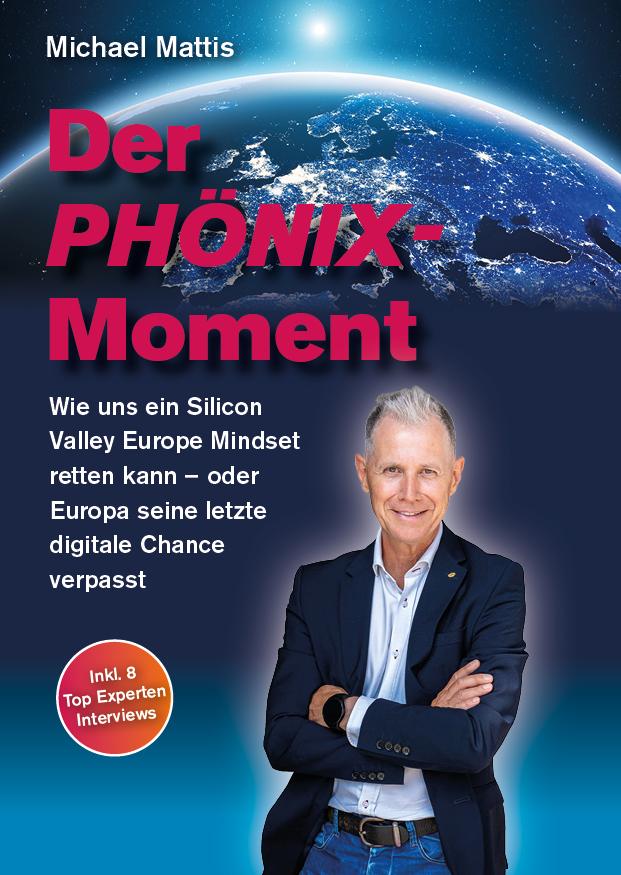
Book information
Michael Mattis: "The Phoenix Moment"
Length: 320 pages
Softcover: ISBN 978-3-384-92628-9
Hardcover: ISBN 978-3-384-92629-6
E-book: ISBN 978-3-384-92630-2
Audiobook: unabridged reading, 11 hours 35 minutes; Book ID 9780466524661
(RED)